The Plain Bagel
AI Audio Summaries
14 videos summarized
5 followers on BriefTube
Last summary: Apr 18, 2026
AI Audio Summaries
14 videos summarized
5 followers on BriefTube
Last summary: Apr 18, 2026
Read AI summary
YouTube
Richard announces a new AI tool called "Plain Bayigle" developed in partnership with AI pioneer Enloppic, now available for beta testing on YouTube. This tool is the first YouTube-native AI agent allowing users to interact directly through the comment section of Plain Bagel videos. To use it, users simply start a comment with "Plain Bayigle" followed by their prompt, and the AI will reply within seconds. Plain Bayigle can explain videos, rewrite scripts, or summarize entire videos. Additionally, due to gaps in financial regulations, it can offer tailored financial advice based on shared details, helping with portfolio growth, debt reduction, or developing financial roadmaps.
Read AI summary
YouTube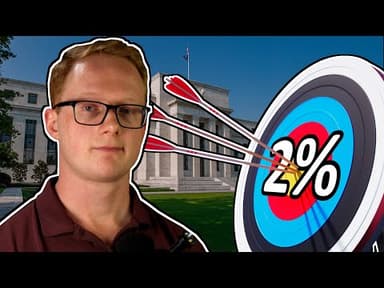
In the world of modern economics, the concept of a central bank targeting a specific inflation rate—usually 2%—is often treated as an immutable law of nature. From the United States and Canada to the Eurozone and even recently China, this figure serves as the North Star for monetary policy. However, as Richard from "The Plain Bagel" explains, the origin of this specific number is surprisingly arbitrary and far more recent than many might assume. While the goal of these institutions is to maintain price stability, the decision to aim for a 2% annual increase in prices, rather than 0% or even a decrease, is rooted in a mix of historical happenstance and specific economic theories. The story begins in New Zealand in 1989. At the time, the country was struggling with persistent double-digit inflation and sought to grant its central bank independence to manage the economy more effectively. During this period of legislative change, the finance minister and the head of the central bank were tasked with establishing a public inflation target. The specific choice of a 0% to 2% range appears to have been inspired by a television interview given a year earlier by the then-Finance Minister Roger Douglas, who suggested a target of 0% to 1%. To allow for more flexibility, the upper bound was raised to 2%. This figure was essentially pulled out of thin air without a robust empirical foundation, yet the policy proved remarkably successful. Within a few years, New Zealand’s inflation dropped into the target range.
Read AI summary
YouTube
In this tenth installment of the "TikTok React" series, Richard Coffin, a registered portfolio manager and CFA charterholder, analyzes several viral financial videos to separate sound advice from dangerous misinformation. The episode covers a broad range of topics, from portfolio construction and options trading to debt management and institutional misconceptions. The first video features an influencer suggesting a $1,000 investment split between tech-heavy ETFs, Bitcoin, and a high-yield instrument called STRF. Coffin points out a common pitfall in this strategy: lack of true diversification. While the creator suggests buying both QQQ and VTI, Coffin notes that these funds have a 50% overlap by weight. Investors following this advice are essentially making a highly concentrated bet on US large-cap tech rather than building a balanced portfolio. More concerning is the recommendation of STRF, a preferred share issued by a Bitcoin treasury company. Coffin warns that the promised 10% dividend is not backed by traditional cash flow; instead, the company raises new capital or sells Bitcoin to pay earlier investors—a structure some compare to a Ponzi scheme. Since these are preferred shares rather than debt, the company has no legal obligation to pay the dividends, making them far riskier than the "safe income" they are marketed as.
Read AI summary
YouTube
In recent market activity, gold has experienced a significant "gold rush," with prices surging over 60% year-to-date and reaching a new all-time high of nearly $4,400 per ounce. This momentum has extended to silver, which has similarly hit record highs. Globally, this has sparked a retail mania, with consumers in Australia and Vietnam lining up at dealers and search interest for "buy gold" reaching peak levels. Even political figures like Donald Trump have engaged with the trend, though some of the gold seen in his surroundings is reportedly plastic. Beyond the immediate excitement, a more serious narrative is driving this price action: the "debasement trade." This theory suggests that ballooning deficits, political instability, and heavy central bank buying indicate that the world is preparing for the collapse or replacement of the US dollar. To understand if this is a temporary fad or a shift toward a "new golden age," it is necessary to examine gold's role as an asset class and the specific factors fueling its current rise.
Read AI summary
YouTube
Since the launch of ChatGPT three years ago, generative AI has advanced at a remarkable pace, moving from experimental tools to sophisticated systems capable of near-perfect image and video generation. However, this "golden age" of artificial intelligence is increasingly being scrutinized as a potential financial bubble. With major financial institutions like the IMF and the Bank of England warning of soaring valuations, and prominent investors like Michael Burry taking short positions against AI leaders, the industry faces a growing "bubble allegation" that mirrors the dot-com crisis of 2000. The current AI landscape is divided into three primary tiers. First are the chip makers, led by Nvidia, which has seen its market capitalization skyrocket to $5 trillion. Second are the infrastructure providers—companies like Microsoft, Amazon, and Oracle—that build the massive data centers required to run AI models. Finally, there are the AI companies themselves, such as Meta and startups like Anthropic and OpenAI. While these companies are at the forefront of the technological revolution, their financials are often precarious. OpenAI, for instance, is valued at $500 billion despite facing projected losses of $8.5 billion in 2025 and an estimated "burn" of $115 billion through 2029.
Read AI summary
YouTube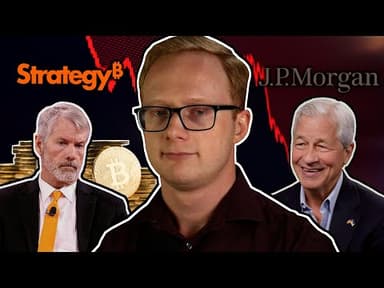
In this transcript, Richard Coffin of *The Plain Bagel* examines the recent volatility surrounding Digital Asset Treasury Organizations (DATOs), with a specific focus on MicroStrategy (referred to as "Strategy"). These companies, which have pivoted their business models to primarily acquire Bitcoin, recently enjoyed a period of explosive growth fueled by what many called an "infinite money glitch." This strategy involved issuing shares at a premium to the value of the Bitcoin they held, then using those funds to buy more Bitcoin, which in turn drove up the stock price and the value of their existing holdings. However, this cycle has recently faced a severe reversal. **The Market Downturn and the "Infinite Money Glitch"**
Read AI summary
YouTube
In this holiday-themed review, a registered portfolio manager—performing in a Santa Claus costume—evaluates various financial advice clips from TikTok to determine if they belong on the "Naughty" or "Nice" list. The host emphasizes that his goal is to provide professional feedback on popular trends, separating legitimate wealth-building strategies from misleading or predatory misinformation. The first video reviewed suggests that the current rise of AI and technology offers a "once-in-a-lifetime" opportunity similar to buying real estate decades ago or investing in Amazon in the 1990s. The creator claims that just 15 minutes of reading can lead to a 4,000% return. The host places this on the **Naughty List**, citing several professional concerns. He explains that technological revolutions are often poor sources of return for investors because of high attrition; many investors end up "funding the revolution" with their losses as companies fail. Furthermore, he warns against hindsight bias—the idea that it was easy to pick Amazon or Starbucks early on. He notes that today there are over 500 AI "unicorns" (companies valued over $1 billion), and the probability of picking the few that will actually survive and dominate is statistically very low.
Read AI summary
YouTube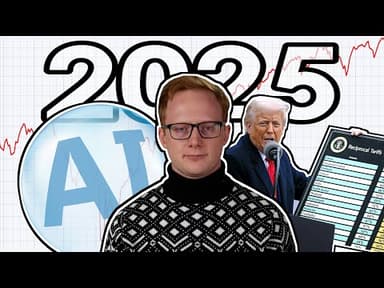
As the year 2025 draws to a close, Richard Coffin of *The Plain Bagel* presents his annual "Finance Rewind," reflecting on a year defined by radical policy shifts, a volatile trade landscape, and the continued dominance of artificial intelligence. This retrospective provides a month-by-month breakdown of the events that shaped the global economy and offers a glimpse into the trends expected to define 2026. The year began with a series of high-profile events centered on the incoming U.S. administration. On January 17, just days before his inauguration, Donald Trump launched "Trumpcoin," a Solana-based memecoin. While the currency experienced a massive surge followed by a correction, it signaled a new era of crypto-friendly policies. Simultaneously, the long-contested TikTok ban briefly took effect before ByteDance was granted a 75-day window to sell its U.S. operations, a saga that eventually culminated in a December deal involving Oracle and MGX.
Read AI summary
YouTube
In a significant escalation of geopolitical tensions, a US Delta Force team recently conducted a midnight raid in Venezuela, capturing President Nicolas Maduro and extracting him to New York to face federal charges. This event, which followed months of US military activity in the region, has sparked intense global debate. While Maduro has long been viewed internationally as an illegitimate leader under whom Venezuela has suffered, the act of a US-led invasion and the domestic charging of a foreign head of state sets a controversial precedent. Publicly, Donald Trump attributed the move to a crackdown on Venezuela’s role in the fentanyl crisis. However, skeptics point to Venezuela’s massive oil reserves—the largest in the world, accounting for one-fifth of global proven reserves—as the primary motivator. Trump has done little to dispel these theories, demanding the return of "stolen" US oil assets and announcing plans to send major American oil companies to rebuild Venezuela’s neglected infrastructure. Furthermore, the US announced it would seize and sell 30 to 50 million barrels of Venezuelan oil, claiming the proceeds would benefit both nations while suggesting indefinite US control over the country's oil sales.
Read AI summary
YouTube
In this update from early 2026, Richard of *The Plain Bagel* explores the rapidly shifting landscape of international trade, specifically focusing on a landmark deal between Canada and China. The global context is one of significant volatility; the United States, under President Trump, has recently imposed new tariffs on semiconductors and threatened European nations over access to Greenland. Amidst this "unhinged" environment, Canadian Prime Minister Mark Carney’s recent visit to Beijing marks a pivotal moment in Canada’s economic strategy, signaling a move toward trade diversification and a thawing of long-standing tensions. The centerpiece of the new agreement is Canada’s decision to waive its 100% tariff on Chinese-produced electric vehicles (EVs) for up to 49,000 units. This makes Canada the only member of the KUSMA (USMCA) agreement to allow Chinese EVs into its market without exorbitant levies. While critics view this as a direct rebuff to the United States—which views China as a primary global adversary—President Trump’s initial reaction has been surprisingly "chill," suggesting that Canada is right to seek deals where it can. However, the move remains controversial among other U.S. officials and within Canada, where some fear a loss of U.S. favor or an increase in Chinese influence.
Read AI summary
YouTube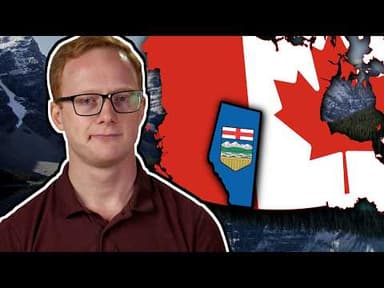
In this transcript, Richard from *The Plain Bagel* examines the rising sentiment of Alberta separatism, a movement that has shifted from the fringes to a significant point of national debate. While currently supported by a minority of Albertans—between 19% and 29%—the movement has gained momentum due to provincial legislative changes making referendums easier and the vocal efforts of the Alberta Prosperity Project. This non-profit group is actively collecting signatures for an independence vote, framing the move as a rescue from what they describe as a "downhill spiral" caused by international agendas. The tension is further heightened by external pressures, including comments from U.S. officials regarding a potential $500 billion transition loan and threats from the Trump administration to exert economic pressure on Canada. To understand the roots of this movement, one must look at Alberta’s unique position within Canada. Known for its agriculture and the Calgary Stampede, Alberta is the nation’s energy powerhouse, producing over 80% of Canada's oil. Despite representing only 15% of the national GDP, its natural resources allow it to maintain the highest GDP per capita in the country. This economic strength, however, has led to "western alienation." Many Albertans feel that federal environmental policies, such as the carbon tax and pipeline delays, stifle their primary industry. Unlike Quebec’s separatist movements, which are rooted in language and culture, Alberta’s grievances are almost entirely fiscal and political, driven by a right-leaning population at odds with the federal Liberal government.
Read AI summary
YouTube
Over the past decade, a massive lending machine has been constructed outside the traditional banking system. Often referred to as "shadow banking" or non-bank financial intermediaries (NBFIs), this sector—specifically private credit—has become the "hot new thing" on Wall Street. Private credit involves non-bank institutions lending money directly to private businesses. However, with minimal oversight compared to traditional banks, recent months have revealed significant cracks in this $2 trillion market, ranging from borrower defaults to a rush of investors attempting to withdraw their capital. ### The Genesis and Growth of Private Credit
Read AI summary
YouTube
In this update from The Plain Bagel, host Richard discusses the significant global economic ramifications of the recent joint military action by the United States and Israel against Iran. Dubbed "Operation Epic Fury," the attack targeted Iran’s nuclear capabilities, missile arsenals, and proxy networks. However, the scope of the conflict shifted rapidly following the death of Iran’s Supreme Leader, Ayatollah Ali Khamenei. While initial objectives focused on security threats, the rhetoric from the U.S. administration and the intensity of the strikes suggest an underlying goal of total regime change. This has led to a volatile escalation throughout the Middle East, with Iran retaliating against neighboring countries hosting American troops. A central theme of the discussion is why a country as economically isolated as Iran can cause such significant global instability. Iran has long been a "hermit" economy, heavily sanctioned by the U.S. and the UN due to its support for groups like Hamas and Hezbollah and its non-compliance with nuclear agreements. Despite having a population double that of Canada, its GDP is only a fraction of the size. However, Iran’s importance lies in its role as a massive energy supplier. It holds 12% of the world’s oil reserves and produces 4% of the global supply. Even under heavy sanctions, Iran has maintained sophisticated black-market channels, primarily exporting oil to China.
Read AI summary
YouTubeBriefTube monitors your YouTube channels, generates AI-powered audio summaries, and delivers them wherever you listen. Telegram, Discord, Slack, or your podcast app. Fully automated.
Start free trial