The Risk the War in Iran Poses to the Global Economy
AI Summary
In this update from The Plain Bagel, host Richard discusses the significant global economic ramifications of the recent joint military action by the United States and Israel against Iran. Dubbed "Operation Epic Fury," the attack targeted Iran’s nuclear capabilities, missile arsenals, and proxy networks. However, the scope of the conflict shifted rapidly following the death of Iran’s Supreme Leader, Ayatollah Ali Khamenei. While initial objectives focused on security threats, the rhetoric from the U.S. administration and the intensity of the strikes suggest an underlying goal of total regime change. This has led to a volatile escalation throughout the Middle East, with Iran retaliating against neighboring countries hosting American troops.
A central theme of the discussion is why a country as economically isolated as Iran can cause such significant global instability. Iran has long been a "hermit" economy, heavily sanctioned by the U.S. and the UN due to its support for groups like Hamas and Hezbollah and its non-compliance with nuclear agreements. Despite having a population double that of Canada, its GDP is only a fraction of the size. However, Iran’s importance lies in its role as a massive energy supplier. It holds 12% of the world’s oil reserves and produces 4% of the global supply. Even under heavy sanctions, Iran has maintained sophisticated black-market channels, primarily exporting oil to China.
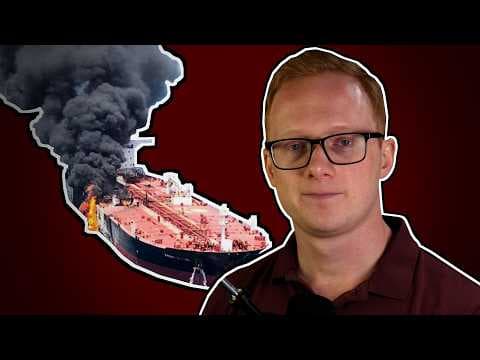
The most critical economic vulnerability identified is the Strait of Hormuz. This narrow waterway is a vital choke point through which 20% of the world’s total oil supply and 31% of all seaborne crude pass daily. Iran’s proximity to the strait allows it to disrupt global markets effectively. Following the start of the conflict, the Islamic Revolutionary Guard Corps announced the closure of the strait, threatening to attack any vessel attempting transit. This blockade has already resulted in several ships being struck and many shipping companies suspending operations. Consequently, oil prices have surged, with West Texas Intermediate and Brent crude rising significantly toward the $90-per-barrel mark.
The impact extends far beyond gasoline prices. Oil is a fundamental input for electricity, manufacturing, and transportation. Any sustained increase in energy costs reverberates through global supply chains, driving up the price of nearly all consumer goods. Furthermore, the Strait of Hormuz is a primary route for liquefied natural gas (LNG) and urea, a key component in nitrogen-based fertilizers. Natural gas prices in Europe have already jumped by 60%, and fertilizer prices have risen by 25%, posing a direct threat to global food security and heating costs.
While alternative routes exist, such as pipelines through Saudi Arabia to the Red Sea or UAE infrastructure reaching the Gulf of Oman, they are not without risk. The Red Sea remains dangerous due to Iranian-backed Houthi rebels. Experts estimate that even with these alternatives, global oil supply could still drop by 8 to 10 million barrels per day. This disruption is compounded by a crisis in the insurance and aviation sectors. Marine and airline insurance companies are canceling war-risk coverage, making it difficult and expensive for companies to operate in the region.
The regional economic fallout is equally severe. Many Gulf nations rely on nationalized oil production for government revenue; if they cannot export, their internal economies suffer. Additionally, the conflict has triggered capital flight and hit the tourism industry, which accounts for a significant portion of the GDP in countries like the UAE. Long-term projections using the Keel Institute’s "price of war" calculator suggest that a multi-year conflict could cost Iran nearly $1 trillion in lost capital and $600 billion in GDP, while the rest of the world could see a cumulative GDP loss exceeding $1 trillion.
Regarding the United States, the video challenges the notion that "war is good for business." While government spending increases, the negative consequences often outweigh the benefits. The U.S. is facing a spike in inflation driven by energy costs and high federal spending. This may force the Federal Reserve to raise interest rates, further straining the economy. Additionally, U.S. Treasury yields have increased due to inflation fears, and the national debt is expected to rise. The legal complications surrounding previous tariff rulings have also limited the government's revenue options.
In conclusion, while the U.S. is attempting to mitigate the damage by providing naval escorts for shipping and OPEC+ considers increasing production, the situation remains highly unpredictable. The potential for Russia or China to intervene, or for a power vacuum to emerge within Iran, suggests that the conflict and its economic disruptions could last much longer than the initial four-to-six-week estimate. For investors, the advice is to avoid reacting to short-term geopolitical headlines, as market valuations historically normalize over the long term despite initial volatility.