AI Audio Summaries
11 videos summarized
4 followers on BriefTube
Last summary: Apr 17, 2026

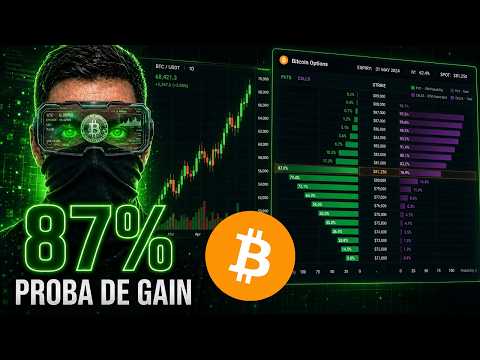
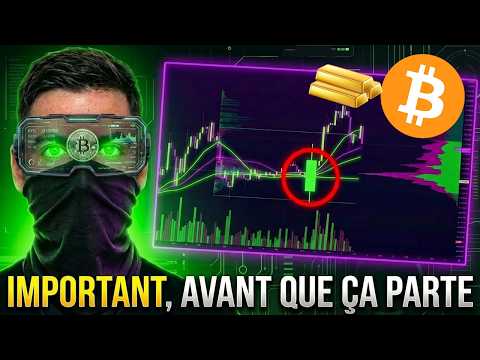
The speaker begins by apologizing for a delay in the video's release, explaining they had been unwell. They then excitedly announce a successful trade, netting $49,900 with a 50% profit on their capital. They highlight the importance of understanding that one can be correct in their analysis but still lose, a crucial concept in trading. The video then delves into the specifics of a Bitcoin trade, showing two entry points and a take-profit target of $75,000, which secured $50,000 in profits. An additional 25% of the capital, currently showing a $17,500 profit, was kept in the trade. The speaker notes the somewhat abstract nature of trading indicators, humorously describing one as "little shiny balls."
Read AI summary
YouTube
This video introduces a powerful, free trading indicator that combines Open Interest and Cumulative Volume Delta (CVD) to identify market traps and predict trend reversals. The creator asserts that if they could only use one oscillator for the rest of their life, this would be it, emphasizing its ability to reveal if price movements are genuine or artificially inflated by leverage. The first component discussed is **Open Interest (OI)**, defined as the total number of open futures contracts in the market. Unlike volume, which represents trades, OI signifies active positions. An increase in OI indicates new money entering the market, while a decrease suggests positions are closing. The core idea is to discern whether a rising price is driven by genuine spot buying or by leveraged positions. If OI rises significantly faster than the price, the movement is considered "leveraged" and therefore fragile. The analogy of a poker room is used: the pot is the price, and OI is the number of players. If the pot grows because 50 new players arrive with leverage, a single bad hand could lead to widespread liquidations. It's crucial to note that OI is only available for crypto futures markets, not traditional markets like the SP500 or metals.
Read AI summary
YouTube
This video introduces several advanced trading indicators and strategies, focusing on how to interpret market movements using mathematical and data-driven approaches rather than speculation. The presenter emphasizes that these methods are not based on crystal balls but on solid analysis, and even offers a chance to win $50 by participating in a comment-based giveaway. A significant portion of the discussion revolves around the "GEX" indicator. The presenter highlights its power and rarity, claiming it was instrumental in a $68,000 profit within days. For those unfamiliar, a tutorial video on GEX is mentioned. The immediate focus is on April 24th, a date marked by a large expiration with substantial amounts of money involved, specifically from market makers. The GEX indicator suggests that significant positive volume waves begin around $72,000 and can extend to $75,000. Any price below $72,000 is expected to be drawn upwards towards this $72,000-$75,000 range. As April 24th approaches, the $75,000 level is anticipated to exert even stronger gravitational pull. The "battle zone" is predicted to be between $72,000 and $74,000-$75,000. If the price is, for instance, at $73,000, the $75,000 pull could become even more dominant. The presenter stresses the importance of understanding GEX, describing it as a free, invaluable tool for "underground traders."
Read AI summary
YouTube
Bitcoin has been trading for months, and there's a prevailing sentiment that crypto, including Bitcoin, is a scam. This view represents the majority, and the speaker questions if being part of this majority is beneficial in the crypto game. The discussion begins with an exploration of new data added to Bitunix, specifically focusing on long open interest, top trader long/short positions, and the liquidation map. The long/short ratio account includes both top traders and regular traders, though the speaker notes a similarity in their charts, suggesting many regular traders might be considered top traders. The speaker highlights peaks in long positions, specifically on March 28th and March 9th, and questions whether these long positions were accurate or if traders were misled. On March 9th, long positions were high, and the price subsequently skyrocketed. On March 28th, the market was closer to a deep than a top, suggesting Bitunix users might be more discerning.
Read AI summary
YouTube
The speaker discusses making a $68,000 profit on a single trade using an indicator unknown to 95% of traders, which they had previously shared on Twitter. This indicator, related to options expiration, accurately predicted the price movement. The speaker clarifies it's not the Max Pain Price, which only 5% of traders are familiar with. The video aims to explain how this indicator works and how viewers can use it for free to profit. To understand the indicator, one must first grasp the role of market makers in the market. When you buy or sell Bitcoin, market makers provide liquidity, acting like casino dealers. They don't bet on price increases or decreases; instead, they facilitate trades by selling when you want to buy and buying when you want to sell. Their profit comes from the spread between the bid and ask prices. Additionally, market makers sell "bets" on Bitcoin's future price, which necessitates hedging by buying or selling actual Bitcoin on the market. These hedging activities often drive Bitcoin's price movements.
Read AI summary
YouTube
This summary provides an overview of the market analysis and trading strategies shared by the "Underground Trader," based on his custom technical indicators and current market observations. **The Underground Trading Philosophy and Custom Indicators**
Read AI summary
YouTube
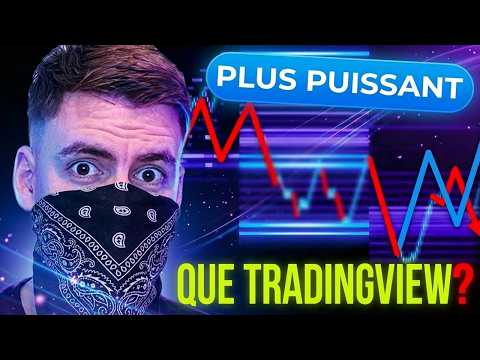
In the world of professional trading, access to deep market data is often locked behind expensive subscriptions. However, the software known as Atas provides a powerful, 100% free alternative for cryptocurrency traders. This tool offers significantly more "alpha" than even the premium versions of TradingView, providing deep-dive capabilities into market mechanics through features like footprint charts, volume profiles, and real-time Delta tracking. Because Atas is free for the crypto market—where most retail and professional activity currently resides—it represents a massive advantage for those looking to read the markets with professional-grade precision. ### Getting Started and Initial Configuration
Read AI summary
YouTube
In this video, the speaker provides a comprehensive update on the current state of the financial markets, focusing on the intersection of geopolitics, oil, and Bitcoin. He begins by addressing a significant news story that he feels is being overlooked: the situation in the Strait of Hormuz. Iran recently blocked this critical maritime passage, creating a high-risk environment for shipping. However, a temporary reopening was recently announced, which caused oil prices to crash. This followed a massive 58% pump in oil prices just days prior, which was then met with a correction of over 30%. The speaker highlights a compelling inverse correlation between oil and Bitcoin. He notes that as oil reached its recent peak, Bitcoin hit a local low. Now that the geopolitical tension regarding the Strait of Hormuz is stabilizing slightly and oil prices are dropping, Bitcoin is beginning to pump. Interestingly, the speaker questions whether Bitcoin is truly behaving as a "safe haven" asset in this scenario, suggesting he is skeptical of that classification.
Read AI summary
YouTube
In the chaotic world of market trading, standard indicators often fail to provide a complete picture of what is happening behind the scenes. This transcript introduces a specialized tool called the "Long Short Volume and Delta Area Fixed Range" indicator, designed specifically to identify trapped long positions, trapped shorts, and over-leveraged traders. Unlike traditional volume profiles that can be misleading, this indicator offers a deeper look into market dynamics by analyzing data beyond simple price candles. The primary issue with standard volume profiles is that they exclusively display market orders. This is a significant limitation because a market long order might actually be offset by an even larger limit short order. Consequently, a trader looking only at market volume might see a bullish signal while the actual price pressure is bearish. This indicator solves that problem by utilizing Open Interest (OI) data, which is considered one of the most accurate data points available on platforms like TradingView. The logic is straightforward: if the price and Open Interest both rise, it is almost certain (99% of the time) that more long positions are opening. Conversely, if the price drops while Open Interest rises, short positions are dominant. This method allows the tool to account for both market and limit orders combined.
Read AI summary
YouTube
This market analysis provides a comprehensive look at the current state of Bitcoin and the broader cryptocurrency market as it enters the month of March. The speaker emphasizes that the upcoming market opening at 15:30 is expected to be "explosive," describing it as a potential "festival of rockets" or significant "squeezes." Because of this anticipated volatility, he advises caution, noting that traditional technical analysis, support and resistance levels, and even on-chain data may become unreliable during the initial market swing. A key focus of the analysis is the monthly opening for March, which is set at $66,460. This level is identified as a critical pivot point; if the price moves sharply upward and retests this mark, it could serve as strong support. Conversely, if the market drops, it may act as a major resistance level. The speaker also notes that the previous month's high was around $78,000, while the previous weeks' levels hovered near $70,000.
Read AI summary
YouTube
In this video, the speaker highlights the "surgical precision" of his recent market analysis regarding Bitcoin. A few days prior, on February 19th, he predicted that Bitcoin would retest the $62,700 level based on TPO (Time Price Opportunity) charts and the behavior of dominant aggressive market actors. This prediction played out exactly as expected, hitting a double bottom at that specific price point. However, despite the accuracy of the dip, he explains that he did not open a long position. His reasoning is rooted in a disciplined trading strategy: in a bearish trend, a trader should look for bounces to enter short positions rather than trying to catch every bottom. The analysis moves into the technicalities of the current Bitcoin range using a one-hour chart and previous weekly opens and closes. The market is currently swinging between several respected levels. He points out a specific instance where a level was broken to the downside before showing a "sign of strength" and breaking back up, though he notes this isn't yet fully confirmed by a candle close. A key tool he utilizes is the Price/Open Interest (OI) divergence. This "counter-trading" signal was visible during recent tops and suggests a potential long-term bearish trend.
Read AI summary
YouTubeBriefTube monitors your YouTube channels, generates AI-powered audio summaries, and delivers them wherever you listen. Telegram, Discord, Slack, or your podcast app. Fully automated.
Start free trial