AI Audio Summaries
7 videos summarized
1 follower on BriefTube
Last summary: Jun 5, 2026

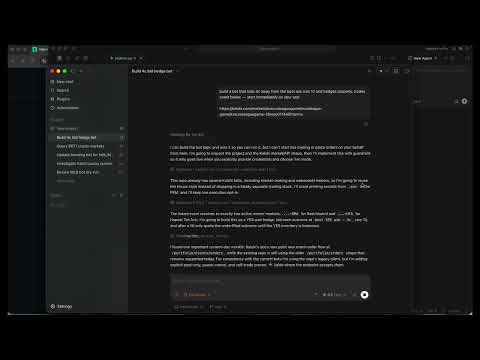
This video demonstrates how advanced AI has become in creating trading bots, making it incredibly easy for anyone to build a bot for their desired trading strategies. The primary AI tool showcased is Codeex, which the presenter praises as phenomenal for quick debugging and bot creation. The presenter uses Cursor, a platform for terminal trading via VPS, where all their bots are set up. None of these bots were manually coded; all were generated by Codeex. The AI has access to Cursor, simplifying the infrastructure setup for bot creation.
Read AI summary
YouTube
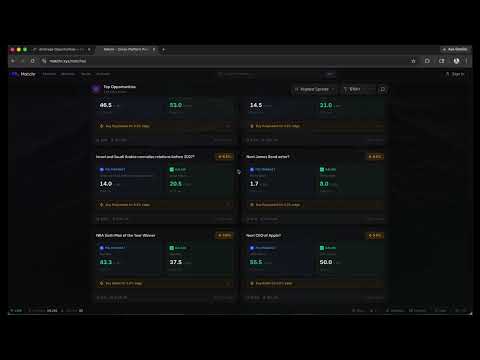
This video introduces two platforms, Matcher and Prediction Hunt, that can be used to easily find arbitrage opportunities across prediction markets like Poly Market and Kalshi, as well as other platforms. Both tools are currently free to use, and Prediction Hunt offers a free API key for bot trading. While Kalshi is US-only, Prediction Hunt supports many other platforms that can be used for arbitrage globally. The speaker suggests that Prediction Hunt is more sophisticated and has a better API. Both platforms present opportunities that are essentially "free money," though users need to factor in fees, which the platforms attempt to account for. Filters can be applied to set a minimum desired profit, such as $100 or $1,000. It's important to note that while some opportunities might appear to be for distant future events, arbitrage prices are expected to converge as markets become more efficient.
Read AI summary
YouTubeBriefTube monitors your YouTube channels, generates AI-powered audio summaries, and delivers them wherever you listen. Telegram, Discord, Slack, or your podcast app. Fully automated.
Start free trial
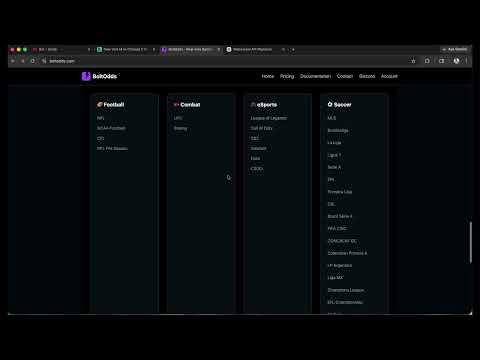
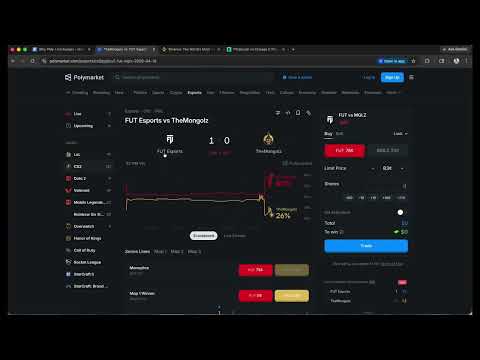
In this video, the presenter discusses their recent venture into coding and running bots on Kelshi, a platform for sports trading. This new capability was achieved with the help of various tools, particularly by "vibe coding" using GPT LLMs. The main focus of the video is introducing a new company called Bolt Odds, launched in 2026, which the presenter uses for sports information to power their trading bots. The presenter highlights Bolt Odds for its exceptional speed in providing sports odds information from dozens of sportsbooks. While acknowledging other fantastic odds operators, Bolt Odds stands out due to its rapid data delivery and incredibly fast onboarding process. Unlike other companies that require days of back-and-forth to set up an API key, Bolt Odds emails the API key within the hour, allowing users to get started very quickly. This quick setup is crucial for efficient bot trading, especially when combined with tools like ChatGPT for coding, or personal coding skills.
Read AI summary
YouTube
The speaker presents five reasons why prediction markets are currently superior to crypto exchanges for making money. The central argument is that prediction markets offer a more accessible and profitable environment for traders. The first reason highlights the unique nature and diversity of prediction markets. Unlike crypto exchanges, which primarily focus on a limited number of assets like Bitcoin and Ethereum for options and futures trading, prediction markets offer a vast array of betting opportunities. These include elections, weather, sports (like esports, baseball, and the Masters), global politics, finance (such as oil), and "mention markets." This wide variety creates numerous unique edges for traders, as opposed to the more constrained options on crypto exchanges where the primary goal is often just predicting Bitcoin's price movement.
Read AI summary
YouTube
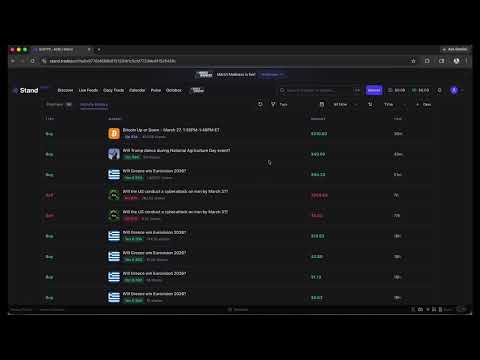
This video introduces a website that allows users to copy or counter trades made by other traders on Polymarket. The presenter highlights this platform as a significant advancement, particularly because it enables users to place limit orders that mirror or oppose the limit orders of other traders, rather than just market orders. The process involves navigating to the "Live Feeds" section to find traders. Once a trader is identified, users can choose to "copy trade." Instead of executing a market order, the platform allows for the use of limit orders. Recommended settings include a 30-day buy limit expiration and a user-defined copy expiration, though the latter might not be essential. The presenter notes that slippage is not a concern when using limit orders exclusively.
Read AI summary
YouTube
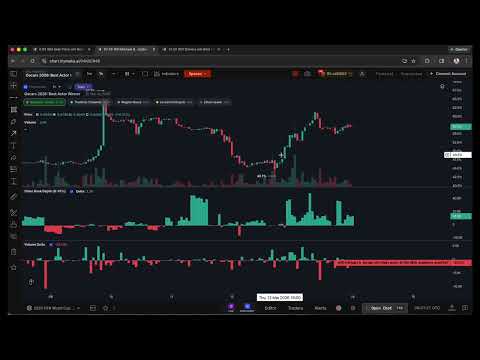
This video explores how to identify "insider" signals on Polymarket using the "fiveminute alpha" tool (also referred to as Kyotaka) to predict upcoming Oscar winners. The speaker argues that order books in prediction markets are uniquely honest because traders are unlikely to place large bids or offers without high conviction. By analyzing order depth and volume deltas, traders can spot where "smart money" is moving before the ceremony. The first prediction focuses on Sean Penn for Best Supporting Actor. The speaker highlights massive volume delta buys occurring just before the current period, combined with a shift toward bullish order depth. With approximately $8,000 in bids currently sitting on the "yes" side, the market signals a high level of confidence that Penn will take the award.
Read AI summary
YouTube
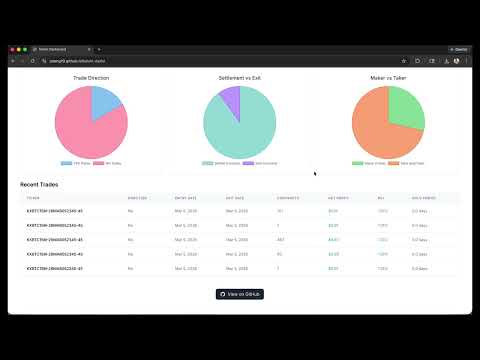
In this performance analysis, the trader reviews their P&L (Profit and Loss) for the year 2026, sharing specific strategies and "alpha" discovered while trading on the Kalshi prediction market. The trader reports a profit of approximately $19,000 for the year so far, noting that while some dashboard figures show higher amounts, the $19,000 figure is the most accurate reflection of their manual trading efforts. Notably, all trading was performed manually without the use of automated bots. The trader’s success is built upon three primary pillars: market making, bonding, and arbitrage. Among these, bonding is highlighted as a dominant strategy that contributes to a high settlement win rate. The analysis breaks down performance across several specific markets, identifying where the most significant profits were generated.
Read AI summary
YouTube