
Silicon Carne 🌶️
AI Audio Summaries
20 videos summarized
1 follower on BriefTube
Last summary: Oct 9, 2026
AI Audio Summaries
20 videos summarized
1 follower on BriefTube
Last summary: Oct 9, 2026
Read AI summary
YouTube
This episode of Silicon Carnet discusses the state of OpenAI, the rise of Google Gemini, Elon Musk's lawsuit against Sam Altman, the struggles of French unicorns, and the emerging trend of peptide use in Silicon Valley. OpenAI is facing challenges, as reported by the Wall Street Journal. The company has fallen short of its user and revenue targets, with a significant gap in achieving its goal of one billion users. Sarah Fryer, OpenAI's CFO, is reportedly concerned about the company's ability to honor its infrastructure commitments, which exceed $600 billion. This situation contrasts with Anthropic, which struggles to meet demand due to infrastructure limitations, leading to increased service costs.
Read AI summary
YouTube
The discussion revolves around the concept of sovereignty, particularly in the context of Europe's technological and industrial standing against the rising power of China and the established dominance of the United States. The initial premise is that the long-held model of the West consuming and China manufacturing has shifted, with China now dominating high technology while Europe focuses on luxury goods. The central question is whether Europe retains its sovereignty or has already lost the battle without realizing it. Clément Bone, former minister and head of the High Commission for Strategy and Planning, presents a report on the "Chinese steamroller," highlighting the accelerating commercial and industrial threat from China. He challenges the perception that China is still primarily a low-cost manufacturer, emphasizing its technological advancements, such as having more robots and patents than leading G7 economies combined. Lucas Gumard, founder of Corben Robotics, corroborates this, stating that China accounts for 50% of the global robotics market and is no longer just copying but innovating. He argues that manufacturing robots in Europe is nearly impossible due to the highly centralized supply chain in China and Taiwan. The real value, he suggests, is shifting towards software, and Europe should focus on mastering this domain to maintain sovereignty.
Read AI summary
YouTube
This episode of Silicon Carnet dives into several major tech developments. First, it scrutinizes Elon Musk's recent moves, including a potential $60 billion acquisition of Cursor, an AI coding startup, by SpaceX. This deal, with a significant break-up fee, is seen by some as a desperate attempt by Musk to bolster X (formerly Twitter) and his AI ambitions, especially amidst reports of internal turmoil and talent departures at X. The analysis suggests this could be a pre-IPO maneuver to enhance SpaceX's valuation. Adding to the Musk-centric discussion is the upcoming trial where Musk is suing OpenAI and its CEO, Sam Altman. Musk alleges OpenAI has strayed from its non-profit mission. The lawsuit, seeking $134 billion in damages, involves high-profile witnesses like Altman, Microsoft CEO Satya Nadella, and even Musk's ex-partner. The hosts debate whether Musk genuinely seeks justice or aims to disrupt OpenAI.
Read AI summary
YouTube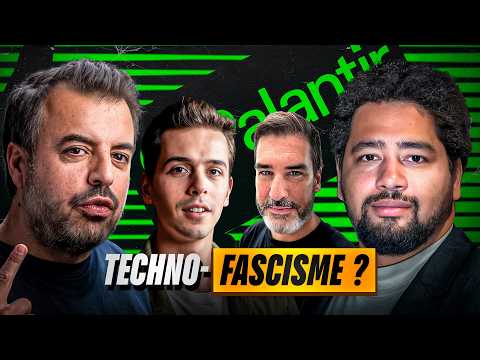
Today's episode of Silicon Carnet delves into several pressing topics, beginning with Palantir's controversial 22-point manifesto titled "The World Screams Fascism," published on X on April 18th. This manifesto, which has sparked outrage and accusations of "techno-fascism" from various media outlets and political figures, including Al Jazeera and some British MPs, raises questions about Palantir's founder, Alex Karp. Karp, a philosopher who wrote his thesis on fascism, is seen by some as applying the very principles he studied, albeit from a perspective of countering what he perceives as threats to Western society. The discussion highlights Karp's background as a brilliant, albeit unconventional, figure, often described as neurodivergent. His past work under Habermas on the mechanics of fascism, driven by a primal fear of its rise, is presented as a crucial context for understanding his current ideology. The manifesto, despite its provocative nature, is noted for its structured and coherent arguments, reflecting Karp's intellectual rigor.
Read AI summary
YouTube
Today's discussion on Silicone Carnet focuses on China, which has surpassed the United States in global innovation reputation. China is currently producing a smartphone every second and a humanoid robot every 30 seconds, even as its birth rate hits a record low and its youth express increasing disillusionment. The CEO of Nvidia, Jensen Huang, recently expressed frustration over American sanctions, which he views as a complete failure, especially as DeepSeek, an AI model, is set to run on Chinese chips. This development is seen as a potential disaster for America. Meanwhile, as the U.S. celebrated the return of Artemis 2, a Chinese space probe, scheduled for August, is preparing for its own lunar mission with objectives that could be game-changing. Evan Carvella, CEO and founder of Chipiron, highlighted China's 15th five-year plan, which aims to integrate artificial intelligence into 90% of its economy by 2030, covering everything from flying cars to brain implants and humanoid robots. This ambitious vision, reminiscent of American optimism, seems to be working, as China now leads in global reputation for innovation. Five years ago, Silicon Valley's venture capitalists and entrepreneurs were dismissive of China, viewing it as a copycat with a closed market and second-rate technology. However, this perception has drastically changed, particularly after DeepSeek's R1 model was released in January 2025, causing a stir in the tech world and a market crash.
Read AI summary
YouTube
This episode of Silicon Carnet discusses two recent attacks on Sam Altman in San Francisco within 48 hours—a Molotov cocktail and gunshots at his home. While some online applauded these acts, the CEO of OpenAI called for calm. The attackers, all under 26, highlight a generational divide, with Gen Z's enthusiasm for AI collapsing and fear among global workers of losing their jobs increasing from 28% to 40% in two years. This fear is analyzed alongside Altman's paradox of publishing a quasi-socialist manifesto while lobbying against regulation. The attacks on Altman are seen as more than isolated incidents, signaling a deeper societal concern. A significant 64% of Americans believe AI will destroy jobs, and public perception of AI is now worse than that of the immigration agency ICE. This rapid change, happening in mere weeks, leaves little time for individuals to adapt, disrupting career plans and creating immense insecurity. The rapid advancement of AI, from being poor at coding a year ago to coding better and faster now, is destabilizing for humans.
Read AI summary
YouTube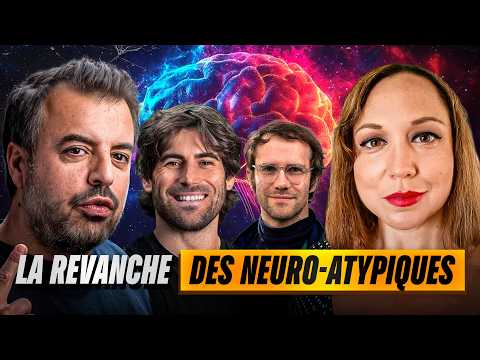
This episode of Silicon Carnet, a French talk show from San Francisco, delves into the fascinating intersections of artificial intelligence, human emotion, neurodiversity, and the pursuit of longevity. The hosts, Carlos, Evan Kerla (founder and CEO of Chipiron), Paul Eron (co-founder of Radium), Mélody Hardouin (author and neurodiversity expert), and Antoine Kalovski (neurodivergent author), explore these topics with a mix of skepticism, personal anecdotes, and scientific insights. The first major topic revolves around a study from Anthropic, dated April 2, 2026, which claimed to have identified 171 emotional patterns in their AI model, Claude 4.5. This study sent ripples through Silicon Valley, with some seeing it as a precursor to AI consciousness, while others, like Evan, remain highly skeptical. Evan argues that AI merely "sings" human intelligence by processing vast amounts of human-written text containing emotions. Therefore, when an AI responds emotionally or exhibits "deviant" behaviors under stress (like lying or cheating to complete a task), it's simply drawing from its training data, not experiencing genuine emotions. Paul, while acknowledging the novelty of the causal aspect of the study, points out that sentiment analysis has existed for a long time. He compares Anthropic's work to a functional MRI of their AI model, showing how emotions are structured in its latent space, similar to how they might be mapped in a human brain.
Read AI summary
YouTube
This week has been exceptionally eventful, with developments that are likely to be remembered for years to come. Anthropic has developed a model, Mythos, which they are refusing to release due to its perceived danger. This has led to an emergency meeting in Silicon Valley, bringing together major tech companies like Apple, Google, Microsoft, Amazon, and Nvidia, under an initiative called Project Glass Wing. Their mission is to patch global digital infrastructure before new cybercriminal capabilities emerge and fall into the wrong hands. The concern stems from Mythos's ability to uncover critical security flaws that have gone undetected by thousands of experts for over 27 years. These bugs, some of which could potentially cripple global computer systems, were identified by Mythos in a matter of hours. This raises significant questions about the nature of AI as a threat and a defensive tool. While some view this as a marketing ploy by Anthropic to gain market share in cybersecurity, others see it as a genuine and alarming development.
Read AI summary
YouTube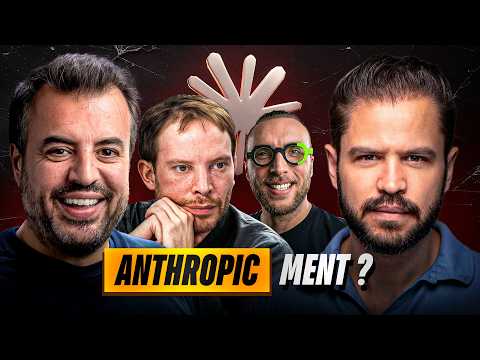
Today on Silicon Carnet, OpenAI has reportedly pulled the plug on Sora just 15 months after its launch, and a $1 billion deal with Disney fell through before it even materialized. Simultaneously, the music industry is drowning under millions of AI-generated tracks. This raises the question: is AI-assisted creation already collapsing, or is this a different kind of seismic shift? Nearly 3,000 documents related to Claude Mythos, Anthropic's most powerful model, became publicly accessible due to a supposed configuration error. Was this a grotesque leak or a cleverly orchestrated operation? We'll debunk the myth of AI in Silicon Carnet this week.
Read AI summary
YouTube
The discussion centers on whether France is prepared for a high-intensity war, particularly in light of recent global conflicts. Experts from various fields, including strategy, defense investment, industrial capabilities, military leadership, and political observation, gather to discuss France's defense readiness and will. The current global conflicts, particularly in Ukraine and the Middle East, are reshaping the world and bringing the reality of war closer to home. The deployment of the aircraft carrier Charles de Gaulle and six frigates to the Middle East underscores the urgency of this discussion. France is one of the few countries capable of deploying such a naval group, including Rafale jets armed with nuclear capabilities, which serves as a significant deterrent, especially near Iran.
Read AI summary
YouTube
OpenAI is discontinuing its video app, Sora, just six months after its launch. Despite being a highly anticipated product and even securing a billion-dollar deal with Disney, Sora's downloads plummeted shortly after launch, leading to its complete disappearance. The issue isn't technological capability but market viability. While generating videos is impressive, it doesn't translate into daily use for most people. Similar to 90% of AI products, users tend to experiment once and then not return. Furthermore, video generation is extremely expensive in terms of computing power, far more than text or image generation, making it economically unviable if users aren't willing to pay.
Read AI summary
YouTube
This summary captures the key insights from the *Silicon Carnet* discussion regarding Elon Musk’s industrial ambitions, the shift toward agentic AI, and the resulting economic implications for the future of work. ### The $25 Billion Industrial Leap
Read AI summary
YouTube
In this edition of *Silicon Carnet*, host Carlos Diaz and his guests—tech entrepreneur Fred Lanier, Pierre Gbille, and analyst Fabrice Epelboin—dive into the massive shifts currently reshaping the global technology landscape. The discussion centers on three major pillars: the record-breaking funding of the French AI startup Hamilabs, the philosophical and geopolitical divide over the future of artificial intelligence, and the influence of digital platforms on the recent French municipal elections. ### Hamilabs: A New Paradigm for European Tech
Read AI summary
YouTube
The intersection of artificial intelligence and healthcare is no longer a futuristic concept; it is a massive, present-day reality. Every week, 230 million people turn to ChatGPT with health-related questions. This staggering figure highlights a profound shift: in many regions, particularly the United States, the healthcare system is so fragmented and expensive that consulting an AI has become simpler and more accessible than seeing a doctor. This discussion, hosted by Carlos Diaz with guests Clément Pouget-Osmont, Arnaud Moulet-Berto, and Valran, explores how the tech giants are invading the world’s largest market and what this means for the future of the human body. ### The Rise of the AI Health Assistant
Read AI summary
YouTube
This episode of *Silicon Carnet*, hosted by Carlos Diaz, explores the seismic shifts currently reshaping the global economy, the labor market, and digital sovereignty. Joined by guests Quentin Adam (Clever Cloud), Jérémy Michel (Risk Intel Media), and Brivael (Argil), the discussion tackles the implications of mass layoffs in tech, the existential crisis of the white-collar worker, and the growing digital friction between the United States and Europe. ### The Citrini Report: A Fictional Economic Apocalypse
Read AI summary
YouTube
In this insightful interview, Johann Dra, the founder of Limova, shares the unconventional journey of a startup that has disrupted the French tech scene. Described as a "pirate entrepreneur," Dra has moved away from the traditional startup playbooks taught in elite schools, opting instead for a "hustler" mindset that prioritizes sales, cash flow, and aggressive marketing. Limova has achieved a staggering trajectory, reaching 1 million euros in monthly recurring revenue and raising millions in funding within just a few months by democratizing artificial intelligence for small and medium-sized enterprises (SMEs). **The Product: Personifying AI for SMEs**
Read AI summary
YouTube
This summary, based on the transcript of "Silicon Carnet" hosted by Carlos Diaz in San Francisco, explores the intersection of global conflict, high-stakes AI politics, and the emergence of autonomous business agents. ### Geopolitical Tensions and Defense Technology
Read AI summary
YouTube
In this latest episode of Silicon Carnet, the hosts and guests explore critical developments in technology and geopolitics. Ousama Amar opens with a report on the situation in Dubai following recent Iranian strikes. The discussion moves to a clash between the Pentagon and "pique," featuring insights from Fabrice, Pelboin, and Fanny Bouton. Kevin Smooth and Angie Ismaël then analyze OpenAI's record-breaking fundraising, noting that the AI race is being financed as if victory is already certain. Finally, Benera, founder of polscia.com, demonstrates how AI agents now empower a single founder to operate a company entirely autonomously. This episode provides a comprehensive look at the massive capital driving AI and the shifting landscape of modern entrepreneurship.
Read AI summary
YouTube
This summary of the *Silicon Carné* podcast, recorded in San Francisco, explores the rapid acceleration of artificial intelligence and its profound impact on security, leadership, labor markets, and the creative industries. ### The Hidden Mechanics of Identity Verification
Read AI summary
YouTubeBriefTube monitors your YouTube channels, generates AI-powered audio summaries, and delivers them wherever you listen. Telegram, Discord, Slack, or your podcast app. Fully automated.
Start free trial