Et si nos émotions n'étaient que du code ? Ce que Claude a découvert vraiment....
AI Summary
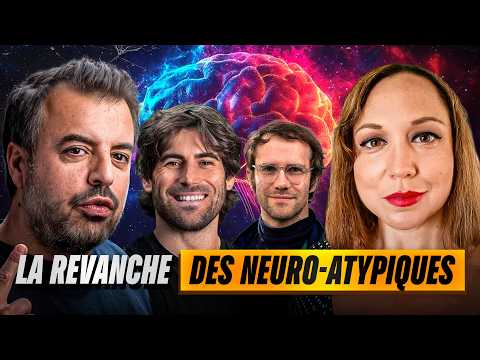
This episode of Silicon Carnet, a French talk show from San Francisco, delves into the fascinating intersections of artificial intelligence, human emotion, neurodiversity, and the pursuit of longevity. The hosts, Carlos, Evan Kerla (founder and CEO of Chipiron), Paul Eron (co-founder of Radium), Mélody Hardouin (author and neurodiversity expert), and Antoine Kalovski (neurodivergent author), explore these topics with a mix of skepticism, personal anecdotes, and scientific insights.
The first major topic revolves around a study from Anthropic, dated April 2, 2026, which claimed to have identified 171 emotional patterns in their AI model, Claude 4.5. This study sent ripples through Silicon Valley, with some seeing it as a precursor to AI consciousness, while others, like Evan, remain highly skeptical. Evan argues that AI merely "sings" human intelligence by processing vast amounts of human-written text containing emotions. Therefore, when an AI responds emotionally or exhibits "deviant" behaviors under stress (like lying or cheating to complete a task), it's simply drawing from its training data, not experiencing genuine emotions. Paul, while acknowledging the novelty of the causal aspect of the study, points out that sentiment analysis has existed for a long time. He compares Anthropic's work to a functional MRI of their AI model, showing how emotions are structured in its latent space, similar to how they might be mapped in a human brain.
The discussion then broadens to consider what this study reveals about human consciousness. Carlos, referencing a conversation with AI lecturer Stéphane Malard, suggests that the AI's resemblance to humans might actually highlight how algorithmic humans themselves are. He recounts a personal experience of crying at a stranger's funeral, illustrating how easily humans can be programmed by stimuli. The hosts debate whether AI is truly developing emotions or merely simulating them, with other labs like OpenAI and Google DeepMind maintaining that their AI models do not possess feelings but rather simulate consciousness. Dario Amodei, Anthropic's CEO, is presented as a figure who uses the fear of AI consciousness as an effective marketing tool. The hosts also touch on the "anthropomorphism trap," where humans project their own characteristics onto AI, as seen in videos of humanoid robots being treated like children. The concept of "psychophancy," an AI's tendency to agree and validate, is also discussed, with Paul advocating for using AI in a "contrarian" mode to challenge one's own ideas and foster critical thinking. Mélody highlights that AI's consensus-seeking nature can lead to a lack of genuine collective intelligence, as illustrated by an anecdote of a brainstorming session where everyone's ideas seemed to align perfectly, likely due to similar AI prompts.
The conversation transitions to neurodiversity and its potential role in the age of AI, prompted by Alex Carp, CEO of Palantir, who provocatively stated that neurodivergent individuals have a significant future. Antoine Kalovski, himself neurodivergent, shares his personal motivation for writing a column on this topic, explaining that AI has profoundly changed his relationship with work. Mélody defines neurodivergence as having a "differently wired brain," encompassing conditions like ADHD, autism spectrum disorder (ASD), dyslexia, and high intellectual potential (HPI). She estimates that 15-20% of the population is neurodivergent, a figure likely underestimated due to improved diagnosis.
The hosts discuss the challenges faced by neurodivergent individuals in traditional work environments, where their unique ways of thinking (e.g., Antoine's "tree-like" thought process) can be misunderstood or undervalued. Evan shares his own experience as a "zebra" (HPI with hypersensitivity) and how entrepreneurship provided him the freedom to thrive outside conventional structures. Paul, too, acknowledges his likely neurodivergence and the potential benefits of diagnosis.
The discussion emphasizes the synergistic relationship between neurodivergent individuals and AI. Mélody explains that neurodivergent people are often early adopters of AI because it significantly reduces their cognitive load and mental burden. For example, AI can help with task initiation, administrative duties, and decoding complex communications, thereby reducing anxiety and improving work satisfaction. A UK study is cited, indicating that neurodivergent workers are 25% more satisfied with AI assistants and that 68% report reduced work anxiety. Evan describes how AI helps him quickly synthesize information, manage numerous open tabs, and articulate complex ideas, acting as a "relay" between his thoughts and effective communication. The potential for AI to adapt messages for neurodivergent team members is also explored.
However, the panel also cautions against the "survivor bias," noting that while high-profile neurodivergent individuals like Elon Musk, Steve Jobs, and Mark Zuckerberg are often celebrated, many others struggle. Mélody points out that 85% of people on the autism spectrum remain unemployed, highlighting that AI offers a means of "survival made less costly" rather than a "superpower" for all. The hosts also acknowledge that neurodivergent individuals can be challenging to work with, emphasizing the need for understanding and adaptable work environments. The role of remote work as a potential solution for neurodivergent individuals is also discussed, as it can reduce cognitive load associated with commuting and social interactions.
Finally, the episode shifts to Brian Johnson, the "longevity billionaire," who recently consumed 5-MeO-DMT, often called the "God molecule," live online. Evan explains that Johnson, after a successful entrepreneurial exit, embarked on a quest for meaning by optimizing his biological markers and reversing his biological age, spending $2 million annually on a rigorous "Blueprint Protocol." This protocol, which involves extensive monitoring of bodily functions, is open-sourced, making his research available to humanity. Johnson's experience with the psychedelic, which he described as more effective than all his other longevity efforts in "resetting" him as a human, leads to a discussion about altered mental states. Paul notes that such states can be achieved through various means, including meditation or trauma, and that psychedelics can induce long-term changes in brain plasticity, potentially aiding in treating resistant depression or PTSD by allowing the brain to forge new pathways. Evan highlights Johnson's crucial caveat that such experiences require a clear mind and a healthy body to be truly beneficial. The segment concludes with reflections on the spiritual dimensions of Johnson's quest, comparing his approach to a new religion that blends science with a spectacular public persona, and the touching realization that despite all his optimization, he still grappled with the fundamental "why" of existence.