One Piece Team Answers The BIG Question About What's Next For The Live-Action Show
AI Summary
The Netflix live-action adaptation of One Piece has been a resounding success, with fans and critics alike praising its first two seasons and with a third season currently in production. The creators behind the show, including executive producer Becky Clements, co-showrunner Joe Tracz, and writer Ian Stokes, recently discussed their approach to adapting the beloved manga, their collaboration with creator Eiichiro Oda, and the show's future.
A core tenet of the adaptation process is a strict adherence to the original manga as the primary source material. The team emphasizes that they are adapting the manga, not the anime. This decision stems from a desire to maintain the "beauty and purity" of Oda's original work, avoiding the potential for losing nuance by going through an intermediate adaptation. While they acknowledge the anime's popularity, they note that it sometimes diverges from the manga and includes non-canonical storylines. Therefore, the live-action series treats the manga as the definitive "Bible" for the story, aiming to translate its pages directly to the screen. This commitment to the manga is reflected in their casting process, where they initially requested actors to read only the manga to avoid anime-influenced performances.
A crucial element of the show's authenticity is the deep involvement of manga creator Eiichiro Oda. Oda is actively engaged in the production, reviewing outlines, scripts, cuts, casting decisions, and concept art. His approval is required for all creative choices, and he has the power of veto. The producers recount instances where Oda insisted on including elements even when budget constraints were a concern, famously stating, "But find the money." They describe his notes on scripts as exceptionally thoughtful and rewarding, highlighting his profound understanding of his own creation. Oda's active participation is seen as invaluable, ensuring that the live-action adaptation remains true to his vision. Even seemingly minor details, like the poetic representation of a cloud over the Drum Island's drum, were refined based on Oda's input, emphasizing the balance between realism and the emotional resonance of the story.
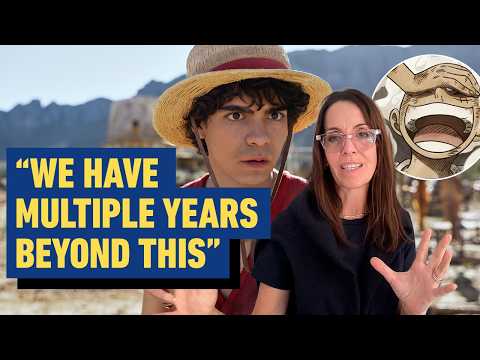
The longevity of the One Piece series presents a significant challenge for adaptation. With the manga already exceeding 1,000 chapters and the anime requiring over 450 hours to watch, the live-action show faces a monumental task. While the series is moving at a faster pace, it's estimated to take at least a decade to cover the existing story. When asked about the show's future, the producers expressed a commitment to continuing the series for many years, with plans extending well beyond the immediate seasons. While some optimistic estimates have suggested up to 16 seasons, the more grounded expectation, aligned with Oda's vision, is in the range of 8 to 10 seasons. The goal is to tell a complete story that Oda intends for the live-action format, ensuring that the characters and world are fully realized before concluding.
Season two saw several notable changes and additions to the original story, including the earlier introduction of characters like Bartolomeo, Brook, and Sabo. These decisions were driven by various factors, including the practicalities of filming and the desire to enrich the narrative. For instance, hiding characters in silhouettes is difficult in live-action, necessitating earlier reveals. The wealth of knowledge about the story's future allows the writers to plant seeds earlier and provide characters with dimensions not yet present in the manga at that point. The introduction of Bartolomeo in Log Town, for example, was a fan-favorite moment that added a crucial element of character interaction and emotional impact to an otherwise sparse episode. Similarly, Brook's inclusion in a flashback scene was vital for developing Sanji's character arc, connecting his past trauma with his mother to his present relationships within the crew.
The casting and performance of the actors have also been a significant factor in the show's success. The writers have found it increasingly fulfilling to write for the specific actors, tailoring lines and scenes to their unique voices. This collaborative approach, where actors often improvise and contribute ideas, has led to memorable moments, such as Jacob Romero's unscripted lines as Usopp. The team embraces this organic process, believing that if a moment resonates with the cast and crew, it will likely connect with the audience.
The adaptation of Sanji's backstory, particularly his childhood trauma with his mother, was a key focus for season two. Instead of relying solely on flashbacks, the writers opted for a powerful monologue delivered by actor Taz Skyler, allowing him to convey the emotional weight of Sanji's experiences directly. This approach was chosen to leverage Skyler's acting prowess and deliver a more immediate and impactful emotional experience.
Even seemingly small details, like Zoro's fight against 100 Baroque Works agents, were meticulously recreated, sometimes requiring stunt performers to play multiple roles. The commitment to visual fidelity extends to subtle nods and Easter eggs for manga fans, such as the Denden Mushi playing familiar anime theme songs or the inclusion of Loki's statue before his manga reveal. These elements are carefully integrated to enhance the experience for dedicated fans without alienating newcomers.
The introduction of the mutant army in the season finale, though not present in the manga, was inspired by a manga moment where characters fuse. This creative decision allowed for a visually spectacular climax and provided an opportunity for the practical effects team to showcase their talent. Similarly, the original character Miss Thursday was conceived in collaboration with Oda, who provided a design that connected to future characters.
The absence of Karu, Vivi's duck companion, from season two was a difficult decision, attributed to narrative choices that would have strained believability. However, the creators ensured Karu was acknowledged in spirit, with Vivi referencing him and the character's role in Whiskey Peak being humorously filled by a bakery cart. Fans can anticipate Karu's return in season three, which will explore one of the producers' favorite epic sagas from the manga.
The production of season three is well underway, with larger sets and expanded locations. The team is committed to maintaining the high level of detail and incorporating fan-favorite elements, with the manga always present on set as a constant reference. The dedication of the entire crew, from production designers to costume artists, in weaving in manga references underscores their passion for the source material and their desire to create an authentic experience for the audience. The show's success is a testament to this collaborative effort and the deep respect for One Piece that permeates every aspect of its production.