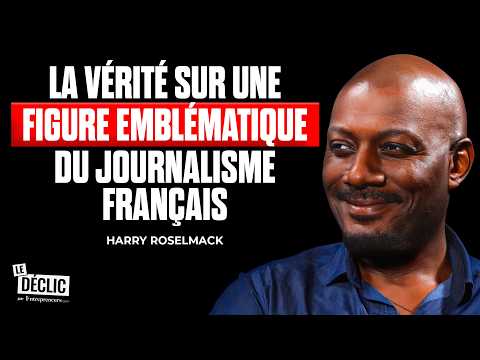
Harry Roselmack : Ce que 20 ans de journalisme m'ont appris sur l'être humain
AI Summary
Harry Roselmac, a prominent French journalist and television presenter, reflects on his extensive career and evolving perspectives in an interview. He begins by discussing his childhood in Tours, describing it as happy and fortunate, thanks to his parents and supportive environment. He highlights the importance of parents and the early influence of his father, a radio host, which sparked his interest in media. Roselmac started presenting news bulletins at 15 or 16, solidifying his early ambition to be a journalist, driven by curiosity and a love for people and words.
His passion for judo, which he practiced from age 7, taught him valuable lessons in physical and mental strength, respect for rules, and dealing with others. He emphasizes judo's moral code, the importance of greeting opponents and masters, and the symbolic power of learning to fall and get up, paralleling it with life's challenges.
Roselmac recounts his journey before TF1, spending 10 years in radio, starting at Média Tropical, a community radio station. He views all his professional experiences as valuable and fulfilling, focusing on the present moment rather than solely on a future destination. He expresses a deep fondness for radio as a medium.
His transition to television wasn't a childhood dream but an opportunity that arose. He joined Canal+ and Télé for a year before moving to TF1. The offer of a 30-minute news program at Canal+ was more appealing than the medium itself, as it offered a structured format with guests, a departure from the short bulletins he did at France Info. He joined TF1 in 2006, presenting the 8 PM news for the first time to millions. He describes the experience as relatively relaxed, despite the inherent pressure, attributing his composure to thorough preparation and exceptional support from the TF1 newsroom. He stresses that preparation is key, providing a safety net for improvisation when unexpected events occur.
For 20 years, Roselmac has hosted "7 à 8," a Sunday news magazine. He explains that this longevity doesn't feel stagnant because news is constantly evolving. The show's strength lies in the people featured, their stories, and the access reporters gain, ensuring a continuous renewal of content. He maintains his sense of wonder and empathy for the individuals he encounters, which prevents him from becoming jaded. He believes his passion for humanity and life fuels his motivation.
Roselmac acknowledges that media often focuses on negative news due to a cognitive bias favoring danger and survival instincts. However, he argues against abstaining from news entirely, stressing the need for tools to manage information and understand one's place in the world. He views journalism as a powerful force for good, aiming to expose injustice and contribute to positive change. He likens consuming information to drinking water: one needs to learn how to consume it effectively rather than stop altogether.
He expresses concern about the world's imbalance, where technological mastery has outpaced ethical standards. This gap, he warns, could be dangerous and potentially lead to humanity's self-destruction. Despite this, he remains optimistic, finding reassurance in the consistent conclusions reached by brilliant minds exploring the world and human nature. He believes humanity is more ready than ever to embrace wisdom and that a global shift in mindset can radically change life on the planet. He identifies as an evolutionist, believing human evolution is ongoing, with the acquisition of knowledge and values leading towards wisdom.
Roselmac's personal journey into philosophy and metaphysics was prompted by aging, a deeper inward reflection, and a desire to understand. He found that understanding reduces fear, and his work on fear, particularly for his book "Love Despite Fear," led him to explore these profound subjects. He emphasizes that philosophy must be embodied in life, not just pondered.
He addresses criticism and external opinions, particularly regarding his decision to leave the 8 PM news in 2011. He stresses the importance of listening to oneself and making personal choices, even if they are misunderstood by others. He clarifies that his decision was not about representing a specific community but about his own path. He values constructive criticism but dismisses non-constructive feedback. He found criticism of his personal projects, like his film "Fracture," more difficult to handle as it felt like a personal attack.
On managing his diverse activities, Roselmac highlights organization and a strong support network as crucial. He advocates for delegation and surrounding oneself with competent people to pilot various ventures effectively.
His film "Fracture" emerged from his journalistic immersions, exploring community dynamics in France and the possibility of human connection transcending differences. He co-founded Humanitown, a digital university for independent artists, to defend art and equip musicians with entrepreneurial skills to monetize their talents. He believes the rise of independent work necessitates this entrepreneurial education.
Roselmac's philosophical and metaphysical essays, published by Jouvance, stem from his desire to share insights and have a positive impact. An impactful experience in Senegal, where he was symbolically named "Messenger," reinforced his mission to transmit messages and foster change.
He redefines courage not as the absence of fear but as facing it. He posits that fear, a natural survival mechanism, has become pervasive, hindering love, passion, and curiosity. He believes reducing the role of fear allows love to flourish, leading to a more harmonious existence for individuals and society.
Ultimately, Roselmac identifies "humanity" as the common thread connecting all his endeavors. His deep empathy and interest in people, evident since childhood, drive his curiosity and desire to connect. He sees journalism as a vital field for understanding human nature and combating misinformation, emphasizing that reporting, the act of going to people and sharing their experiences, is fundamentally a human endeavor that AI cannot replicate. He encourages young people to pursue journalism, highlighting its importance in an era of abundant but often unreliable information.