Devenir LA référence de son marché : pourquoi personne ne vous aide à le faire ?
AI Summary
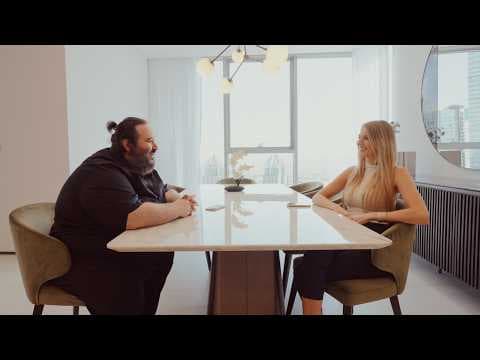
In this conversation, Ousama Ammar meets with Amandine, a high-level business coach based in Bali, to discuss the mechanics of personal branding, the transition from traditional careers to entrepreneurship, and their new collaborative framework, "#Ref." The discussion centers on how to transform professional competence into market authority and significant revenue.
### From Law to Bali: Amandine’s Entrepreneurial Leap
Amandine shares her journey from a traditional legal background in Switzerland to becoming a marketing expert in Bali. Despite being on track to become a law firm partner, she felt a disconnect. During the COVID-19 pandemic, she and her partner, Micha, decided to leave everything behind. With no financial safety net, they moved to Bali to build a business from scratch.
Her first success was rapid: within 30 days, she secured six clients—three for free and three paid—by creating an offer alongside her target audience. Within three months, her coaching business was generating over €11,000 per month. This experience solidified her belief that anyone can succeed on social media if they master specific skills and maintain extreme discipline.
### The Philosophy of Becoming a Reference
Ousama and Amandine dissect why most entrepreneurs fail to gain traction online. Ousama identifies "Baker Syndrome" as a primary obstacle: the belief that being the best at your craft is enough to attract customers. He argues that it is the entrepreneur's responsibility to be understood, not the world’s responsibility to find them.
A key insight Ousama offers is that quantity leads to quality. He compares mastery to Japanese artisans who repeat the same task for decades. To become a reference, one must produce a high volume of work to find the "moments of grace" that resonate with the public. Furthermore, he emphasizes that personal branding should follow a strict hierarchy: first, be known for what you can do (competence); second, for who you know (network); and only finally, for who you are (vulnerability and personal anecdotes).
### The 6-Pillar Methodology: The "#Ref" Framework
Amandine introduces her structured approach to building authority and converting visibility into sales. This method is divided into two phases: Visibility and Conversion.
**Phase 1: Visibility (Becoming Magnetic)**
1. **Positioning:** Entrepreneurs must find a "Blue Ocean" by becoming a specialist in a narrow niche. You shouldn't aim to be the #1 entrepreneur in a country, but rather the only person doing exactly what you do.
2. **Marketing Message:** Amandine suggests looking at the US and UK markets for inspiration. Because these markets are hyper-competitive, their messaging is forced to be excellent.
3. **Content Creation:** Content must solve a specific problem for a specific "avatar." It should be SEO-driven and aligned with market demand, rather than just what the creator finds interesting.
**Phase 2: Conversion (Turning Views into Cash)**
4. **Irresistible Offer:** The offer must have "Product-Market Fit." Amandine uses a candidacy system to gather data from potential clients, allowing her to refine the offer based on their actual words and needs.
5. **Systems & Automation:** Using tools like ManyChat, Amandine automates the transition from a social media follower to a lead. This includes keyword triggers in comments and stories that lead to automated funnels.
6. **Shortening the Sales Cycle:** In France, the typical sales cycle for a high-ticket item is six months. By using automated trust-building (newsletters, podcasts, and YouTube), Amandine aims to match the US standard of two weeks.
### Ousama’s Strategic Enhancements
Ousama adds four "cements" to strengthen this methodology. First, he emphasizes **Storytelling**, a skill often neglected in the French-speaking world. Second, he suggests **Advanced Automation** beyond simple chat bots to create a "content factory." Third, he introduces the concept of a **Common Enemy**; a strong brand is defined as much by who it refuses as who it accepts. Finally, he advocates for **"Rising in a Pack,"** using community resonance and group momentum to amplify individual success.
### Spotting Potential and Driving Results
The conversation shifts to the psychological barriers of students. Amandine notes that many people fail to apply simple advice because they believe success must be complicated. To combat this, she uses a "traffic light" system in her coaching: green for those on track, orange for those needing a watchful eye, and red for those who are stalled and need a "whip" to move forward.
Ousama discusses his ability to spot "raw diamonds"—individuals with untapped potential. He believes the most important criterion for success is "Founder-Market Fit." He argues that entrepreneurs should focus on what they are naturally good at rather than struggling to climb mountains they aren't equipped for.
### Conclusion: The Launch of #Ref
The video concludes with a case study of a dentist who rebranded as "Smile Media." By shifting from clinical content to premium, US-inspired storytelling, he went from stagnant growth to 35 million views and 13,000 new followers in a single month.
Ousama and Amandine decide to merge their expertise into the "#Ref" program. They invite entrepreneurs to apply, looking for those with a scalable offer and a "no plan B" mindset. Their goal is to select high-potential pépites (gems) and provide them with the authority, systems, and storytelling needed to dominate their respective markets.