The Day Minecraft Sold Its Soul
Audio Summary
AI Summary
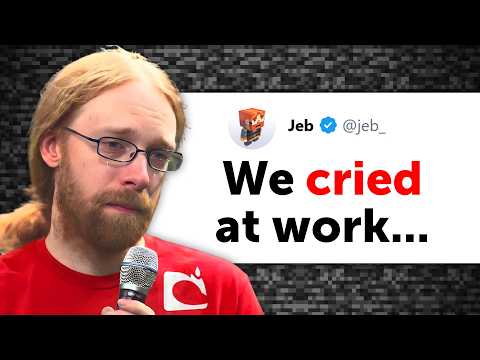
The acquisition of Mojang by Microsoft in 2014 brought significant changes, not all of them positive. Lead developer Jeb noted that the acquisition led to a period of low morale, with colleagues openly crying. Microsoft introduced stressful performance targets, and the founders, including Notch, all left within months. Mojang employees faced pressure from Microsoft's time zone difference, leading to late-night meetings, and a constant feeling of needing to defend their work. A controversial proposal to add tornadoes, which could destroy player creations, exemplified the disconnect with Microsoft's corporate culture. Furthermore, the tradition of a $12,000 Christmas bonus for employees was eliminated by Microsoft, despite executive bonuses remaining high. The creative process at Mojang was described as being filtered through layers of corporate bureaucracy.
The game's community also presented challenges. When Mojang announced concept features for the 1.19 update, they were unable to complete them all due to unsustainable workloads, a fact they admitted publicly. This led to community harassment on social media, with some public-facing employees receiving death threats. The community's tendency to treat any random statement as a promise for new updates or to inflate minor issues into drama was highlighted. For instance, when a developer shared personal excitement about the game's future, it was misconstrued as an announcement of unrevealed updates, prompting a clarification from the developer. Similarly, a new head of vanilla Minecraft, Katie Scott, faced harassment based solely on her past work experience at studios known for microtransactions.
A particularly egregious consequence of the Microsoft acquisition was the dismissal of C418, the composer of Minecraft's iconic soundtrack. C418, whose real name is Daniel Rosenfeld, had a history of working in manual labor before discovering music production. He joined an indie game forum and met Notch, who was struggling to find suitable music for Minecraft. C418's ambient and acoustic style, contrasting with the typical chiptune music of indie games at the time, proved to be a perfect fit. Notch granted him complete creative freedom and 100% of the rights and royalties. C418's music, characterized by its calming atmosphere and strategic use of silence, became an integral part of the Minecraft experience. After the success of his first album, he was able to quit his factory job and live off royalties. His second album, released in 2013, expanded the soundtrack with darker, more electronic themes.
Upon Microsoft's acquisition of Minecraft in 2014, C418 was asked to give up all rights to his music to continue composing for the game. He refused, and a planned third album remained unreleased. While he contributed three tracks in 2018, these were his final contributions. Microsoft subsequently hired new composers, such as Lena Raine, whose work, while talented, is owned by Microsoft. C418, unable to monetize his Minecraft music directly under Microsoft, co-founded an indie game studio, Ivy Road, and released the soundtrack for their game, Wanderstop. He also began selling his Minecraft albums on vinyl independently. In a significant recognition of his work, C418's first Minecraft album was added to the Library of Congress in 2023, being only the second video game soundtrack to receive this honor. This event garnered significant attention, focusing solely on C418, much to Microsoft's likely chagrin.
The End Poem, a text displayed after defeating the Ender Dragon, also has a troubled origin story. Julian, a writer with a spiritual style, was contacted by Notch via Twitter to create the poem. After playing Minecraft to understand its essence, Julian wrote the poem, which Notch loved. However, Notch referred Julian to Carl, a business graduate and major shareholder at Mojang, for payment. Carl, described as ruthless, offered Julian $20,000 and a vague promise of promotion. Julian, unaware of Minecraft's immense value and facing financial struggles, accepted. He did not sign a contract before the money was sent, and when he finally received it, he was frustrated. He did not sign the contract, which would have entailed signing away all rights and included an NDA. Following this, Notch distributed a $120,000 bonus to his employees, significantly more than Julian received for his work. Carl later sent the contract, which Julian discovered would have made him sign away all rights in perpetuity and prevent him from taking credit for his work. This resurfaced as Microsoft was in the process of acquiring Mojang for $2.5 billion, with Carl needing to secure the rights to the poem. Julian again refused to sign. Carl, using vague emails as leverage, proceeded with the deal. Notch was also displeased, and Julian, left with no money, released his poem into the public domain. Despite this, Julian understood Carl's perspective, viewing him as a corporate finance professional likely acting on perceived rational economic principles.
Notch, the creator of Minecraft, is characterized by his impulsivity. This trait led him to quit his job at King to pursue game development independently. He was inspired by Infiniminer to create Minecraft, which experienced rapid organic growth. This success reinforced his belief that quitting difficult situations would lead to positive outcomes. Notch's impulsivity also manifested in his inability to commit to projects. After two years of developing Minecraft, he passed the lead role to Jeb, who is credited with its continued success. Notch then began working on a sequel, 0x10c, but abandoned it due to its complexity and the need for sustained commitment. This impulsivity extended to his personal life, with a divorce occurring around the same time he relinquished control of Minecraft.
Notch's public persona also became a source of controversy. He was banned from Twitter for expressing controversial and offensive views, including racist and anti-Semitic sentiments, and espousing conspiracy theories. This led to Microsoft scrubbing his name from the game, removing his mention from splash texts and anniversary celebrations. Following the sale of Minecraft to Microsoft for $2.5 billion, Notch purchased a lavish mansion and started a new studio, Rubber Brain AB. Despite his wealth, he experienced isolation and a lack of purpose. His political extremism and offensive tweets led to widespread criticism and his cancellation. He later rebranded his studio to BitShift Entertainment and began working on a new game, "Levers and Chests." However, he polled his audience on whether he should create a "Minecraft 2," which was met with legal threats from Microsoft. Despite his past actions, there are signs of a potential shift towards a more positive path, with a less offensive online presence and a renewed focus on game development.
Microsoft's monetization strategies for Minecraft have also been a point of contention. The Bedrock Marketplace operates under an "anti-competitive flywheel" model, where Microsoft locks in users and suppliers, eliminates competition, and forces suppliers to accept low prices, taking a significant cut (62.5%). This model aims to strengthen their monopoly and entice Java creators to move to Bedrock. Companies like Noxcrew, saved from bankruptcy by becoming Bedrock Marketplace partners, still see Microsoft earning significantly more than they do. While the marketplace offers some creators the ability to go full-time, it is criticized for its monopolistic nature and the low percentage of revenue retained by creators. Microsoft's actions are framed within the context of US corporate law, which prioritizes shareholder profit maximization, a principle established by landmark cases like Dodge v. Ford.
Mojang has also made several controversial decisions since the Microsoft acquisition. The abrupt banning of Pay-to-Win servers in 2014, though intended to protect players from predatory monetization, caused significant backlash and led to the downfall of many servers. This event is considered Mojang's first major mistake. The 1.9 combat update, which introduced attack cooldowns and shields, fundamentally changed Minecraft's combat and alienated many PvP players, leading to a split in the community and the refusal of major PvP servers to update. The update was so controversial that it has not been implemented on Bedrock Edition. Subsequent updates were sparse and criticized for their lack of content, leading to a period where Minecraft was perceived as "dying."
In an effort to revive the game, Mojang implemented several changes. The Better Together update unified mobile, Windows, and console editions into Bedrock, a decision that was controversial for console players due to bugs and feature disparities, but ultimately seen as a positive step towards platform unification. The SuperDuper Graphics Pack, announced at E3 2017, was ultimately canceled due to technical demands, leading to a loss of player trust. The decision to change parrots' food source from cookies to seeds, based on a Reddit post about potential toxicity, demonstrated an overly cautious approach. The mob vote, while intended for community engagement, was criticized for underwhelming winners, disappointing the majority of voters, and fostering infighting.
These mistakes led to a period of adaptation. Mojang learned to maintain a high quality bar without hindering progress, avoid overhyping unconfirmed features, and better understand community desires. Updates like 1.13 (Oceans) and 1.14 (Villages) were well-received. The subsequent 1.15 update, though content-light, focused on internal improvements, which was initially perceived as lazy, prompting Mojang to ensure subsequent updates had sufficient new content. This led to updates like 1.16, widely regarded as one of the greatest Minecraft updates.
More recent challenges include older features becoming out of place, such as durability on items when max gear is easily obtainable, and the inventory system, which can lead to the loss of entire playthroughs. Potions are also considered too short or expensive to be practical. The game's chat reporting system, implemented to prevent grooming and harassment, has been criticized as an "astronomically stupid decision" that negatively impacts Java servers and is seen as an attempt to make Minecraft more family-friendly, despite the average player being in their mid-20s. The system has been poorly implemented and communicated, and Java servers have found ways to bypass it.
Other perceived mistakes include the removal of a movement glitch that allowed faster diagonal and crouching movement, which impacted parkour maps and PvP. Experimental changes to redstone mechanics, including eliminating directionality and altering minecart behavior, have been met with criticism from the redstone community, with concerns that complexity is being removed rather than accessibility being improved. The mob vote system continued to face criticism, particularly regarding its timing and perceived bias. Mojang eventually canceled the mob vote, learning that community satisfaction through liked updates is more important than engagement metrics. They have shifted to adding new mobs without a vote.
Mojang has also shifted from yearly updates to smaller "game drops," which, while potentially leading to less hype, aim for a more balanced approach. The hiring of modders, such as Fisk and Brandon (King B-Dogs), by Mojang is seen as a positive sign of their respect for the community. Fisk, known for his superhero mods, was hired for his extensive work with the Minecraft codebase and his HeroPack system. Brandon, creator of the influential Aether mod, was hired after his contributions to features like the Strider, Soul Speed enchantment, and the Warden. His influence is evident in upcoming updates, suggesting a continued integration of modding concepts into the official game. The company's size and diverse history mean there isn't a single, morally consistent narrative, but rather a mix of positive contributions and "skeletons in the closet."