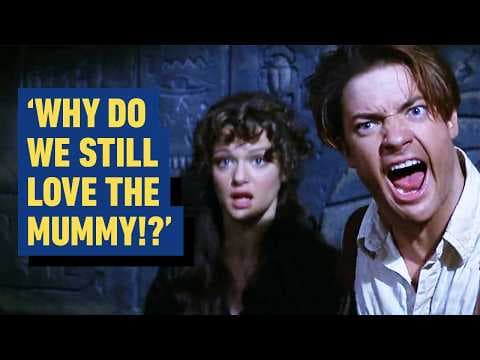
Somehow, The Mummy Wound Up Being the Best Movie of 1999 | IGN Flashback Review
Audio Summary
AI Summary
1999 was a remarkable year for cinema, with iconic films like "The Matrix," "The Sixth Sense," "Fight Club," and "The Blair Witch Project" gracing the silver screen. However, among these cinematic giants, Steven Summers' "The Mummy" stands out as a particularly beloved and enduring fan favorite. This review delves into what makes this action-comedy romp, starring Brendan Fraser and Rachel Weisz, so appealing and why its charm hasn't diminished despite Hollywood's shift away from making movies of its kind.
"The Mummy" is, in essence, a remake of the 1932 Universal Monsters classic, sharing a core plot. In ancient Egypt, Prince Imoteep attempts to resurrect his deceased lover using magic, but is caught and punished by being mummified and buried alive. Thousands of years later, in the early 20th century, he's accidentally revived as a supernatural being with the sole aim of bringing his lover back, even if it requires sacrificing a young woman.
What distinguishes Summers' take is its clever transformation of this horror premise into a swashbuckling adventure comedy. Despite an extensive opening narration and exposition that might typically bog down a film, Summers injects Imoteep's origin story with late 90s CGI, thrills, and a playful sexiness that is both silly and exhilarating. The word "fun" becomes a recurring descriptor for the movie, perfectly encapsulating its spirit.
The narrative centers on the accidental revival of Arnold Vosloo's Imoteep, a supernatural entity in a state of suspended animation, waiting for the arrival of Brendan Fraser's Rick O'Connell, a roguish adventurer, and Rachel Weisz's Evelyn Carnahan, a bright but somewhat clumsy librarian. Their encounter with the mummy is likened to the iconic boulder scene from "Raiders of the Lost Ark," but set against the backdrop of a screwball comedy.
Brendan Fraser is lauded for his portrayal of O'Connell, embodying a cocky yet charming persona with a high-energy performance, whether he's facing down mummies or talking his way out of trouble. However, Rachel Weisz is arguably the film's MVP. Her introduction, precariously balancing on a tall ladder in a Buster Keaton-esque display, immediately sets the tone for the hijinks to come and establishes her as a smart, integral character. Her character's drive to uncover ancient mysteries, even as she navigates the chaos, makes her as crucial to the story as O'Connell.
While some of the early CGI effects, particularly those involving Imoteep's regenerating form and his face appearing in a sandstorm, may show their age, they are still considered cool and effective. The film also embraces practical effects, with many of Imoteep's mummy followers depicted as actors in suits, and gruesome action sequences often shot in shadows or silhouette, contributing to its PG-13 rating and charm.
Even the film's weaker aspects, such as the forgettable band of competing American treasure seekers who serve as expendable characters, ultimately work in its favor. Their timely and often darkly humorous demises serve to heighten the stakes and provide moments of comedic relief. The film is described as having a magical quality, as if Summers unearthed ancient secrets to ensure its success.
The review awards "The Mummy" an eight out of ten, recognizing it as a fun throwback to adventure films and screwball comedies. Its enduring appeal is attributed to the charisma of its cast, the filmmaker's blend of old-school and modern techniques, and its overall enjoyable nature. The mention of a potential fourth "Mummy" film suggests a continued desire for this type of entertainment.
The discussion then shifts to the film's lasting impact and why it resonates so strongly with audiences. It's noted that while it's a solid adventure film, the intensity of affection for it is somewhat surprising, given its genre. The likability of the characters, the fun of the plot, and the then-groundbreaking CGI contribute to this affection, especially for those who saw it at a formative age. The creature design, with its nod to Ray Harryhausen, is also highlighted.
The film's connection to 90s cinema is evident, with its dual-wielding pistols reminiscent of John Woo films, and its characters embodying the spirit of the era. The chemistry between Fraser and Weisz is praised, with Weisz's character being a charming intellectual whose actions inadvertently unleash the mummy.
The sheer number of characters introduced, even late in the film, is discussed, with a humorous mention of an actor recognizable from "Bewitched" appearing as a pilot who meets a memorable end. The film is characterized as a textbook adventure, with a satisfying setup and payoff for its supporting cast.
The fate of the character Benny, dying alone in the dark as scarabs approach, is recalled as a particularly striking moment. The caricatures of different types of Americans, with their distinct personalities and shared penchant for dual-wielding pistols, are also a point of discussion, drawing parallels to similar character types in other films.
The review contrasts "The Mummy" with other 90s adventure films, noting its distinct tone. While films like "The Phantom Menace" were released around the same time and achieved greater box office success, "The Mummy" has maintained a unique place in popular culture. Its willingness to embrace a more playful, almost cartoonish, tone is seen as a key factor in its success, contrasting with the more serious approach of some other blockbusters.
The question of whether Hollywood still makes movies like "The Mummy" is raised, with limited examples of comparable big, fantastical adventure films in recent years. While some films like "Mad Max: Fury Road" and the "Dungeons & Dragons" movie are mentioned as having some similar qualities, the landscape of big-budget cinema has largely shifted.
The film's ability to get away with a high body count and the casual way characters are dispatched is attributed to its overall tone and vibe. The reviewers also touch upon the modern trend of fandom being overly self-serious, with a focus on continuity and hero-centric narratives, suggesting that "The Mummy" offers a refreshing departure from this.
The cartoonish feats of Brendan Fraser's character are emphasized, with his ability to withstand extreme physical punishment and deliver one-liners. The inclusion of multiple mummies, each with their own visual quirks, adds to the film's playful nature. The scene where Imoteep's head is decapitated and bounces around is cited as an example of the film's over-the-top, yet effective, humor.
Director Stephen Summers is acknowledged for his career in making "okay" movies, with "The Mummy" being his standout achievement. While sequels and other films he directed didn't quite reach the same level, this film remains his high watermark.
The VFX of "The Mummy" are discussed in the context of the late 90s, a transitional period for CGI. While some effects may not hold up perfectly compared to modern standards, they are seen as working within the film's overall tone and not detracting from its enjoyment. The film's visual effects are described as a case where "the reach exceeds the grasp," but the tone and fun of the movie compensate for any technical shortcomings. The scarab effects, in particular, are noted as still looking quite convincing.
In conclusion, "The Mummy" is celebrated for its successful blend of action, comedy, and adventure, its charismatic lead performances, and its enduring ability to entertain. Its unique tone and willingness to be fun have cemented its status as a beloved classic, even as Hollywood's cinematic landscape continues to evolve.