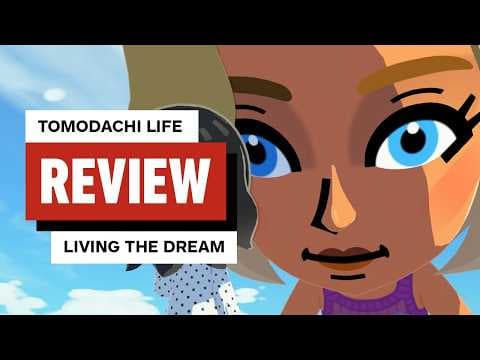
Tomodachi Life: Living the Dream Review
Audio Summary
AI Summary
Tomodachi Life: Living the Dream is presented as a large digital dollhouse where players create humorous digital versions of themselves, friends, celebrities, and fictional characters using an in-depth Mi Maker. The game allows players to dress up their Miis, feed them, and interfere in their dramatic interactions, creating a deeply funny and personal civilization simulator that constantly rewards creativity. Despite its entertaining nature, a significant drawback is the difficulty in sharing favorite moments, characters, and creations, turning what should be a highly social game into an isolating experience. This major issue casts a shadow over an otherwise delightful game.
A substantial amount of time, specifically 35 hours, was dedicated to designing Miis in the revamped Mi Maker. This version is a significant improvement over the 3DS Tomodachi Life, offering more options and sharper graphics while retaining the original's simplistic charm. The advanced capabilities of the new tool made character creation more satisfying. However, the sharing of Miis is extremely limited, restricted to local wireless, meaning characters can only be sent to someone in the same room. This is a considerable downgrade from the 3DS's sharable Mi QR codes. This limitation prevents players from easily acquiring appealing Miis created by others or adding friends' Miis from a distance, forcing tedious recreation from scratch and detracting from the fun of planning an island roster. While old 3DS QR codes can technically be used by transferring them via a 3DS and an amiibo to the Switch, or by smuggling Miis through the Switch remaster of Miiopia (though with accuracy issues due to its unique makeup system), these methods are cumbersome and outdated for 2026. The restriction on sharing artistic creations through Miis feels like a step backward, demanding players to either enjoy extensive character creation or accept spending a lot of time in the creator to fully experience the game.
Once characters are populating the island, Living the Dream becomes genuinely fantastic. The personality customization is remarkably accurate and detailed, allowing players to assign one of 16 personality types by adjusting a few sliders, often capturing the essence of the recreated person. Players can also set pre-existing relationships, pronouns, and dating preferences, fulfilling a long-standing promise from Nintendo. Treating Miis well through preferred food, gifts, and introductions increases their happiness and levels them up, forming a rewarding gameplay loop. Observing their reactions to items, like walking pets, is enjoyable, and leveling up unlocks further personalization through behaviors, catchphrases, and additional gifts. Each Mii faces their own problems, with the player acting as a life coach, influencing surreal situations whose outcomes are ultimately decided by the Miis. Much of the game's joy comes from observation, with memorable moments enhanced by eccentric writing and quirky text-to-speech voices.
While the game offers many delightful moments, such as watching Mii versions of real-life partners fall in love and marry, it also features absurd conflicts, like a violent fight between Miis over a reality show. The game possesses an absurd, Madlibs-like quality, where personal phrases make interactions funnier. However, the underlying repetitive foundation of these sequences can become apparent over time, leading to skipped conversations when Miis are trying to make new friends. Despite this, new interactions and events continue to surprise and amuse even after 35 hours. A notable creative outlet is the Pallet House, where players design home interiors, exteriors, food, clothes, pets, and treasures. This feature is incredibly flexible, allowing for creations limited only by artistic ability, with attributes that influence Mii reactions. While handcrafted items may not look as polished as stock images, they contribute to a charming mix of official playset and homemade crafts. However, Pallet House creations are also restricted to local wireless sharing, another significant missed opportunity, though eased by thousands of built-in items earned through mini-games or purchased from rotating shop catalogs.
Players can shape their island with complete freedom, using building tools that are snappy and easy to learn. The frictionless creation process allows for seamless transitions between building and shopping for materials. Island decoration can include paths and objects created in the Pallet House. Yet again, sharing these creations is hindered by Nintendo blocking screenshot and video sharing, forcing players to transfer files to a PC or take low-quality phone pictures of their screen. This contradicts the game's philosophy of creativity and communication, especially since the 3DS version allowed direct social media uploads years ago. Speculation suggests Nintendo's concern over hosting offensive user-generated content due to the lack of a language filter, which allows Miis to say anything and creations to take any shape. Despite the understandable priority of protecting children, the absence of a sharing system similar to built-in voice chat (which requires mutual Nintendo account friendship and opt-in consent) is baffling. Tomodachi Life: Living the Dream is a genuinely funny and personal civilization simulator, offering endless amusement through absurd Mii interactions. However, its extreme sharing restrictions, a downgrade from the 3DS version, significantly detract from the experience, making it frustrating and isolating for those not adept at or tired of complex character design. The game offers a unique, quirky paradise that rewards creativity and reflects personality, but the inability to easily share it with friends is a major drawback.