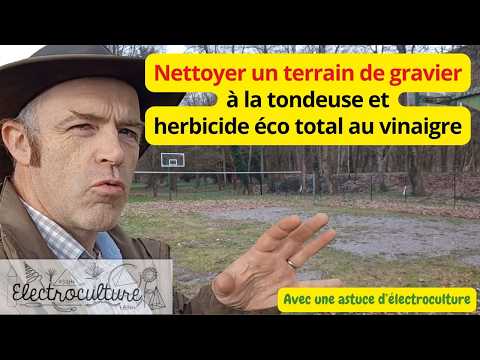
Comment nettoyer un terrain de gravier envahi de feuilles et d'herbes et une astuce d'électroculture
AI Summary
In this video, the presenter demonstrates an ecological approach to restoring a basketball and volleyball court that has become covered in leaves and weeds. Located near large trees, the court’s gravel surface is prone to overgrowth because decomposing leaves turn into humus, providing a fertile base for weeds. To address this, the first step involves using a lawnmower to collect the fallen leaves. The speaker highlights the immediate visual difference this makes, showing that simply removing the organic debris significantly cleans the gravel surface.
To tackle the remaining weeds, the presenter uses white alcohol vinegar with 10% acidity. This affordable and eco-friendly method works similarly to how vinegar reacts in a salad; it burns the plant tissues, causing them to dry out and eventually decompose. While it may require two or three applications to be fully effective, it is a simple solution that can even be produced at home. For a full-sized court, the speaker estimates that approximately 40 to 50 liters of vinegar are needed, as a standard 5-liter container covers about one-eighth of the area.
Beyond immediate maintenance, the video explores how the choice of materials impacts long-term weed growth through the lens of electroculture. The speaker explains that the type of gravel used is crucial for prevention. He advises against using basalt or lava-based gravel because these materials can be paramagnetic and act as potent fertilizers, which accelerates weed growth. Instead, he recommends choosing limestone or other low-fertility rocks that can actually discourage plant growth.
Upon inspecting the current court, which has become heavily weeded in only one or two years, the speaker notes the presence of silica—identified by white veins in the stones—and potentially paramagnetic rocks. He suggests that these geological factors, combined with the proximity of the trees, are the primary reasons for the rapid encroachment of grass. By selecting non-fertilizing gravel in the future, maintenance needs can be significantly reduced. The video concludes by inviting viewers to share their own ecological weeding tips and experiences with keeping outdoor courts clean.