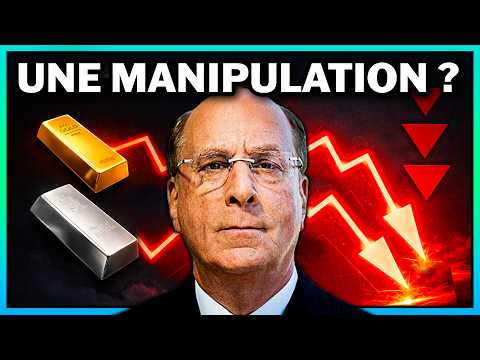
Mais que se passe t-il vraiment sur l'OR???
AI Summary
The financial world is currently buzzing with questions about the future of gold prices. In January, gold dropped by $1200 in a week after nearing $5600, and the market continued to see corrections. By March, it had fallen to around $4800. Silver, meanwhile, saw its value halved. Despite short-term fluctuations, gold is considered remarkably stable by specialists.
Analysts are actively revising their price estimates. Goldman Sachs projects $5400 for year-end, UBS $6200, and JP Morgan $6300. Some even whisper about $10,000 before the decade ends. While these figures might seem ambitious, it’s worth remembering that 18 months ago, when gold was at $2500, $6000 also seemed improbable. However, Morning Star anticipates a drop to $3000.
Gold is unique as an asset that humanity has consistently accepted and exchanged for 6000 years. Central banks worldwide are currently accumulating it at an unprecedented rate. Its value is underpinned by well-known fundamentals, many of which continue to drive prices upward.
This video also introduces Gold Avenue, a partner and a preferred solution for purchasing physical precious metals. Available as a mobile app or on their website, the platform caters to all portfolio sizes, offering physical gold, silver, platinum, and palladium with reduced and transparent fees. Key benefits include free metal storage, no commission on instant resales, and 0% VAT. A special offer provides a €30 discount on a first purchase of at least €900 with the code M Radar 30.
Over the past 18 months, gold prices have doubled, silver tripled, and platinum doubled, largely unnoticed. These are not normal performances. Gold took five years to go from $1800 to $3000 (+66%) but only eight months to jump from $3000 to $5000 (+66%). Silver’s performance was even more dramatic, rising from around $25 last spring to over $70 by year-end, and hitting $117 in January after Donald Trump designated it a strategic metal.
Such rallies were largely unanticipated. In January 2025, the most optimistic analysts predicted gold at $2500 by year-end, but it finished at more than double that. Goldman Sachs and JP Morgan had to revise their forecasts upwards multiple times.
Last year was particularly favorable for gold. The Fed cut rates three times, the dollar lost 10% of its value, central banks bought over 1000 tons of gold for the third consecutive year, and geopolitical crises intensified. Gold ended the year up over 60%, its best annual performance since 1979. 2026 started even stronger, fueled by the war in Iran, the closure of the Strait of Hormuz, oil nearing $110, and uncertain equity markets. On January 29, gold reached an all-time high of $5595.
However, the market can also retract what it gives. A week after the January 29 euphoria, panic set in. Gold lost 21%, and silver plummeted to $71, nearly half its value, in just a few sessions. Platinum also dropped, though less severely.
This correction was due to several factors. First, better-than-expected US employment figures were released. Second, Kevin WH was nominated to succeed Jerome Powell at the Fed, quickly dispelling hopes of immediate rate cuts, contrary to market expectations. A second shock came from the CME, the Chicago Mercantile Exchange, which raised its margin requirements for metals futures contracts. This forced many traders to either inject more capital or sell their positions, triggering cascading sales and liquidating billions of dollars in positions, leading to massive outflows from gold ETFs. The smaller, more volatile silver market was hit harder.
By early March, gold had rebounded above $5000, and silver to around $85. The February crash, while unsettling, prompted analysts to revise their forecasts, many upwards. JP Morgan now targets $5000 for gold by year-end in its base scenario and $6300 in its most optimistic one. Goldman Sachs aims for $5400, and UBS raised its target to $6200. Economist Yar Denny, whose gold predictions have been remarkably accurate, forecasts $6000 by late 2026 and $10,000 by the end of the decade, representing an average annual return of 13.4%. On Poly Market, over 60% believe gold will reach $6000, and 37% even $7000. These optimists argue that gold’s quick rebound above $5000 after such a correction indicates a higher price floor.
Conversely, more cautious voices like Morning Star suggest gold could return to $3000 within five years if geopolitical tensions ease and supply increases. JP Morgan also considered a pessimistic scenario where gold falls to $4500 by year-end.
The optimism is fueled by strengthening market drivers. The US debt is nearing $39 trillion, the Fed ended its monetary tightening program in December, central banks continue their gold purchases, and de-dollarization is progressing, with China and Europe buying less US debt and BRICS nations accelerating local currency transactions. JP Morgan predicts central banks will absorb 755 tons of gold in 2026, slightly less than the previous three years but still double the pre-2022 average. The crisis in Hormuz, with oil above $110, threatens inflation, which historically benefits gold as a store of value and a last-resort currency.
For those interested in understanding these market mechanisms, the Money Radar newsletter, the fifth most-read financial letter in the French-speaking world, offers weekly market summaries, high-potential stock analyses, and insights into events influencing personal finances, all in simple language and free.
Regarding gold, the general consensus is that it will remain expensive and its value will continue to rise this year, along with silver. Silver is no longer just "poor man's gold"; it’s a strategic metal, officially classified as such by the US last November. China has restricted its exports through a licensing system, slowing the global supply chain. Industrial demand is the primary driver, as silver is essential for solar panels, AI servers, and electronic chips. Unlike gold, silver is consumed in such tiny components that recycling is impossible. The physical market has been in deficit for five consecutive years, stocks are dwindling, and mining production is stagnant at around 800 million ounces annually because 70% of extracted silver is a byproduct of other mines (copper, zinc, lead).
Given this, JP Morgan forecasts silver at an average of $81 in 2026, and City Group targets $150 in the short term, possibly by autumn. Some independent analysts even suggest $200 to $400 by 2030 if the physical deficit worsens.
Platinum also saw its price double last year due to a three-year supply deficit. South Africa, which accounts for 60% of global production, struggles with power outages, aging mines, and soaring extraction costs. Bank of America raised its 2026 forecast to $2450 per ounce. Platinum was more expensive than gold until 2015. Ten years ago, an ounce of platinum and gold cost the same. In 2025, it took 3.5 ounces of platinum for one ounce of gold, and currently, it takes 2.35. Platinum is crucial for the energy transition and hydrogen technologies, with few alternatives.
While these figures are enticing, it’s crucial to remember that this is not investment advice. Precious metals should hold a significant place in a well-constructed portfolio. Ray Dalio, founder of Bridgewater, allocates 15-20% of his portfolio to commodities, including a substantial portion in gold. Physical gold (coins, ingots) is fundamental, offering tangible assets independent of intermediaries. For flexibility, gold-backed ETFs allow easy entry and exit, suitable for dollar-cost averaging (DCA) strategies.
For silver, the speaker shares a personal experience: buying a triple-leveraged silver ETF in April 2025 led to significant gains by New Year's but a dramatic crash in February, losing most of the profits. Despite the volatility, consistent buying during lows and a long-term perspective are key. The speaker anticipates a rebound, believing the market will return more than it takes from patient investors.
The video concludes by reiterating the invitation to invest in gold through Gold Avenue, emphasizing its ease of use, security (part of the world's largest group in the sector), and accessibility for investments starting from a few tens of euros. The exclusive offer of a €30 discount on a first purchase of at least €900 using the code M Radar 30 is highlighted. Finally, the answer to the earlier question: an asset that quadruples in four years yields an average annual return of just over 41%, thanks to compound interest.