What The Mandalorian Gets Right About Real-World Religions
AI Summary
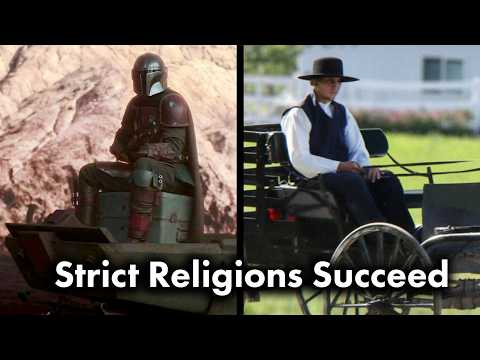
The provided transcript delves into the religious and sociological underpinnings of the "Children of the Watch" faction within the Star Wars universe, drawing parallels with real-world strict religious communities. The speaker, adopting the persona of an anthropologist of religion, argues that the Children of the Watch, characterized by their unwavering adherence to the Mandalorian creed, including the rule of never removing their helmets, exemplify the success of demanding religious groups.
The analysis begins by establishing the context of the Children of the Watch's origins: the destruction of Mandalore during the "Night of a Thousand Tears" by the Empire. This catastrophe led to the fragmentation of Mandalorian society, with the Children of the Watch emerging as a group that interpreted the disaster as a sign that their traditions had become too lenient. They sought to revive what they perceived as the "ancient way," which necessitated extreme strictness. This included maintaining their helmets in the presence of any living being, a rule enforced by exile. They formed secret enclaves, adopted foundlings into their creed through ritual rather than biological ties, and operated under a strict code of obedience, encapsulated by the phrase "This is the way."
The core argument is that strict religious communities tend to be more successful and durable than less demanding ones. This is illustrated by the example of the Amish, whose strict adherence to tradition and separation from modern technology has led to significant population growth, contrasting with the decline of more liberal Protestant denominations that have relaxed their demands on members.
Several overlapping mechanisms are proposed to explain this phenomenon. Firstly, the "free rider problem" is identified. Religious communities offer substantial benefits, such as social support and economic aid, but also require contributions. Strictness acts as a filter, a screening device that deters individuals who are not genuinely committed from joining, thereby ensuring that the remaining membership has "paid a deposit" and is less likely to exploit the group's resources. This "strict church model," rooted in rational choice economics, suggests that high demands are not a hindrance but a functional feature for group survival.
Empirical data supports this theory. A study of 19th-century American communes found that religious communes, particularly those with more costly requirements, lasted significantly longer than secular ones. This highlights that the combination of cost and religious framing is crucial. Religious rituals, anchored in supernatural beliefs that cannot be empirically disproven, provide a stronger basis for commitment than secular utopian ideals, which can be tested and found wanting.
Secondly, the concept of "costly ritual" is explored. Anthropological research on the Tipusam festival in Mauritius demonstrates that participants who undergo more extreme and painful rituals donate more to the temple afterward. Even witnessing loved ones endure such ordeals can foster solidarity and increase donations. This suggests that costly rituals forge social bonds and generate commitment, extending beyond mere filtering of free riders. The Mandalorian helmet rule is presented as a high-cost behavioral constraint that continuously signals commitment and sacrifice. The declaration of a helmetless Mandalorian as an "apostate" reinforces the sharp in-group/out-group boundaries. The recitation of the creed, invoking ancestors and the "way," serves as a powerful commitment device, binding individuals to a lineage and a set of obligations.
The theory of "credibility enhancing displays" (creds) is introduced to explain intergenerational transmission of beliefs. Joseph Henrich's work suggests that humans learn what to believe not solely from what people say, but from what they are visibly willing to pay for. Costly actions, or creds, serve as stronger evidence of belief conviction than mere words. For example, observing someone consistently forgo a forbidden food demonstrates a deeper commitment than simply being told it's forbidden. This mechanism is crucial for transmitting beliefs about unverifiable concepts like the afterlife or sacred obligations. Research indicates that exposure to religious creds, such as fasting or tithing, predicts adult religiosity more strongly than general religious upbringing. Conversely, "anti-creds," actions that demonstrate hypocrisy or predation, can lead to disaffiliation, as seen in the study of Irish Catholics.
The Children of the Watch are steeped in creds from childhood. A foundling observes adults, like their father, consistently adhering to the creed, even at great personal inconvenience, such as eating awkwardly to avoid removing their helmet. The Armorer, as a ritual specialist, further reinforces these creds through her actions in forging armor and officiating rituals. This constant exposure to costly practices, demonstrating the leaders' and community's deep conviction, instills the belief that the creed matters, irrespective of its inherent logic.
Finally, the concept of "fictive kinship" is discussed as a key element in maintaining group cohesion. This refers to kin-like relationships not based on biology, such as adoption or sworn brotherhoods. These relationships are treated as fully real and morally binding, extending familial obligations beyond biological ties. The Mandalorian foundling system, where orphaned children are raised within the creed and supported by the community, exemplifies this. Din Djarin's adoption of Grogu as his son, despite not being biologically related, highlights the power of institutionalized fictive kinship in creating strong, durable bonds that transcend biological limitations. This system ensures the transmission of the creed to the next generation through established rituals and obligations.
In conclusion, the Children of the Watch, through their strict adherence to costly practices, vivid credibility enhancing displays, and institutionalized fictive kinship, mirror the survival strategies of successful real-world religious groups like the Amish and Haredi Jews. The show, "The Mandalorian," by depicting these elements, inadvertently provides an ethnographic lens through which to understand the dynamics of religious communities. The speaker also promotes an upcoming lecture on "The Hero's Journey," Joseph Campbell, and the mythology of Star Wars, available through religionepdepartment.com/theherojourney.