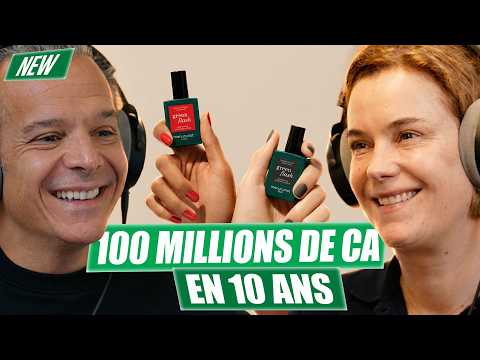
Manucurist - Le futur leader mondial du vernis à ongles ?
AI Summary
Gaëlle Lebrat-Personnaz, founder of Manucurist, a nail beauty brand, shares her journey from working in luxury fashion to building a global enterprise projected to reach 100 million euros in revenue this year. She highlights the challenges and motivations behind her entrepreneurial path, emphasizing innovation, sustainability, and a strong company culture.
Gaëlle’s journey into entrepreneurship began after her mother's nail institute business, Manucurist, faced liquidation. Despite warnings from friends to return to the comfortable world of luxury, where she earned a substantial salary, Gaëlle felt a strong conviction to create a new brand. She repurchased the Manucurist name and the commercial lease for the original office, driven by a clear vision to innovate in a stagnant nail beauty market. She observed the prevalence of "disgusting" products in her mother's institutes and dreamed of offering something better.
One of the initial challenges was securing funding. Her husband, Gaël, an engineer with a financial background, invested 500,000 euros in the venture, though initially skeptical. This "love money" was crucial as traditional banks were unwilling to lend to a nail polish business. Her husband later joined Manucurist as General Manager, overseeing finance, logistics, and supply chain, and playing a vital role in the company's digital growth, especially after 2020.
Gaëlle's experience in luxury houses like Louis Vuitton, Prada, and Saint Laurent profoundly shaped her understanding of brand building. She learned the importance of meticulous attention to detail, from product conception to customer interaction. Louis Vuitton, in particular, taught her about structured development, demanding excellence, and maintaining desirability across global markets. This holistic approach to brand management, ensuring a seamless experience for the customer, became a cornerstone of Manucurist’s strategy.
A key innovation for Manucurist was the development of "Green Flash," a semi-permanent nail polish that is easy to remove without acetone and formulated without harmful methacrylates. This product, which took 2.5 to 3 years to develop with a French lab, addressed a significant gap in the market where existing semi-permanent options damaged nails and contained potentially carcinogenic ingredients. 95% of Manucurist products are manufactured in France, emphasizing clean, bio-sourced formulations using green chemistry instead of petrochemicals.
Manucurist's growth has been remarkable, with revenues soaring from 50 million euros two years ago to a projected 100 million this year. This rapid expansion, typically seen in tech companies, is unusual for a product-based business due to the complexities of supply chain and production costs. Gaëlle attributes this success to several factors, including her commitment to innovation, a strong digital strategy, and an omnichannel distribution approach.
The brand initially developed significantly through digital channels, especially during the 2020 pandemic when traditional retail was closed. Gaëlle recognized her own limitations in digital and hired a skilled digital boss in 2019, transitioning the brand's e-commerce platform to Shopify. This move proved prescient, as it positioned Manucurist for explosive online growth.
However, Gaëlle emphasizes the importance of not relying solely on digital. Manucurist has embraced an omnichannel strategy, distributing its products through over 4,000 pharmacies, Sephora, Monoprix, and major department stores globally. This diversification hedges against rising digital acquisition costs and ensures broader market reach. For instance, in the US, a significant market contributing to a third of their revenue, Manucurist is heavily present on Amazon, viewing it as an essential platform for brand visibility and customer reviews, especially in the beauty sector.
When expanding into retail, Manucurist adopted a strategic approach. For pharmacies, they targeted influential buying groups and high-profile pharmacies, creating demand that then influenced broader distribution. For Sephora, a highly coveted retailer, they engaged in a prolonged "courting" process, leveraging their strong Instagram community and brand desirability to secure a presence first online, then in physical stores.
Gaëlle also highlighted the importance of pricing strategy. Unlike many digital native brands that price for direct-to-consumer sales, Manucurist set prices with sufficient margins to accommodate traditional retail distribution, allowing them to expand into diverse channels without compromising profitability. This foresight prevented the pitfalls faced by many DNVBs post-COVID-19.
Internally, Gaëlle fosters a culture of trust and continuous improvement. She delegates extensively, empowers her team, and views errors as learning opportunities. The company has implemented a "red bin" method, inspired by Toyota's Lean principles, to analyze dysfunctions collectively and prevent their recurrence. This approach, combined with a focus on employee well-being and a supportive work environment, is seen as fundamental to Manucurist's success.
Manucurist also prioritizes customer care. They have an in-house customer service team in Tunisia, which allows them to maintain control over customer interactions and provide personalized support, including online consultations with nail experts. Gaëlle believes that customer loyalty is paramount, and addressing customer issues generously is crucial for brand reputation.
Looking ahead, Gaëlle's ambition is for Manucurist to become the global leader in nail beauty. She believes the brand's innovative, clean, and fashion-forward approach gives it an edge over traditional competitors like OPI, which have been slower to adapt to evolving consumer demands for healthier and more modern products. She is constantly inspired by youth culture and maintains a strong focus on product development and brand desirability to avoid becoming "outmoded."
Gaëlle is also considering an LBO (Leveraged Buyout) to de-risk financially and reward her team, who are also shareholders. This move would allow her to realize the fruits of her labor while re-engaging employees with new opportunities. Despite the anxieties of leading a rapidly growing enterprise, Gaëlle emphasizes the importance of resilience, learning from failures, and having a "plan B" to mitigate risks, especially for women entrepreneurs who often face additional societal pressures and self-imposed limitations.