Religious Residue: What Sticks After You Leave Religion
AI Summary
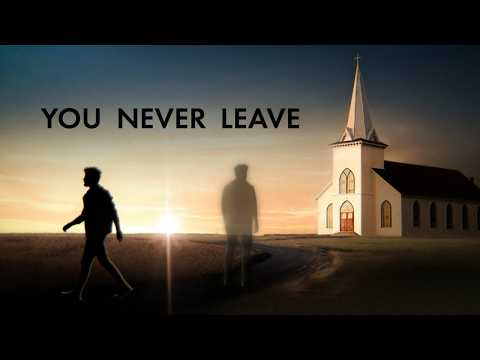
A hypothetical woman leaving the Southern Baptist Church after 12 years exemplifies a phenomenon researchers are calling "religious residue." This residue refers to the persistence of religious cognitions, emotions, and behaviors even after someone has disidentified with a religious community. This is distinct from individuals who have never been religious.
A 2021 cross-cultural study by Daryl Van Tongeren and colleagues investigated this difference. They compared three groups: currently religious individuals, never religious individuals, and those who were formerly religious (dubbed "duns"). Using implicit association tests (IATs) to gauge gut-level reactions, the study found that "duns" consistently fell between the currently religious and never religious groups. For instance, they showed more positive implicit associations with God than the never religious, and a higher certainty about the supernatural. Furthermore, "duns" engaged in religious practices at more than twice the rate of never religious individuals, even after disaffiliation. This evidence, gathered across the US, Netherlands, New Zealand, and Hong Kong, supports the concept that something "stays" after religious deconversion.
The researchers proposed two primary mechanisms for this enduring residue: cognitive schemas and habit formation. Schemas are mental frameworks that help us interpret the world automatically. Growing up religious instills deeply embedded schemas for morality, suffering, and the sacred. These schemas are difficult to change, similar to how depressive thinking patterns can persist even after recovery from depression. Religion, therefore, installs an interpretive framework that continues to operate in the background.
Secondly, religion is deeply embodied through repeated practices and habits. From a young age, religious individuals engage in rituals, memorize prayers, and perform coordinated actions, shaping their bodies and minds. Scholars emphasize religion as an embodied practice, not just a set of beliefs. These habits, ingrained through repetition, can outlast the conscious decision to leave religion.
A crucial element in habit formation is "credibility-enhancing displays" (creds). Children learn what to believe by observing adults' actions, especially those involving personal cost. Parents who make sacrifices for their faith—tithing, fasting, or observing rituals—demonstrate the credibility of their beliefs more effectively than mere words. The study found that "duns" who reported higher childhood exposure to their parents' costly religious behaviors exhibited stronger religious residue. This suggests that deeply ingrained religious residue stems more from observed actions than from doctrinal instruction.
In essence, religion establishes a deep cognitive and embodied architecture. While individuals may consciously disaffiliate, their underlying schemas and bodily habits continue to operate.
Follow-up research has explored the nature of this residue. Some residue decays slowly, while some persists. A longitudinal study using the National Study of Youth and Religion found that while formerly religious individuals were similar to the never religious regarding moral intuitions about harm and fairness, they differed on "binding" moral foundations like loyalty, authority, and purity. Those who left religion more recently showed stronger residue on authority and purity than those who had left longer ago, indicating "religious residual decay."
Another study on basic human values found that former religious individuals retained "conservation" values (tradition, conformity) more strongly than the never religious. However, they also sometimes showed an increase in "self-transcendence and openness" values (freedom, self-expression), possibly as a reaction against previously suppressed desires.
Interestingly, religious residue appears to have a limit, particularly in politics. Despite retaining some moral intuitions and values, former religious individuals in the US and other countries tend to shift towards liberalism, often matching or even slightly exceeding the political liberalism of the never religious. Longitudinal data suggests that disaffiliation precedes this political shift, rather than vice versa. This patterned nature of residue, appearing in some domains but not others, makes the phenomenon more nuanced.
Emotionally, research indicates that formerly religious individuals, like currently religious ones, report more negative attitudes toward God than the never religious. This coexists with warmer implicit associations with God, suggesting that a long and engaged relationship with religion can foster both positive and negative feelings. This is further explained by "religious cognitive dissonance"—the gap between religious teachings and lived experience. Those who experience this dissonance most sharply tend to have stronger negative feelings toward God.
In conclusion, religious residue is more than just leftover habits. It represents deeply embedded cognitive schemas, embodied habits, moral intuitions, and emotional relationships that persist after disaffiliation. While some aspects fade over time, others remain, shaping individuals in complex ways, though not uniformly across all aspects of life, particularly politics.