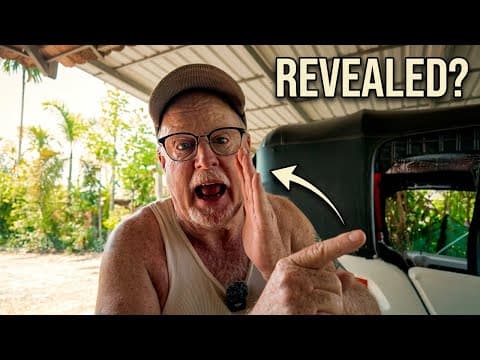
I Interviewed an Expat in Cambodia… and He Said THIS
AI Summary
The interviewee, a YouTuber living in Siem Reap, Cambodia, discussed several aspects of his experience there, starting with a misconception he had before arriving. He initially thought Cambodia would be less developed, especially concerning infrastructure, given its proximity to the COVID-19 pandemic. However, upon arrival, even within a month and a half of the lifting of COVID restrictions, he observed significant construction activity, including new houses and additions, indicating a resilient and industrious populace. He noted more progress in infrastructure than he had anticipated so soon after the pandemic.
When asked what he lost by coming to Cambodia, he stated he lost his "Western-centric thinking." He explained that growing up in the West, he was programmed to prioritize organization, cleanliness, and speed. In Cambodia, this mindset is not conducive to comfortable living, and he emphasized the necessity of adapting and shedding these Western thought patterns.
The conversation then shifted to when Cambodia stopped being an adventure and became normal daily life. He humorously responded that his normal life *is* an adventure. He elaborated that this adventure stems from internal growth, learning new things in a new country, and accepting the "Cambodian way" of life. He stressed that without this acceptance, living there would be very difficult, but he enjoys this continuous process of adaptation and learning.
Regarding the cost of living, he believes many people have misconceptions, again attributing it to Western-centric thinking. Despite thorough research and even prior visits, many Westerners still feel the need for "a little bit more" comfort, which often translates to working longer in their home countries to save more money. He questioned the value of trading "precious time for that all-American dollar," suggesting that people often don't realize that "less is more." He finds it liberating not to struggle as much by having less, and believes people need to stop living as if they are still in their home countries.
A daily annoyance for him in Cambodia is his limited diet. He mentioned his inability to eat anything without knowing its ingredients, often leading him to decline food offered by neighbors or friends, even from new restaurants. This constant refusal and the need to explain his dietary restrictions have become tiresome over the years.
In a reverse question, he considered what would most shock a Khmer person visiting the United States. His immediate answer was the cost of things, noting that simple items can be eight, nine, or ten times more expensive there. He cited the example of a $2.99 bottle of water at a gas station minimart as a significant shock. Beyond money, he also highlighted the difference in people. While acknowledging that nice people exist everywhere, he generally finds Khmer people to be nicer, friendlier, more outgoing, and "beautiful inside and out" compared to people in Western societies. He likened the experience to a "frog in a frying pan," where one doesn't fully realize their cultural environment until they step out of it and gain a different perspective.
When asked what would make him permanently leave Cambodia, his quick and firm answer was "nothing." He stated he is not going to leave.
Finally, he offered advice for someone considering moving to Cambodia. He warned that if a person is not open-minded, has a big ego, is narcissistic, and believes everything must be their way with no gray areas, they will find it very difficult. He emphasized the need for flexibility and a willingness to change, not just during the "honeymoon period," but even after three or four years. He stressed that one must actively work on changing their mindset. Additionally, he advised against driving or even walking on sidewalks if one experiences road rage, as driving in Cambodia is "crazy." He concluded by stating that the chaotic driving works because people have compassion for each other, and one needs to "go with the flow."