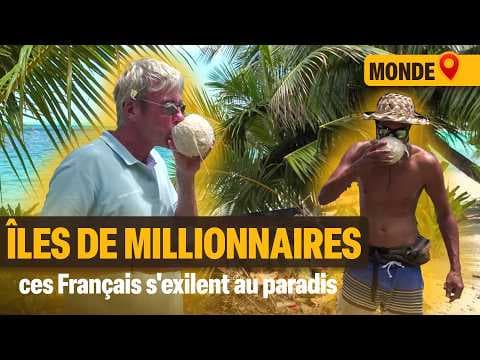
Au cœur du quotidien hors du commun de ces Français exilés
Audio Summary
AI Summary
The video explores the lives of affluent French individuals who have relocated or acquired property in exclusive locations worldwide, seeking a different lifestyle, tax advantages, or both. The narrative begins in the Caribbean, introducing Martine, the wife of French millionaire George Cohen. They own a sprawling 500m² modern villa on the island of Caraïbes, featuring 11 suites with water views. George Cohen, whose net worth is estimated at over 400 million euros, built his fortune from scratch. Starting as a technician at Capgemini, he rose through the sales ranks to become a millionaire after founding his own social services company, Transitiel, with Martine. He later invested a significant portion of his wealth in a mining company. The couple purchased the Caribbean island for an undisclosed sum, transforming it into their "paradise." Their staff includes a personal chef, Giovanni, and a majordomo, Michael.
The focus then shifts to Belgium, a country that has become a haven for French millionaires seeking tax benefits. Philippe Rosy, a real estate agent specializing in luxury properties, highlights the influx of French clients, including prominent families and business leaders. Bruno Maniglier, founder of the French company Compac, is featured as an example of a wealthy individual who relocated to Brussels to reduce his tax burden. He owns an 850m² mansion, now too large for him and his wife, which he is looking to sell. Maniglier explicitly states that his move to Belgium was driven by fiscal reasons, finding it the "best fiscal regime possible" due to the absence of wealth tax and capital gains tax. The report emphasizes that this relocation is legal, leveraging the free movement of people within Europe.
The video then moves to Mauritius, an island in the Indian Ocean that has become a fiscal paradise for French expatriates. Gwen, a 62-year-old retiree, lives in a luxury villa, enjoying the benefits of tax exemptions. She has a dedicated couple of domestic staff. Her husband, Henry, also retired, enjoys leisure activities like golf on their private course. The couple, who previously ran an accounting firm, moved to Mauritius for tax reasons, appreciating the absence of housing tax, wealth tax, and other levies. Thomas, a French entrepreneur, established a successful call center operation in Mauritius, employing 500 Mauritians. He highlights the significant cost advantage of labor compared to France and the zero percent tax on profits, allowing him to become a multi-millionaire. He expresses no desire to return to France due to the tax implications.
The narrative then travels to French Polynesia, specifically Bora Bora. Guillaume and Fanny, a couple from Nice, run the island's first artisanal pottery business. They invested €15,000 and, while not yet drawing a salary, aim to sell their products to tourists. Their move to Bora Bora was prompted by Fanny's husband's transfer, and they later met. They live frugally, acknowledging the high cost of living on the island, particularly for imported goods. Fanny misses her children, who remained in mainland France due to studies, highlighting the personal sacrifices involved. Despite the challenges, they have built a community of French expatriates and secured their first major order from a luxury hotel. Régis, a French entrepreneur, has been living in Bora Bora for 20 years, owning two restaurants and a patisserie. He appreciates the relaxed lifestyle and the ability to watch sports live due to the time difference. He notes that the French community in Bora Bora is well-integrated and that the island's economy heavily relies on tourism. The COVID-19 pandemic significantly impacted his businesses, but he remains optimistic about reopening new restaurants.
The video then visits Porquerolles, a French island in the Mediterranean. Baptiste Lebert practices spearfishing in the protected waters, adhering to strict quotas. His family has a long history on the island, with his wife's great-grandmother having owned it. The island was purchased by millionaire François-Joseph Fournier in 1912 and remained in his family until 1971, when the state acquired much of the land. Yves Lebert, a descendant of Fournier, manages a luxury hotel on the island, which his grandfather built. The hotel is consistently booked, with high prices reflecting its exclusivity. Adel, Yves's daughter, returned to manage the family hotel after gaining experience in Paris. She acknowledges the island's challenges, including a declining school population and the high cost of living, but remains committed to her family's legacy. Her uncle, Sebastian, cultivates vineyards on his 35-hectare estate, producing a significant amount of wine. However, he faces challenges in passing the business to his children due to high inheritance taxes. The island's exclusivity is further emphasized by the soaring property prices, making it a destination for the wealthy seeking secondary residences.
Finally, the focus shifts to Koh Samui, Thailand. Guy and Chantal, a retired couple from Metz, have found an affordable and enjoyable lifestyle on the island. They live in a spacious 180m² house with a pool for €850 per month, a stark contrast to French property prices. They engage in activities like oil massages, pétanque, and sports. Guy has quit smoking and embraced a more active lifestyle. The island's economy is heavily influenced by tourism, with French expatriates forming a significant community. Bernard Delattre, a property owner, highlights the increasing value of real estate due to foreign investment. Stéphane Braunstein, a real estate developer, is building luxury villas, offering them at competitive prices. He explains the legal framework for foreign land ownership, which involves a 90-year leasehold. Yann, a French butcher, runs a successful shop selling imported French products, catering to the expatriate community. He employs his family and Thai staff, offering a generous salary to his mother. He also imports Charolais beef from Burgundy, supplying high-end restaurants. Mélanie and Julien, a couple with two children, established a successful water park on the island, creating jobs for locals and obtaining work visas. They emphasize the bilingual education their children receive and the high quality of life. The video concludes by highlighting the appeal of these destinations for French citizens seeking a better quality of life, financial advantages, or a escape from their previous routines, while acknowledging the sacrifices and challenges that can accompany such a move.