The Charts Are Coiling for a Big Move
AI Summary
The speaker begins by acknowledging that markets are at major inflection points, with potential for strong follow-through if they break out. They share updates on various charts and ongoing work.
A significant portion of the discussion revolves around crafting "low cap" stocks, defined as anything in the stock market below $2 billion. The goal is to identify what performed best between 2023 and 2026 and then develop a universal setting for a portfolio scanner to focus on these. Progress is noted, with Carvana being a successful model, though INOD proved challenging. Other stocks like Rocket Labs and ASTS are also mentioned as having been well-crafted, with ASTS significantly outperforming despite a drawdown. The speaker aims to complete work on IONQ, SMR, HIMS, and SOUS by the next day, which would then allow for the search for a universal setting. This work is described as significantly aiding the speaker's modeling ability.
The speaker then transitions to V2 positioning stocks, emphasizing the importance of diversification between stocks, Bitcoin, and other cryptocurrencies. Nvidia is noted as being in profit, and Tesla is re-entering the market. FNGU is pending long, which appears to be a late entry, raising questions about whether equity markets are about to hit a wall or are just beginning a new phase. The sentiment is described as moving towards greed, though not yet at "max greed." TQQ is out of the market. A major breakthrough is highlighted with GBTC preparing to enter on the long side for the first time in a long while, alongside Bitcoin bull runs.
Reflecting on past Bitcoin bull runs, the speaker notes that the extent of the downside seen since the last exit at $112,000 was unexpected in real-time, though clear in retrospect, especially given the significant decline in the M1 monetary base total during that period. The current situation is seen as a turning point, with the Fed beginning balance sheet expansion, suggesting the Fed cycle is playing out. However, a concern is raised about the possibility of a crisis being engineered, as happened in a previous cycle, to ensure system funding.
The discussion then moves to forward-tested strategies. TQQ is presented as a "pure play" with no filters, holding an open unrealized gain of 45%, though with a higher drawdown. Tesla and GBTC are currently on the sidelines. FNGD short (implying FNGU long) is holding a 16% position. Nvidia is up 5% and MSTR is up a "monster" 25%. The speaker expresses excitement about the future and the ongoing work, particularly the "low cap potential universal fittings" rabbit hole. They intend to continue this work and then evaluate how these learnings can be implemented into existing templates.
An updated table is mentioned, with an "enter long pending" status. The speaker plans to upload performance data for comparison, highlighting TQQ and MSTR as "absolute beasts," along with spot ETFs which were not in the market last year but were the "right play."
A key point is made about Michael Saylor's strategy for tapering Bitcoin purchases once he owns 7.5% of the overall supply, projecting a Bitcoin price of $10 million at that level. The speaker acknowledges that while strategies are volatile, diversification is an edge. They recall making the mistake of heavily allocating to Ethereum in 2022 after it was the best-performing asset, only to learn the importance of even allocation across Bitcoin, crypto, and stocks.
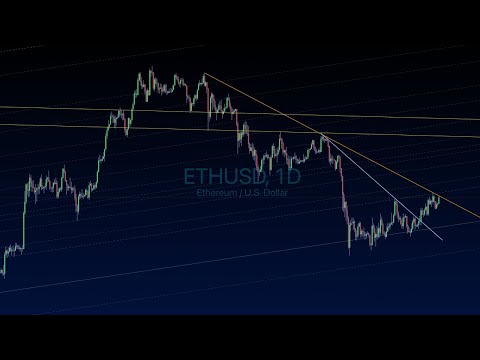
The importance of position sizing, especially around seasonalities for stocks, is emphasized as an additional edge. Ethereum is noted to be on the verge of a CTM 1.0 conservative line breakout, with a "double black diamond" entry already having taken off. The speaker advises on how to play such an entry, typically by waiting for a break of the wick or a close above the line, and crucially, how to manage risk using a trend line for exit if the price closes back below it.
Copper is observed bouncing off a breakout retest, while silver and gold are lagging. This leads to the speculation that a bottom has been called for Bitcoin, and a rollover from a gold bull market into a Bitcoin bull market could be underway, awaiting the next breakout for confirmation.
Bitcoin itself is shown with a conservative breakout in play, with clear risk management points. From a different angle, Bitcoin is approaching a final resistance zone, and a break and close above could lead to sharp follow-through towards $30,000. The speaker stresses that "we're not out of the woods until we're out of the woods." The current price is noted to be above the "previous cycle ceiling" of $17,250, prompting a question about whether a second massive leg down in the bear market is imminent, or if a low has been established after a 55% correction.
The speaker also mentions issues with the financial juice news feed on Discord being offline since the 15th, highlighting its value and the need to get it back online without interrupting their current workflow of modeling low caps without filters.
Another view of Bitcoin is presented, where it could be seen as a bear flag, with a potential trigger being a worsening situation in Iran leading to an oil spike above $120, potentially causing a recession. However, equity markets are currently at all-time highs. The speaker reiterates the importance of being on the right side of trades and leveraging templates to capture market moves.
The speaker discusses the "Fed playbook" playing out, where it took several weeks for risks to stabilize after the balance sheet began rising. Equities have led to all-time highs, and Bitcoin's turn is expected next, but it's dependent on the current energy spike and the situation in Iran. The US seems to be looking for an "off ramp," and Israel is cooperating.
The ongoing work on universal settings for low cap stocks is highlighted again, with the aim of finding a scanner to enable calculated risk speculation for calculated returns. If successful, this approach could be replicated in the altcoin market. Tesla earnings are also mentioned for the current evening. The speaker concludes by thanking the audience and encouraging them to hit the like button.