
Conquer Trading & Investing
AI Audio Summaries
20 videos summarized
1 follower on BriefTube
Last summary: Oct 7, 2026
AI Audio Summaries
20 videos summarized
1 follower on BriefTube
Last summary: Oct 7, 2026
Read AI summary
YouTube
The presenter reviews the 2026 top stock picks, assessing their performance to date and for the first quarter. The list, averaged, shows a 24.5% year-to-date gain, which the presenter deems not good enough, especially when compared to the NASDAQ's likely performance, which is estimated to be around 15% year-to-date. The presenter emphasizes the need to outperform and explores strategies to achieve this, including analyzing first-quarter performers and considering the potential of "dialed-in" strategies for specific assets rather than universal settings. A significant portion of the discussion revolves around macroeconomic factors and their potential impact on the markets, particularly Bitcoin. The nomination of Kevin Walsh as the new Fed Chair is a focal point. Walsh's stated preference for balance sheet reduction and quantitative tightening (QT) is contrasted with the current reality of the Fed's balance sheet expansion. The presenter questions whether Walsh will be able to implement his preferred policies without causing market disruption, drawing parallels to past situations where economic realities forced policy deviations. The current environment is described as a potential "melt-up" and the "greatest bubble of our lifetime," with the expectation that it will likely end badly. The presenter stresses the importance of timing and diligent market analysis.
Read AI summary
YouTube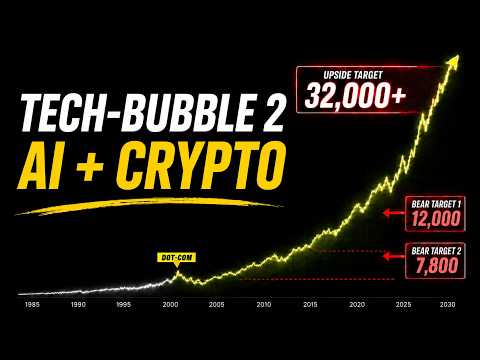
The markets are currently experiencing an "ugly" day, with the Nasdaq down two percent and Bitcoin also down almost two percent. A concerning development is the rising 10-year yield, which is approaching a level that previously prompted significant political intervention. The question arises whether this signals a market top or a correction leading into midterm elections, a period often associated with average 10% market corrections when a new Fed chair takes office. The discussion delves into potential scenarios, including the possibility of Iran collecting tolls on all goods and information passing through the Strait, a move that could drastically impact oil prices. There's speculation that oil might break out, with some observing an inverse head and shoulders pattern. The critical factor, regardless of pattern, is whether the trend line breaks. A measured move to the upside, if the trend line breaks, could see oil prices return to and exceed 2008 highs, potentially reaching $250 a barrel, which would be "bad news bears" for the economy.
Read AI summary
YouTube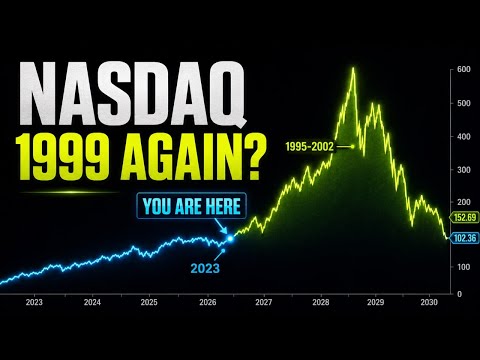
The speaker begins by acknowledging the current market situation, likening it to the 1999 bubble setup, characterized by a "mega shoot the moon move." They question if the market has gone "too far too quickly" and indicate a focus on identifying warning signs that could signal an end to this upward trend. While past indicators like CapEx spending have been monitored, they are considered lagging. The discussion then shifts to forward indications, starting with Bitcoin. Bitcoin is currently off its session lows but still slightly down, puzzling many given the NASDAQ's "melting up" trend. The speaker aims to provide perspective on whether this is a genuine melt-up or if a rollover is imminent, or if there's further upside potential. Drawing parallels to the Fed's cycle, specifically late 2019 when the Fed stopped Quantitative Tightening (QT) and expanded its balance sheet, a similar outcome is observed today: a tech-led melt-up in equities. Bitcoin, during the previous Fed pivot, saw a quick move up, a lower low, then an ascent. The expectation is for Bitcoin to catch up, currently showing slight upward consolidation, which is ultimately bullish. Tech, driven by AI build-out, is leading for good reason. The speaker anticipates Bitcoin accumulation over the next few days, possibly shifting to a bi-monthly cadence for strategy plans.
Read AI summary
YouTube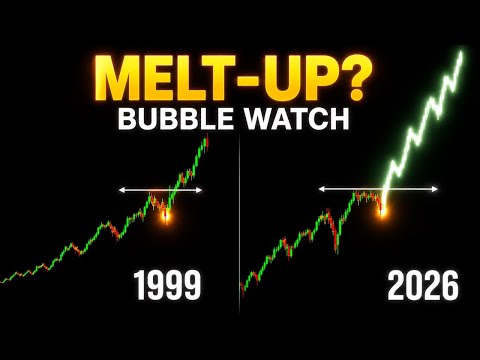
The current market is experiencing a "melt-up" phase, reminiscent of 2019 when the Fed expanded its balance sheet. This time, the focus is on Bitcoin, which is expected to stabilize over several weeks, potentially seeing one or two lower lows, though the latter seems less likely. Both bullish and bearish outlooks for Bitcoin suggest an exceptionally bullish future, differing only in the timing of the upward surge. Some predict a significant 50% correction in Bitcoin, possibly reaching $40,000 between September and November. This scenario would mirror Bitcoin's 2008 flatline followed by a sharp drop, triggered by Fed policy. However, the current market differs significantly from 2008, which was retail-driven. Today, institutional flows, particularly from spot ETFs, are holding up Bitcoin, resulting in a much smaller drawdown compared to previous cycles. Retail investors are currently irrelevant, a trend observed over the last three years.
Read AI summary
YouTube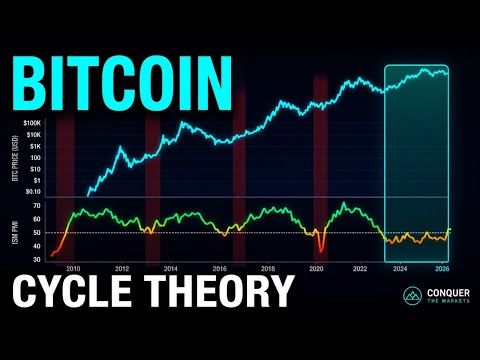
The speaker challenges the common assumption that Bitcoin's cycle top will occur in October 2025, suggesting an earlier peak in December 2024 or January 2025. By aligning cycle lows from February, previous cycle bands align more smoothly, indicating a potential peak earlier than most anticipate. This alignment suggests a traditional bear market could unfold sooner. This perspective is supported by several factors. The current move up in Bitcoin is different from previous cycles, partly due to significant spot ETF inflows and MicroStrategy's accumulation during the bear market. Aligning cycle tops from the January 7th event also shows this bear market is "massively different." Other analysts, like Checkmate, agree with an earlier top, drawing parallels to April 2017 versus November. The "on top," which signifies maximum realized profit coin day destruction, is argued to have occurred in December 2024 and February-March 2021, suggesting subsequent rallies were merely "last gasps of hope."
Read AI summary
YouTube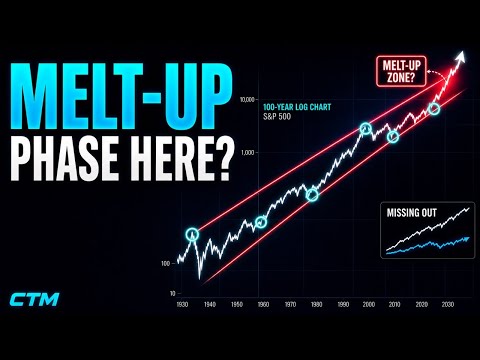
The market is currently exhibiting patterns that suggest a potential "melt up" phase, characterized by accelerated price behavior, similar to historical periods. Analyzing various charts, including the S&P 500, reveals significant structural breakouts and retests of long-term trend lines. One key observation is a beauty breakout and retest of an upward sloping trend line on the S&P 500. This pattern, when seen in an upward sloping channel, often leads to accelerated price action. Conversely, a breakdown from a downward sloping channel typically leads to accelerated decline or a liquidity grab. The current market behavior, with a breakout from an upward channel, indicates a potential melt up.
Read AI summary
YouTube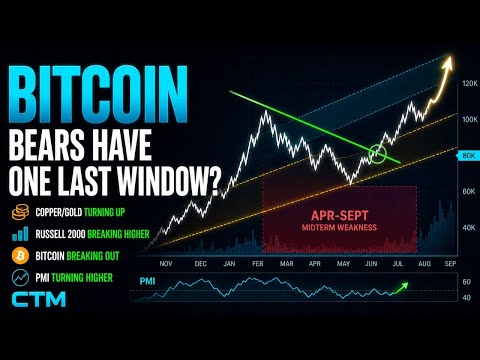
This week's market outlook highlights a complex environment with crude oil at $105 a barrel and rising yields, particularly real yields, which could disrupt the current market rally, potentially leading to a "melt-up." Concerns are noted regarding market thrust and seasonal patterns around midterm elections. The speaker emphasizes trading based on charts while maintaining awareness of broader market events, stressing the importance of not becoming complacent. For Bitcoin, the current technicals suggest a potential turn. The price has broken out of a downward-sloping trendline, a common characteristic of bear market endings. However, confirmation through follow-through is still pending. Bitcoin is up 2% today, with some chatter about the Clarity Act possibly moving towards passage, though its timing remains uncertain. The speaker draws a parallel to late 2022, when a similar trendline break on the Nasdaq, despite bearish sentiment, foreshadowed a significant upward move. An inverted Nasdaq chart was used to illustrate a potential waterfall decline, which subsequently occurred. This situation is presented as analogous to the current Bitcoin scenario, where a breakout from resistance is imminent after multiple rejections. A successful breakout could lead to a rapid decline towards the $80-$87 range.
Read AI summary
YouTube
The current market environment is characterized by a resilient US economy, despite concerns about a potential global event stemming from escalating tensions in the Strait of Hormuz and rising oil prices. Oil is currently just under $100 a barrel, with the potential to reach $120 or higher if the situation with Iran escalates further, especially given the rejection of Iran's recent proposal by the US administration. A key observation is the inverse relationship between gold and Bitcoin in past cycles. Historically, a significant bull run in gold has often preceded a Bitcoin bull run. This pattern has been observed in previous bear markets, where gold putting in a high coincided with Bitcoin putting in a low against gold, followed by a retest and then Bitcoin outperforming gold. The current situation shows this pattern recurring, but in an extremely elongated fashion, which could signal a slower, longer march upwards for Bitcoin once a breakout is confirmed. Unlike past breakouts, such as in July 2020, the current environment does not feature outright quantitative easing (QE), suggesting a less sharp but potentially more sustained upward trend.
Read AI summary
YouTube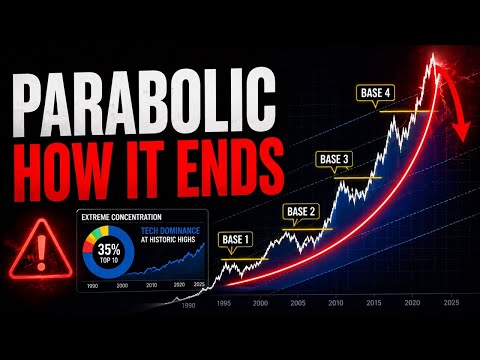
The market outlook remains uncertain, with several key factors influencing potential future movements. Yesterday's session saw the "mag seven" earnings, which provided significant insights, and the upcoming weekend holds the potential for further escalation in crude oil prices above $120 or a negotiated arrangement. Federal Reserve Chair Powell suggested a 30 to 60-day timeline to assess whether the recent energy price shock is a temporary event that the resilient economy can absorb, or if it will lead to significant, long-lasting macroeconomic consequences. Bitcoin is currently undergoing a retest after a massive breakout attempt. While a green day for Bitcoin is welcome, a sustained move above the resistance level is necessary for confidence that a bottom is in. The current situation is described as a breakout retest, and confirmation of the retest and subsequent upward movement is crucial. A breakdown and subsequent retest scenario is also being monitored, where a resumption of the downward trend would confirm the retest of a previous low. Historically, gold bull markets have preceded Bitcoin bull markets, and a confirmed retest of a bear market low in Bitcoin against gold could signal a stronger probability of a market bottom.
Read AI summary
YouTube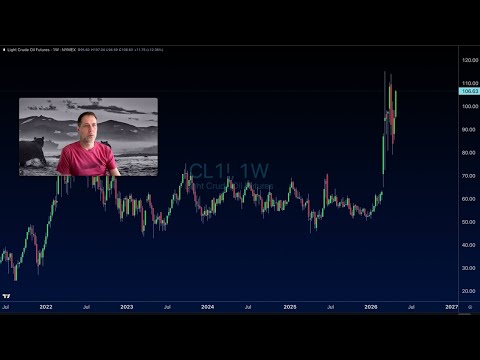
The current market situation presents a critical juncture, with several factors indicating a potential shift towards a bear market. The 10-year Treasury yield is rising, influenced by oil prices, which futures markets are pricing at $107 a barrel for light sweet crude. A significant concern is a potential pullback in capital expenditure (capex) spending, which currently drives the markets. If capex spending decreases, it could derail the markets. Another critical factor is the escalating negotiations between Iran and the White House regarding oil. Trump's strategy involves a blockade, aiming to damage Iran's oil production capacity long-term if their oil isn't flowing and storage runs out. Iran, however, is betting on outlasting Trump, with midterms approaching and the U.S. perceived to be running low on leverage. The speaker anticipates a short wave of strikes on Iran as Trump pushes for a resolution to lift the blockade and secure a concession from Iran regarding nuclear weapons. If this is not resolved, oil prices could surge above $120, leading to dire macro consequences and potentially a full-blown bear market. The clock is ticking on this situation, possibly leading to a resolution by Monday's market open.
Read AI summary
YouTube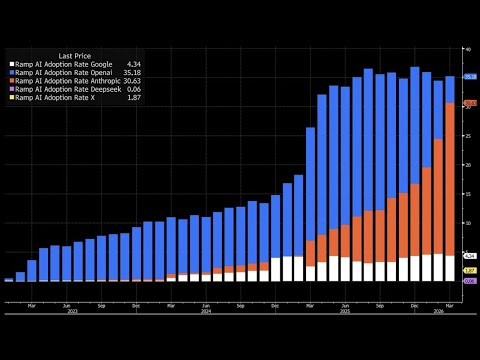
The discussion centers on whether the AI bubble is cracking, following reports that OpenAI missed internal revenue and user targets. This comes ahead of the MAG7 earnings reports from Amazon, Microsoft, Meta, and Google, which are anticipated to be major market events. The speaker dismisses the FOMC meeting as less significant, urging focus on tomorrow's earnings and potential broader implications beyond OpenAI's issues. The speaker believes OpenAI's product offering is inferior to Anthropic's, citing personal observations of users migrating from ChatGPT to Claude. A chart illustrates Anthropic's significant user growth, while ChatGPT's remains stagnant. Google's cloud CEO stated that AI demand will outstrip supply for the next decade, making tomorrow's earnings forecasts and CapEx spending crucial.
Read AI summary
YouTube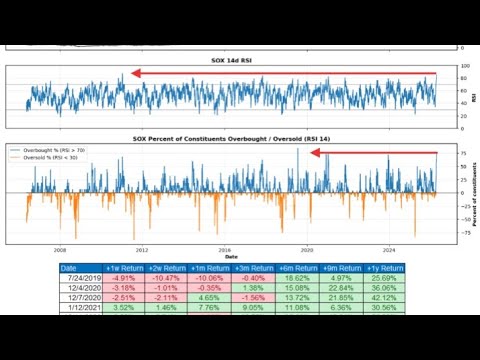
The speaker begins by highlighting a significant week ahead, with central bank activities and a focus on the US dollar and Japanese yen. The yen is trading just below 160, and its future strength depends on whether the Bank of Japan hikes rates in May to 1% or delays. This is crucial as the yen's unwinding has caused market turbulence, a topic previously discussed in December 2023. The speaker then shifts to their weekend work, having spent 14 hours on Ethereum, specifically reviewing their V4 crypto models. This intensive focus on crypto follows the completion of V4 models for stocks, signaling a return to re-evaluating Bitcoin and crypto strategies. The goal is to avoid complacency and continuously refine their approach.
Read AI summary
YouTube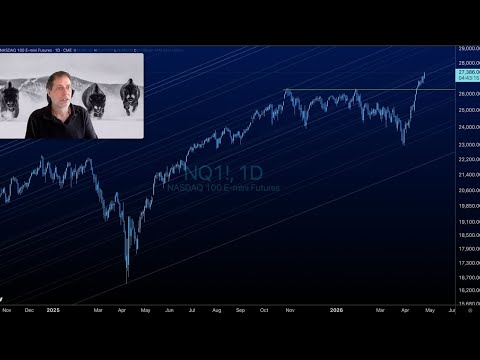
The speaker opens by acknowledging the Nasdaq reaching all-time highs, up 1.8%, attributed to news that Iran is sending a delegation to Istanbul, potentially signaling an end to the ongoing conflict. The current situation involves Iran being "hours, maybe a little bit more than hours, maybe a couple of days away from having to close off oil wells," which could have significant, potentially irreversible, repercussions. The blockade strategy is highlighted as a "brilliant strategy," reminiscent of its effectiveness in Venezuela. The discussion then shifts to market observations, noting a "fun Friday" with tech stocks performing strongly. Intel, in particular, is "absolutely screaming up," finally surpassing its 2020 all-time high after a 25-year wait for some investors. The speaker reflects on a recent decision to sell CHPY, an ETF that had been consistently rising for 18 days and pays a 40% annual dividend. The concern was around "NAV erosion," a factor dependent on the ETF's structure. Despite the sale, CHPY was up 4% on the day, leading to the self-assessment of a "bad call." The mention of "Chat GBT 5.5" is noted as interesting, with the speaker expressing surprise at being out of the loop regarding its release.
Read AI summary
YouTube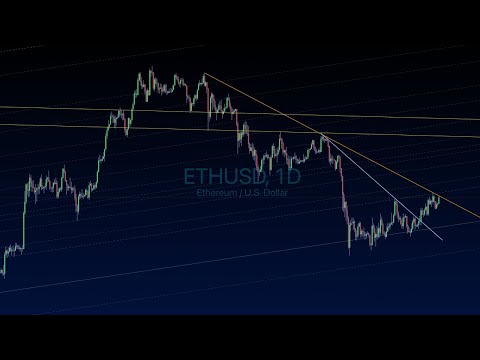
The speaker begins by acknowledging that markets are at major inflection points, with potential for strong follow-through if they break out. They share updates on various charts and ongoing work. A significant portion of the discussion revolves around crafting "low cap" stocks, defined as anything in the stock market below $2 billion. The goal is to identify what performed best between 2023 and 2026 and then develop a universal setting for a portfolio scanner to focus on these. Progress is noted, with Carvana being a successful model, though INOD proved challenging. Other stocks like Rocket Labs and ASTS are also mentioned as having been well-crafted, with ASTS significantly outperforming despite a drawdown. The speaker aims to complete work on IONQ, SMR, HIMS, and SOUS by the next day, which would then allow for the search for a universal setting. This work is described as significantly aiding the speaker's modeling ability.
Read AI summary
YouTube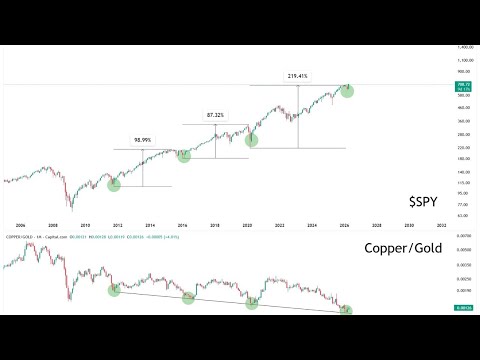
The speaker begins by discussing an ongoing project to identify top-performing low-cap stocks, specifically those under $2 billion that performed best between 2023 and 2026. The goal is to model the best V4 settings for each, then find universal settings for these potential "monsters." This involves analyzing various factors, including price-to-earnings ratios and cash burn, to create a scanner for successful low-cap runs. The speaker acknowledges the uncertainty of the current market cycle, noting that opinions are split between a bull trap and the beginning of a sustained bull market. The current market is described as event-driven and news-driven, with significant geopolitical events unfolding. The possibility of meetings in Istanbul and ongoing posturing by global powers are highlighted as critical factors influencing market stability. The speaker emphasizes that the world could look very different in the next 12-24 hours, underscoring the immediate impact of these events. There's also a plan to apply similar analytical methods to cryptocurrency, viewing this as a potential moment for speculative plays.
Read AI summary
YouTube
The speaker begins by discussing a potential adjustment to their presentation routine, considering playing the "honeymoon" track just before going live to set the desired mood. They then pivot to the current market, describing it as headline-driven and difficult to trade, reminiscent of March 2025. A key observation is the parallel playbook to the previous weekend, characterized by positive headlines during market hours, followed by denials and escalations from Iran after markets close. The speaker elaborates on the situation with Iran, noting that after market close, the parliament speaker denied certain points, and there were minor incidents like shooting at oil tankers, which they interpret as negotiation tactics. India was reportedly upset after firing on Iranian vessels despite having permission to cross the Strait. The speaker also mentions Trump's assertive stance, threatening to "blow everything up" if negotiations fail. They highlight that Trump announced sending a team to Istanbul, and Iran also confirmed sending a delegation, creating uncertainty about who is being more accurate.
Read AI summary
YouTube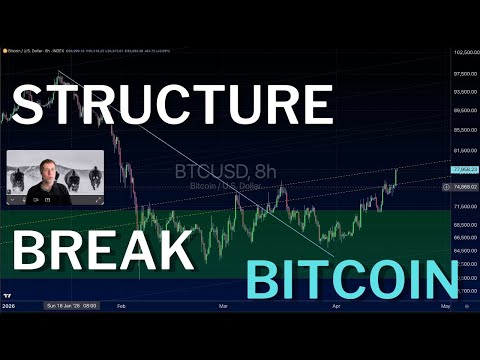
The S&P 500 is currently experiencing a significant upward trend, pushing to all-time highs with substantial buying activity, particularly from CTAs. Last week, an estimated $86 billion in buying was observed, following a period where CTAs were heavily short. This buying is expected to continue, with around $70 billion anticipated next week, even as many buybacks are in a blackout period. This indicates that CTAs are currently driving market flows. The market's performance is heavily influenced by geopolitical developments, specifically regarding the opening of a crucial strait and potential peace negotiations. There are conflicting reports about the strait's status, with Iran initially stating it's open, then affirming it, but also threatening a blockade if negotiations falter. A potential peace deal, even if it's only the second round of talks, could lead to significant market benefits, especially if the strait remains open and traffic increases. However, any escalation or reversal of the improving situation could trigger massive volatility.
Read AI summary
YouTube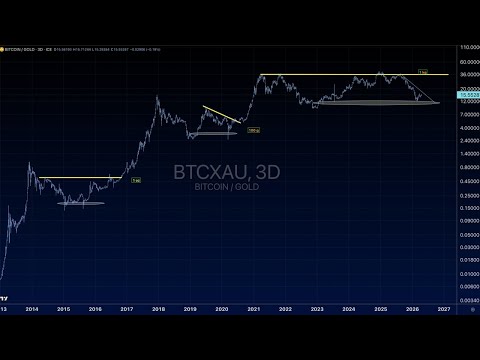
The discussion begins by highlighting gold's "super cycle" in 2023, noting its tremendous run and a period of consolidation, offering opportunities for dollar-cost averaging (DCA). The speaker draws parallels with past Bitcoin bear markets against gold, where gold's bull runs preceded significant Bitcoin bull markets. The first two Bitcoin bear markets saw 85% and 84% drawdowns, respectively, each followed by a retest of the low before a gold bull market led to a Bitcoin bull run. The most recent bear market, however, has different characteristics: it's longer in duration, with a diminished drawdown of 75%, and only 68% during Bitcoin's mega bull market. This is attributed to a fundamental shift where central banks have heavily invested in gold. The conversation then shifts to the broader business cycle, acknowledging varying opinions. Some believe the cycle is ending, potentially manifesting as a "triple top" on the NASDAQ, especially if a major engulfing candle appears next week. Others, like Elon Musk and Kathy Wood, foresee substantial GDP increases and an "arc of epic proportions" for the business cycle after a period of suppression. The current market ascent, led by the "MAG7" (Magnificent Seven), has been incredible, with many money managers feeling "short" and under pressure to chase, which could lead to a "euphoric top" before a severe bear market. The rapid shift from extreme oversold to extreme overbought in many assets is unusual, with April historically being a volatile month.
Read AI summary
YouTube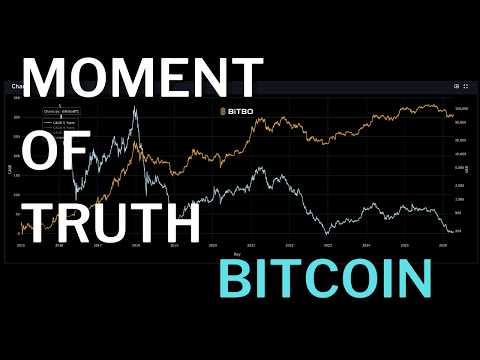
The market is showing resilience, with Tesla experiencing a nearly 7% surge. MicroStrategy had a notable trading anomaly earlier in the day, though its exact nature is unclear. NVIDIA continues its strong upward trend, up 9%. In the crypto space, Bitcoin and Cardano are both hedged against each other and currently in a loss. Bitcoin has encountered resistance at the yellow marked upward channel. A break above this resistance could lead to a significant bounce, potentially towards $83,000-$87,000.
Read AI summary
YouTubeBriefTube monitors your YouTube channels, generates AI-powered audio summaries, and delivers them wherever you listen. Telegram, Discord, Slack, or your podcast app. Fully automated.
Start free trial