L’agence MATRIMONIALE des entrepreneurs
AI Summary
This summary explores the insights of Alice Bentink, co-founder and CEO of Entrepreneur First (EF), a "talent investor" that has built a portfolio valued at over $15 billion. The conversation focuses on the mechanics of finding world-class founders, the psychology of high-stakes entrepreneurship, and the critical cultural differences between the European and American tech ecosystems.
### The Philosophy of Talent Investing
The core premise of Entrepreneur First is that the most valuable "nuggets" in the tech world are not companies or ideas, but individuals. Bentink argues that ideas are essentially "ten a penny" and will inevitably iterate or fail. However, the behaviors and ambitions of a person are largely fixed. EF identifies high-potential individuals before they have a company or even a co-founder.
By focusing on "edge"—the specific domain where an individual has spent significant time and energy—EF helps founders find a starting point they can dominate. This model challenges the traditional venture capital approach by moving one step earlier in the lifecycle: investing in the person rather than the pitch.
### The Science of Co-founding
Bentink identifies co-founder breakups as the primary reason early-stage companies fail. To mitigate this, EF acts as a high-stakes matchmaker for strangers. The process is clinical and unsentimental. They discourage "co-founders of convenience"—friends who work together simply because they are available. Instead, they push for pairs with complementary skills and shared ambitions.
The primary metric for a successful partnership is "productivity." Bentink suggests that founders should know within 48 hours to a few days if a partnership is right. If a pair is not more productive together than they are individually, they are encouraged to "break up" immediately. EF makes the opportunity cost of these breakups low by providing a pool of other potential partners in the same office. This "speed-running" of relationship dynamics allows founders to find the right team before they have signed legal agreements or raised significant capital.
### The Psychology of "High Personal Exceptionalism"
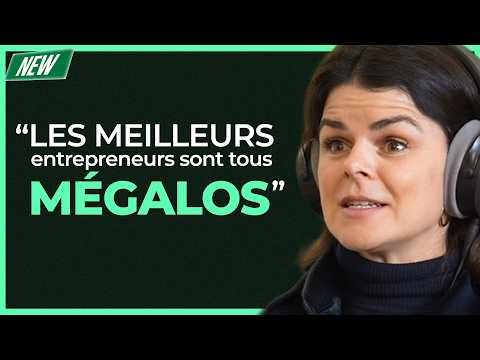
A controversial but central theme of the discussion is the role of "megalomania" and "high personal exceptionalism" in founding. Bentink asserts that while these traits are not sufficient for success, they are necessary. A founder must believe their odds of success are fundamentally different from everyone else's.
This mindset often stems from a desire for power or impact, sometimes linked to childhood experiences that foster a high drive for resilience. Bentink notes that while the term "megalomania" has negative connotations, in the context of startups, it manifests as a belief that one’s point of view is uniquely correct and that they have the right to influence millions of lives.
### The Transatlantic Bridge: Europe vs. the US
A significant shift in EF’s strategy involves moving its companies to the United States, specifically San Francisco. Bentink highlights a stark cultural delta between European and American founders. European founders are often praised for being "methodical" or "great at product," which she interprets as a polite way for US investors to say they are "slow" or "not hungry."
In Europe, ambition is often repressed or viewed as "dirty." In contrast, the US ecosystem normalizes aggressive growth and "playing to win." This aggression is reflected in market speed; in the US, a three-week-old startup can land a $50,000 contract because American customers are more willing to take risks on new technology. In Europe, customers are often afraid of looking bad to their superiors, which slows the entire ecosystem down.
EF’s new "Bridge" residency in San Francisco is designed to help European founders peel back these cultural constraints. By immersing them in an environment where "stealth founders" are the norm and planning happens in hours rather than quarters, EF aims to fast-track the development of European talent.
### The Impact of AI and the "Golden Handcuffs"
AI has lowered the barrier to entry for building products, leading to an increased supply of founders. Bentink views this as a "golden era" for entrepreneurship. However, she remains concerned about the "golden handcuffs" of traditional high-prestige careers in Europe, such as investment banking or consulting.
She argues that the real opportunity cost for a high-potential individual is not the lost salary from a corporate job, but the "billion-dollar company" they never build because they remained in a comfortable role. Her advice to young people—particularly young women—is to start early. The muscle of founding is built through multiple attempts; statistics show that success is significantly more likely on a third or fourth company.
### The Business of Entrepreneur First
EF has evolved from a scrappy non-profit (2012–2015) into a sophisticated investment firm that manages $750 million in assets. They invest off their own balance sheet, allowing them to take a long-term view of their portfolio. Their current offer includes a stipend, $250,000 in initial funding for roughly 9% equity, and access to a follow-on fund that can provide up to $3 million in additional capital.
Ultimately, Bentink’s mission is to professionalize the "founding career path." By providing a playbook, a network, and a high-pressure environment, EF seeks to ensure that the world’s most ambitious people don’t get lost in traditional corporate structures, but instead build the companies that will define the next decade of technology.