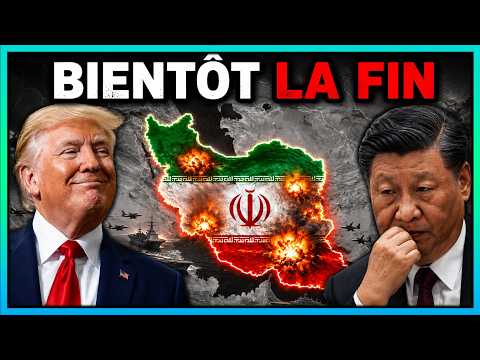
🚨 Le piège américain se referme sur l'Iran (le compte à rebours a commencé)
AI Summary
On April 26th, Iran's Revolutionary Guard proposed peace to the United States via Pakistan, offering to reopen the Strait of Hormuz, cease hostilities, and negotiate. This sudden shift, however, stems from a critical economic juncture. Iran has alienated its primary oil buyer, China, which is now officially demanding the reopening of Hormuz. In Guangzhou, China, rising plastic prices have led to factory closures and worker protests, prompting President Xi Jinping to prioritize his economy over supporting the Iranian regime.
Simultaneously, U.S. sanctions are severely impacting Iran. Oil storage tanks are overflowing, and experts warn that Iranian oil fields could suffer irreversible damage within one to two weeks if production cannot be reduced, a critical deadline around May 10th. This urgency is pushing Iran to consider alternative strategies. While Tehran negotiated in Islamabad, Iran's Foreign Minister Araghi traveled to Moscow to meet with Vladimir Putin.
The Iranian peace offer was publicly rejected by U.S. Senator Marco Rubio on Fox News. Consequently, Iran finds itself in a precarious position, advocating for an end to the conflict to avert collapse. The situation raises questions about whether this marks an Iranian defeat or the prelude to a more intense and deadly conflict.
Just days prior, on April 25th, the White House announced the dispatch of negotiators to Islamabad for talks with Iran. Iranian Foreign Minister Abas Araghchi met with Pakistani officials, describing the discussions as "very fruitful." However, Araghchi's subsequent rapid diplomatic tour, including visits to Oman and Moscow, suggests a hurried effort to find a resolution.
President Trump, in a characteristic move, canceled the U.S. delegation's trip, stating there was no point in "sitting and talking for nothing." He deemed Iran's initial written proposal insufficient but then received a second, improved offer minutes later. This revised proposal included reopening Hormuz and ending the war in exchange for the lifting of U.S. sanctions and a delay in nuclear negotiations. The justification for postponing nuclear talks was an alleged internal fracture within the Iranian regime, hindering agreement on concessions. However, this delay is problematic, as the nuclear program was the very reason for previous U.S. military actions. Without addressing the nuclear issue, the U.S. loses leverage for disarmament.
On April 27th, a White House crisis meeting was held to discuss Iran's proposal. The preceding weekend had been eventful, including a shooting incident at a White House Correspondents' Dinner, which Trump dismissed as irrelevant to the Iran conflict. On Fox News, Marco Rubio vehemently opposed Iran's offer, interpreting "reopening Hormuz" as a demand for a toll and equating it to terrorism. He insisted that the nuclear issue, the catalyst for the February 28th bombings, could not be postponed. This has led to an impasse, with Pakistan dismantling security checkpoints in Islamabad, signaling an immediate halt to further negotiations.
The urgency stems from Iran's collapsing oil exports, which have dropped by 70% since March. U.S. naval actions are intercepting tankers, and Iran's immense oil production has nowhere to go, filling storage to capacity. Improvised solutions like using old tankers and reactivating disused tanks offer only temporary relief. Experts estimate that Iran's land storage will be saturated within 12 to 24 days, with potential irreversible damage to oil fields if production cannot be halted, as shutting down mature fields carries significant risks of long-term production loss.
Adding to Iran's woes, its sole major trading partner, China, has signaled its displeasure. Xi Jinping's statement to Saudi Crown Prince Mohammed bin Salman emphasizing the importance of keeping Hormuz open indicates Beijing's waning patience. While Iran relies almost entirely on China for oil exports, China's imports from Iran constitute only 11% of its total oil needs, with Gulf nations providing a much larger share. The disruption in Hormuz has directly impacted Chinese industries, leading to factory closures and economic slowdowns.
Currently, a fragile ceasefire is in effect, extended indefinitely by Trump on April 22nd, but the naval blockade remains. The presence of multiple U.S. aircraft carriers in the region signifies a strong U.S. posture. Iran continues its provocations, including seizing ships and mining the passage. Diplomatic channels are closing, with U.S. negotiators withdrawn, Rubio's rejection of the offer, and Pakistan dismantling checkpoints. Araghchi's meeting with Putin in Moscow,