😮 Rothschild : la VÉRITÉ sur la famille la plus mystérieuse du monde...
AI Summary
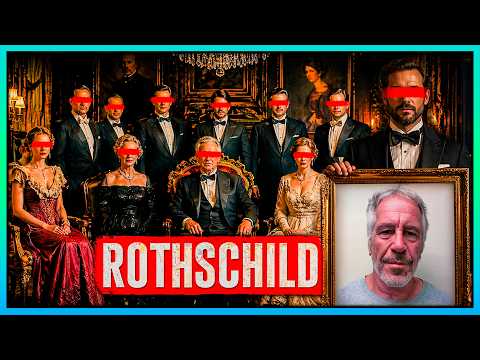
The transcript discusses the Rothschild family, focusing on recent controversies and common misconceptions surrounding their wealth and influence. A central point of discussion is the relationship between Ariane de Rothschild, head of the Edmond de Rothschild bank, and the notorious Jeffrey Epstein. Their interactions, revealed in the Epstein Files, include thousands of messages and over 5,500 email exchanges over six years. While Ariane referred to him as Jeff and he called her Arian, their communications included personal confidences about her marriage and discussions about meeting in various locations like Paris, New York, and Little St. James island. The transcript emphasizes that these interactions were not illegal or immoral, though they involved contracts worth tens of millions of dollars for Epstein’s services.
The appearance of the Rothschild name in the Epstein case has reignited numerous conspiracy theories. The family is often rumored to be wealthier than figures like Crassus, Midas, and Elon Musk combined, controlling central banks, funding intelligence agencies like the CIA and MI6, and even terrorist organizations. They are also fabled to have orchestrated the fall of the last Russian Tsar and maintained their power for centuries through a pact with the devil.
In reality, the Rothschilds’ history is that of a family originating from a Frankfurt ghetto, funding wars and businesses, surviving Nazism, enduring nationalization, and achieving success while cultivating extreme discretion. However, recent events, particularly the Epstein affair, have brought them unwanted public attention. Ariane de Rothschild, born Ariane Langner in El Salvador in 1965, began her career as a trader and later met Benjamin de Rothschild, whom she married in 1999. In 2015, she became the first woman and first non-descendant by birth to lead an establishment of the Edmond de Rothschild group in 250 years.
At the time, the Rothschild bank was under investigation by U.S. justice for tax evasion, like many Swiss banks. Ariane sought support in Washington, and Epstein, with his extensive network and high-placed contacts, offered exactly that. Their meeting occurred in 2013, five years after Epstein’s conviction, facilitated by Norwegian diplomat Terje Rød-Larsen, who has since faced charges of complicity in corruption. The group Edmond de Rothschild has defended their relationship as purely professional, but documents suggest a more intimate connection. Ariane confided in Epstein about personal matters, and he offered her moral support. He even invited her and her four daughters to Little St. James island for lunch, an invitation the group claims was brief and uneventful, but which now appears chilling given Epstein’s known activities. In 2015, two contracts committed the bank to pay Epstein’s company, Southern Trust Company, $25 million for networking and tax advice. The transcript clarifies that there is no indication Ariane de Rothschild was aware of Epstein’s crimes, and both she and the group have condemned his actions. However, the question remains how the head of a Swiss private bank could maintain such an intimate relationship with a convicted sex offender for six years without public scrutiny.
This incident follows another scandal, the 1MDB affair, a Malaysian sovereign fund from which billions were siphoned. In May 2025, the Luxembourg subsidiary of Edmond de Rothschild was fined 25 million euros for money laundering, with nearly 500 million transiting through accounts there. The investigation is now targeting the subsidiary’s executives.
The transcript then debunks common myths about the Rothschilds. The idea that they control central banks like the Fed, the Bank of England, and the ECB is false; these are public institutions. The Fed is overseen by the U.S. Congress, and the Bank of England was nationalized in 1946. Fictional quotes attributed to Nathan and Jacob Rothschild about controlling a nation’s money or information are also addressed.
Regarding their supposed immense fortune, the often-cited figure of $3.5 trillion (or even $5 trillion) is unsubstantiated and has circulated online for two decades without verification. In reality, in 2015, Forbes listed only one Rothschild billionaire, Benjamin de Rothschild, with $1.1 billion. After his death in 2021, no family member remained on the list. Jacob Rothschild, from the English branch, was estimated by Bloomberg to be worth around $1 billion at his death in 2024. The French branch, led by Ariane de Rothschild and her four daughters, is estimated by Challenges magazine to have a fortune of approximately 5 billion euros in 2024. Serious estimates for the entire family, including all branches and descendants, range from $10 to $20 billion. While substantial, this is significantly less than figures like Elon Musk’s wealth and comparable to the fortune of the family behind Nutella. The Rothschild fortune is diluted across generations, with hundreds of descendants from the patriarch Mayer Amschel Rothschild’s five sons. Their assets are largely held in private holdings and family trusts, making them opaque, which fuels public fantasies more than factual figures.
The Rothschilds primarily own two banks with no capitalistic ties: Rothschild & Co, an investment bank led by Alexandre de Rothschild, focusing on mergers and acquisitions, and Edmond de Rothschild, a private bank based in Geneva, led by Ariane, which manages 170 billion euros in assets. Their undisputed domain remains vineyards, including Mouton Rothschild and Lafite Rothschild, two of Bordeaux’s top Grand Cru Classé wines.
The family’s origins trace back to Mayer Amschel Rothschild, an 18th-century pawnbroker in Frankfurt, who sent his five sons to establish a banking network in major European capitals. They became the world’s first financial multinational, financing the Napoleonic Wars and building immense wealth in the 19th century. However, they faced significant challenges, including the confiscation of assets by the Nazis during the Anschluss and the nationalization of their bank by François Mitterrand in 1982. David de Rothschild rebuilt the empire from scratch, transforming a former railway company, Paris-Orléans, into Rothschild & Co.
Finally, the transcript notes Emmanuel Macron’s past as an investment banker at Rothschild & Co, a fact that is not a conspiracy but part of his CV, and explains why the Rothschild name often elicits strong reactions in French political discourse. The Rothschild clan is indeed wealthy and exerts influence, but they are not above the law or the "masters of the world." The video concludes by promising to follow the ongoing developments in the Ariane de Rothschild and 1MDB cases.