J'ai analysé 50 ans de cycles : Voici ce que j'ai appris
AI Summary
The S&P 500, Nasdaq, NIKKEI, gold, U.S. real estate, and the Buffet Indicator are all at historic highs. The Buffet Indicator is currently over 228%, a 100-year record. This indicator measures the valuation of S&P 500 companies against the U.S. GDP. Warren Buffet himself stated that above 200%, remaining invested in financial markets is "playing with fire." This video will offer a perspective on current market analysis, geopolitics, and valuations, concluding with three personal actions based on this analysis.
My research included over 50 years of stock market cycles. American stocks are at their peak, with the S&P 500 up over 30% in one year and doubling in five years. The Nasdaq also hit historical records. NVIDIA, for instance, is valued at over $5 trillion, exceeding the entire CAC 40 combined. A structural problem, previously discussed in a vlog from Singapore, is the high concentration of the "Magnificent Seven." These seven companies now account for 44% of the S&P 500’s value, surpassing the other 493 companies combined. This signifies an enormous concentration of global investment in a very few U.S. tech companies.
Gold is also at historic levels, having experienced an unprecedented surge. Historically, gold was a hedge against inflation and currency changes, but its increased accessibility through ETFs like GLD and IAU has made it more volatile over the last decade.
National debt levels are concerning. The U.S. debt-to-GDP ratio was 60% from 1999 to 2007; today, it’s around 125%. France shows a similar trend at 113%. Governments are reaching the limits of inflation elasticity, having devalued their currencies and accumulated massive debt. They continue to seek inflation to artificially reduce debt, but the Federal Reserve is now constrained, citing "no room to cut" in 2026, with inflation around 3.3%.
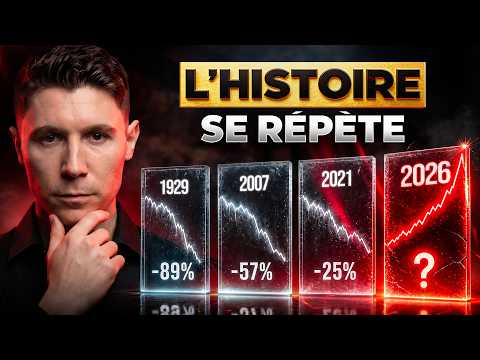
The Buffet Indicator is a major concern. In 2000, at 146%, the Nasdaq subsequently dropped 78%, taking 13 years for investors to recover their nominal capital. The 2007 subprime crisis, with the indicator at 109%, saw the S&P 500 fall 57% and U.S. real estate 32%, triggering global economic crises. In 2021, at 200%, there was a massive crash across all assets—stocks, cryptos, and long-term bonds—all down at least 30% in a year. During these periods, cash and uncorrelated assets like online businesses were the only safe havens.
The current disconnect between real value production and valuations is enormous, suggesting investors believe this growth will never end. They are willing to pay high multipliers for long-term holdings, despite many having short-term expectations. Warren Buffet's record cash balance further indicates a lack of attractive investment opportunities.
Based on this analysis, my first action is to reduce exposure to the U.S. financial market from 33% to 18% of my portfolio. Second, my liquidity level will increase from 5% to 10%, a significant shift for me, as I typically maintain around 2.5%. This is feasible due to diverse income streams from private equity, stock market investments, private debt, and real estate. Third, the freed-up capital will be invested in uncorrelated, income-generating assets, specifically private equity in online businesses not listed on the stock exchange. My company, Online Asset Private Equity Club, acquires, develops, and resells such businesses, achieving over 16.6% net returns for investors in 2025.
It is crucial not to sell your entire stock portfolio. This is not about timing a market crash, as markets can remain irrational for extended periods. However, I believe risk coverage is necessary. The 2026 outlook suggests a rapid, violent, deep, and lasting market correction. Unlike past quick recoveries, all indicators point to a severe event. The Fed's inability to intervene as it did in 2007 or 2008 makes this situation more precarious.
Three key questions arise: Are your current investments aligned with this information? Do you have sufficient cash to act, as "cash is king" for the next 2-3 years (e.g.,