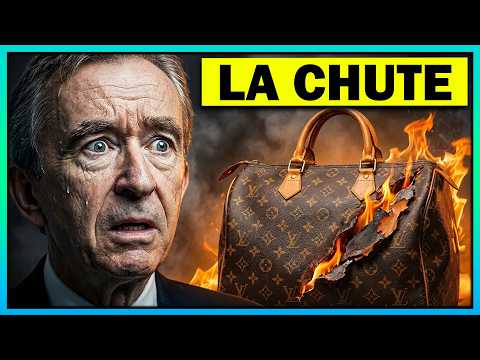
MAIS QUE S'EST-IL PASSÉ AVEC LVMH ?
AI Summary
LVMH is facing a significant downturn, with first-quarter revenues dropping by 6% to 19.1 billion euros. This has led to an immediate stock market reaction, with the share price declining 27% year-to-date and falling another 2.4% after the results announcement. Bernard Arnault, once vying for the top spot on the Forbes billionaire list, has slipped to seventh place with a fortune of 171 billion euros. LVMH itself has lost 50% of its value from its peak three years ago, a staggering 237 billion euros, impacting not only the Arnaud empire but also other luxury giants like Hermès, Christian Dior, and Kering, which has lost two-thirds of its value in five years. The luxury market has seen 70 million customers stop buying, a phenomenon the video aims to explain.
Amidst this crisis, with potential US tariffs on French champagne and geopolitical instability in the Middle East, Bernard Arnault, at 77, has been aggressively repurchasing LVMH shares, investing hundreds of millions of euros. This unusual behavior raises questions about his strategy and foresight.
The video then pivots to discuss the success of startups like Airbnb and Stripe, attributing their growth to accelerators like Y Combinator. It introduces Fundora as a platform offering access to private equity investments in Y Combinator-backed companies through two funds: YC Venture for early-stage startups and YC Grows for established private companies. Fundora emphasizes diversification and expert management to mitigate risk.
Returning to LVMH, the video details the company's financial struggles. Annual results for 2025 showed an 8.8 billion euro revenue decline to 80.8 billion euros, a 5% drop, with a 13% decrease in net profit to 10.9 billion euros. The operating margin has also seen a three-year decline. The core fashion and leather goods division, including Louis Vuitton and Dior, saw a 5% decrease in sales, while wines and spirits fell by 9%. Sephora was a bright spot with 4% growth, but it couldn't offset the overall decline. The stock plunged nearly 8% on the results day, dragging down the CAC 40 index. The first quarter of 2026 has continued this trend, with sales expected to remain down. The conflict in the Middle East has hurt investor confidence and impacted a key growth region for luxury.
The video highlights that this downturn is not unique to LVMH but affects the entire European luxury sector. Kering has lost 66% of its market value in five years, with its flagship brand Gucci experiencing consecutive negative quarters. Hermès, while more resilient, still saw a 9% dip. In total, the luxury sector has lost over 100 billion euros in market capitalization this year.
A primary reason for this decline is the alarming disappearance of customers. A report indicates that the number of active luxury buyers has dropped from 400 million in 2022 to 330 million in 2025, a loss of 70 million customers. These are primarily "aspirational" buyers who are now finding luxury goods too expensive. Brands like Dior and Chanel have significantly increased their prices post-Covid, leading to market polarization where a small percentage of top spenders account for a large portion of sales. Many consumers are turning to the second-hand market, which is now valued at 50 billion euros and growing. Furthermore, consumers are increasingly prioritizing experiences over material goods, diverting spending from traditional luxury items like bags and watches.
The American market, a crucial quarter of LVMH's sales, has been impacted by potential US tariffs, particularly on French wines and spirits. Donald Trump's threats of 200% tariffs on champagne and subsequent 15% tariffs have created uncertainty and hurt sales. The crisis in the Middle East and reduced spending from Chinese consumers further complicate LVMH's situation, forcing the company to choose between protecting margins or raising prices further, which risks alienating more customers.
Amidst this turmoil, Bernard Arnault's significant share repurchases, totaling 771 million euros in 90 days, are seen as a strategic move. The family has increased its stake in LVMH to over 50%, signaling confidence and securing absolute control for future decisions. While Arnault has made provisions to remain in charge until 85, the succession plan remains unclear, creating a governance discount for the stock.
The video suggests that while LVMH has weathered past crises, the current situation may represent a more profound shift in consumer values, with a potential redefinition of what is priceless. The luxury market is expected to grow, but it will likely be driven by experiences rather than material possessions, and the model of perpetual price increases is deemed unsustainable. Analysts advise caution for new investors, suggesting the correction may not be over and that a clearer picture will emerge later in the year. For existing luxury stock holders, a long-term perspective is recommended.