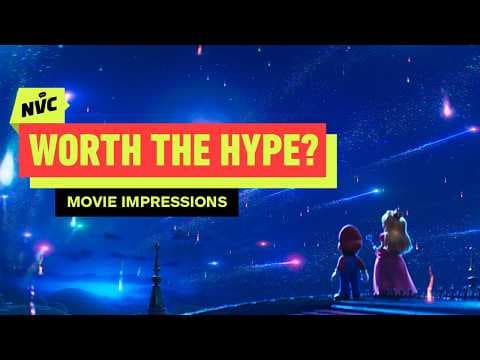
Does the Mario Galaxy Movie Live Up to the Hype? - NVC Clips
Audio Summary
AI Summary
The new Mario movie has generated varied reactions, with some critics finding it a "mess" from a storytelling perspective, while others, including the hosts, enjoyed it, often comparing it favorably to the first film. One host went in with lowered expectations due to critical reception but found it on par with the original. They likened it to "Mario Galaxy," where the appeal lies in immersing oneself in different levels and worlds rather than a cohesive through-line. The characters were generally well-realized, and the movie featured notable cameos, with Star Fox being a significant highlight. However, without the nostalgia and cameos, some view the movie as "flimsy."
A recurring theme in the discussion is that the movie's vision aligns with a Super Mario game: a thin emotional core serving as a vehicle for "Looney Tunes-shaped vignettes" that are either funny or cool, strung together by a simple narrative. This structure, much like Mario levels, offers bite-sized challenges without deep storytelling but celebrates the visual and auditory experience.
A significant improvement over the first movie, according to the hosts, is the soundtrack. While the first film featured licensed pop songs like "Take on Me" and "Kill Bill" tracks, this sequel primarily uses orchestrated remakes of classic Koji Kondo music, along with contributions from Hajime Wakai. This change made the movie feel more authentic to the Mario universe. There are only a few licensed songs, none of which are considered intrusive. While some wished for more music from "Mario Galaxy," the overall orchestral score was highly praised for enhancing the Mario feel.
Despite the positive reception from fans, some acknowledged the film's weaknesses. One major criticism is the "magic will solve anything" problem, where characters easily overcome obstacles by hitting a question mark block and receiving a convenient power-up, removing any sense of agency or clever problem-solving. Another issue is the introduction of too many characters and villains, such as Yoshi, Rosalina, Fox, and additional antagonists, which prevents any single character from being fully developed. Mario and Luigi sometimes feel forgotten in their own storyline, and some characters, like Rosalina, are underutilized, despite their potential. This leads to a lack of emotional impact compared to other animated films like "Up" or "Ratatouille," which have strong emotional resolutions. The movie is described as a "rollercoaster ride" of visuals and references, which appeals to fans but might leave general audiences feeling it's "empty calories" without the nostalgic connections.
The movie's target audience is clearly Mario and Nintendo fans. Those who are not familiar with the games or characters might find much of the content lost on them. The film's structure is compared to "Mario 64," where characters jump through paintings into completely different scenarios, or "Mario Odyssey" with its diverse locations. The inclusion of Universal's own IP, like the "Jurassic Park" roar for the dinosaur, was noted as a funny detail.
The writing and characterization are considered the weakest aspects, especially for critics or non-Nintendo fans. The strategy of making a movie "for the fans by the fans" is questioned, as it might limit its appeal to a broader audience, contradicting Nintendo's stated goal of growing the Mario audience. The movie's references, such as Wart, Birdo, and Ninji, are deep cuts that many general viewers, and even some kids, might not recognize, leading to a quieter audience reaction compared to other fan-heavy screenings.
A major disappointment for some was the treatment of Rosalina. While the first movie broke the "damsel in distress" trope by giving Peach powers and autonomy, Rosalina, despite her powerful introduction, is quickly sidelined and locked up for most of the film, echoing an old video game trope. This was seen as a missed opportunity, especially given the character's popularity and the voice actor's enthusiasm for Nintendo.
The movie is packed with action and physical comedy, which Illumination, the animation studio, excels at. Fight scenes are well-choreographed, and clever visual gags are abundant, often overshadowing the dialogue and writing. The action sequences, however, often lack a sense of challenge or puzzle-solving, presenting a straightforward path without much doubt about the heroes' success.
A significant spoiler discussed is the extensive role of Star Fox. Initially teased with a leaked image, Fox's presence in the movie is far greater than anticipated. His introduction, which includes an old-school '80s anime-style backstory, genuinely surprised and delighted fans. The inclusion of Fox, along with glimpses of Pikmin and other Nintendo characters like Mr. Game & Watch and Daisy, sparked speculation about a potential "Smash Brothers" movie, though some believe it's more about using a "gateway galaxy" as an excuse to bring in various Nintendo IPs. The "Arwing" sequence and space battles with Fox were particularly praised.
The character of Fox, while cool and heroic, also takes away screentime from Mario characters, having a larger role than Rosalina and Yoshi combined. His introduction hinted at a potential rivalry with Mario for Peach's affection, but this was quickly dismissed, suggesting a potential tug-of-war between Illumination's creative vision and Nintendo's strict control over their characters and relationships.
The movie is filled with references and homages to various Mario games and even other classic films like "Star Wars" and "Jurassic Park." Examples include Bowser Jr.'s "Death Star"-like weapon, Wart resembling Jabba the Hutt, and the Arwing crash site mirroring the X-wing on Dagobah. The "Mario Maker" scene, where Bowser Jr. designs a challenging level for Mario and Peach, was highlighted as a brilliant way to incorporate different art styles and eras of Mario games.
Overall, the movie is seen as a "giant toy box" of every Mario game, combining elements from various titles into a new structure. While it might lack a cohesive narrative or deep emotional impact for some, its celebration of the Mario universe, improved soundtrack, and action sequences make it an enjoyable "amusement park ride" for dedicated fans, even if it doesn't always cater to a broader audience.