The Creative Genius of Sneaker Design | Salehe Bembury and Cloe Shasha Brooks | TED
Audio Summary
AI Summary
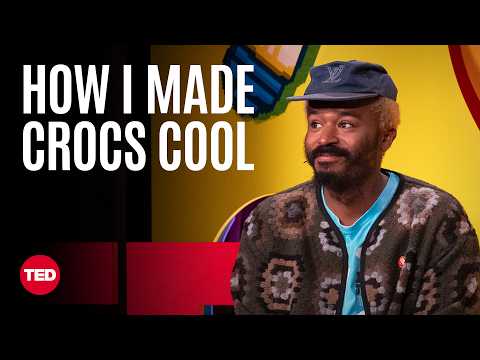
Salehe Bembury discusses his journey and design philosophy, highlighting key collaborations and projects. He explains how he transformed Crocs into a fashion item with the Crocs Pollex clog, inspired by his fingerprint. This collaboration began with Crocs reaching out, and Bembury proposed a partnership, focusing on manipulating the shoe's form rather than just reskinning it, drawing from his industrial design background.
Bembury recounts his early career, starting at Payless in 2009 and progressing to collaborations with major brands like New Balance, Cole Haan, and Versace. He shares a pivotal moment where, while unemployed and eating cereal on his couch, he used LinkedIn to connect with Versace. This led to a meeting with Donatella Versace, where he presented his vision for their sneaker program. Impressed, she offered him a role, and he negotiated to establish his own design studio in Los Angeles while traveling to Milan monthly, a move he describes as life-changing and a testament to the power of asking.
His design philosophy emphasizes playful use of color, form, and function, incorporating nuanced details and "Easter eggs." He showcases his first collaboration with Anta, a from-scratch project that introduced him to the footwear industry under his own name. He also discusses the HALI 1, Tyrese Haliburton's first signature sneaker with Puma, which he was inspired to create due to his love for basketball. Another notable project was with Pyer Moss, where he designed a shoe representing the feeling of being financially stuck, using silicone as a material solution.
Bembury touches on his Moncler Genius collaboration, his first ready-to-wear collection, which involved creating a full installation that told the story of the collection through footwear, accessories, and billboards. He explains that establishing a signature language allows him to translate his aesthetic across different product categories. He also highlights the New Balance "Sand be the Time" project, influenced by a trip to Utah's pink sand dunes, where he used chenille to evoke the colors of the sunset.
A particularly popular design is the New Balance "Peace Be the Journey" shoe, inspired by Arizona's Antelope Canyon. Bembury believes its enduring popularity stems from telling a resonant story, using colors that represent the canyon's tones and the sky. He notes that visual cues, like wearing certain brands, can signify community, a concept he explored with this shoe.
He shares the innovative New Balance 574 Yurt shoe, featuring a whistle on the heel. This idea emerged from observing unused "real estate" on shoes and wanting to add functionality. He conceptualized the whistle as a practical tool, especially for outdoor activities, contrasting the energy needed to scream versus blow a whistle.
Bembury emphasizes that "genius can be created in seconds and crap can be created over months," advocating for focus and avoiding distractions from social media to maintain a clear vision. He also discusses the importance of shoe boxes as an extension of the product, creating a memorable "reveal moment" for consumers, akin to Steve Jobs' philosophy that consumers don't know what they want until it's shown to them.
Finally, he reflects on his nine-year-old self creating an Air Jordan 11 out of clay, stating that he still feels that same sense of freedom and nostalgia in his work today. He likens this to Kanye West's sentiment about creating freely at a young age, before boundaries and market trends impose restrictions. His goal is to maintain that childlike creative freedom as much as possible.