TED
AI Audio Summaries
20 videos summarized
1 follower on BriefTube
Last summary: Oct 15, 2026
AI Audio Summaries
20 videos summarized
1 follower on BriefTube
Last summary: Oct 15, 2026
Read AI summary
YouTube
The speaker recounts a personal experience of attempting to buy coffee a year and a half ago, only to find her bank account empty. This incident, while temporary, triggered a profound panic rooted in past struggles, from navigating the Great Recession with a small business to working through college with no financial safety net. This dramatic reaction, she explains, stems from her past as a working-class girl from South Brooklyn, highlighting the arduous journey of upward social mobility in America, where less than 10% from the bottom rungs reach the top. She argues that wealth inequality, often discussed clinically, poses an urgent threat to democracy. Despite being a capitalistic society, Americans avoid discussing money, leading to financial anxiety linked to health issues like hypertension and depression. This experience prompted her to delve into the sociology and psychology of social class, revealing that social class of origin profoundly shapes identity, much like race or gender, with children recognizing class standing almost as early.
Read AI summary
YouTube
The Yurok tribe's creation story describes shapeless spirits asking the creator for a place to be together, leading to Earth's creation under the condition of stewardship. This isn't a parable but practical instructions: live in balance, take only what's needed, give thanks, and protect life. The Yurok nation, living by these rules, saw the lower Klamath River's salmon runs become the third largest in the continental US. In the 1800s, newcomers disrupted this balance with a focus on extraction, leading to genocide and the slaughter of over 90% of California’s Indigenous population by 1910. By the 2000s, dams, habitat loss, and pollution had devastated the Klamath River, reducing salmon runs to 5% of historical levels. The dams, lacking fish passage, blocked salmon from 400 miles of spawning grounds and emitted significant methane.
Read AI summary
YouTube
Poor communication costs businesses billions annually, often due to being long-winded or unclear. To improve workplace communication, especially in the crucial first minute of any interaction, a simple yet effective strategy called "TIP" can be employed. This framework, tested by over 75,000 people, ensures clarity by addressing three key elements: Topic, Intent, and Point. The first element, **Topic**, requires clearly stating the subject of the conversation upfront. Without a clear topic, misunderstandings can arise, leading to wasted time and frustration, as illustrated by an anecdote about a boss and employee discussing different meetings. To establish a clear topic, start your message with one specific sentence that names what you want to discuss, such as "I'd like to talk about July sales figures."
Read AI summary
YouTube
The speaker, founder of TOMS Shoes, shares a deeply personal journey from immense success to a near-suicidal state. Despite building a global brand and achieving financial success, he felt lost and depressed, planning to end his life on his old sailboat. He emphasizes that reaching out to friends and family, and admitting he wasn't okay, saved his life. After being misdiagnosed with bipolar disorder and taking four medications, he worked with a psychiatrist who helped him understand the root cause of his suffering: a core wound stating, "You are not enough." He realized his entire life, from athletic achievements to building TOMS, was an attempt to earn his worth, which only amplified this internal voice.
Read AI summary
YouTube
Despite climate change challenges, a shift towards a climate solution-based economy is underway, driven by profitability and practicality. Solving the problem requires strategic focus on systems that create ripple effects, with shipping being a powerful, often overlooked lever. If shipping were a country, it would be the sixth-largest greenhouse gas emitter. Maritime shipping contributes to climate problems in three ways: transporting fossil fuels (crude oil, gas, LNG), burning heavy fuel oils and LNG, and using steel made with dirty coal. East Asia, particularly South Korea, dominates global shipbuilding and steel production for ships. This region is at a critical juncture, deciding whether to fund fossil fuels or pivot to clean alternatives like offshore wind installation vessels and green ammonia tankers. Organizations like Solutions for Our Climate are working to align policy, finance, and regulation to make clean options attractive.
Read AI summary
YouTube
In education, curiosity is vital for enabling students to see possibilities beyond current realities. When students feel seen, heard, and empowered through curiosity, they engage, connect with their work, leading to improved attendance and performance. This approach requires educators to be curious, not judgmental, as advocated by Ted Lasso. Curiosity acts as a bridge between differences, transforming potential conflicts into dialogue. It's crucial to meet students where they are, viewing them through a lens of expectation and opportunity, free from judgment. This means looking beyond data; for instance, understanding that a child living in poverty is not inherently "poor," but rather their parents are. Similarly, a child of wealthy parents is not "rich" themselves. By placing data-driven characteristics on the parents, not the student, educators can see the child's potential, allowing them to rise to the occasion.
Read AI summary
YouTube
The conversation begins with a concern about increasing disembodiment in society, where people gather, party, and drink less, and a significant portion of restaurant food is consumed off-premises. This suggests a difficulty in dealing with the inherent messiness of human life. When asked to redesign a system from scratch, the first speaker initially deflects, stating there's no single system they would redesign entirely. However, they identify the mental health system as one they know well and believe requires significant improvement. This includes institutional changes, training, service delivery, and better integration with legal and medical systems. Their personal work focuses on micro-systems like couples, families, and groups.
Read AI summary
YouTube
Four months ago, Venezuelan regime agents raided my house, destroying property and killing my dogs. They then revoked my Venezuelan nationality, despite it being constitutionally prohibited. This was in retaliation for my public support of law enforcement and military action against Nicolás Maduro, which led to his capture. My family and I have endured a long period of persecution, including assassination attempts and my eventual seven-year imprisonment as a political prisoner. During solitary confinement, the constant sound of nine locks became a metaphor for my lost freedoms: speech, mobility, a fair trial, property, and identity. I began to see locks as the problem and keys as the solution. I developed a communication protocol with other prisoners during mass by asking them to contact my wife, eventually leading to us taking control of the prison for 12 hours. After this, I endured a 28-day hunger strike, losing everything, including my books. In this extreme loneliness, I realized my heart and soul, my feelings and thoughts, were the only things they couldn't take—a key to internal freedom.
Read AI summary
YouTube
In Singapore, 180 individuals collaborated to create a unique shared library, distinct from the city's existing public system. This library, nestled between a furniture store and an antique shop, is surrounded by nature and chickens. It operates on a model where 180 shelves are rented monthly for 45 Singapore dollars, allowing owners to share and decorate their space with favorite books, offering a voyeuristic glimpse into their minds. The library is entirely volunteer-run by about 40 individuals, including bookshelf owners and community members like doctors, students, and retirees, all united by a love for books. It's open six days a week, 12 hours a day, welcoming anyone to read, connect, or relax with coffee.
Read AI summary
YouTube
The speaker, an 18-year-old from Eugene, Oregon, has played the accordion for 12 years and recently performed for NPR's Tiny Desk Concerts, playing "The Prelude and Fugue" by Bach. She enjoys playing various music styles, from Bach to The Beatles to AC/DC, often in a duet with her father, who is her teacher and a professional accordionist. She then introduces her instrument: a professional B-system chromatic button accordion with 120 buttons on the left and 106 on the right. Registers and chin switches change the tone, imitating instruments like the bassoon or organ. The bellows, which she constantly pushes and pulls, act as the accordion's lungs, controlling dynamics. Weighing 35 pounds, she calls it a workout and an intense brain exercise.
Read AI summary
YouTube
Schendy Kernizan's company, Rapid Liquid Print, is revolutionizing manufacturing by addressing 3D printing's limitations. Traditional 3D printing requires a platform, and complex geometries are restricted by gravity, necessitating wasteful support structures. This makes it suitable for prototyping but not mass production. Rapid Liquid Print solves this by printing objects inside a reusable, water-based gel. This gel, with a hand sanitizer-like consistency, supports the material as it's extruded, eliminating gravity's constraints. Users design objects on a computer, and the printer precisely deposits material into the gel, creating custom shapes. This process allows for faster production, customizable colors, and gradients. After printing, the part is extracted, and the gel is reused, making the process sustainable.
Read AI summary
YouTube
As an artist, AI has transformed my life, becoming a new tool like a paintbrush or camera. Initially, my AI art was strange, but I embraced it, and it's now my signature style, giving me a superpower. The gap between my imagination and creation has closed. I began animating AI images into short films. Feeling something was missing, I started creating music, writing lyrics inspired by my visuals and life, and collaborating with AI on instrumentation. This led to a record deal.
Read AI summary
YouTube
The speaker highlights the irony of discussing time in a brief TED Talk, noting that the Founding Fathers promised the pursuit of happiness, which requires time—a resource many lack. The speaker's father, after 40 years of tile work, received knee surgery for retirement and felt compelled to find another job. This situation reflects a deeper issue than just time management, arguing it's a civil rights problem. Many Americans work multiple jobs, losing personal time, impacting their ability to participate in democracy. The current pace of life, driven by convenience and productivity, has replaced genuine connection. The last successful fight for more time was over a century ago, securing "eight hours for work, eight hours for rest, eight hours for what you will." The speaker proposes a "Time Amendment," asserting time as a civil right, independent of income. Joy is presented as evidence of a functioning democracy, and rest as essential infrastructure, not merely a reward. The "pursuit of happiness" is a promissory note that needs to be collected.
Read AI summary
YouTube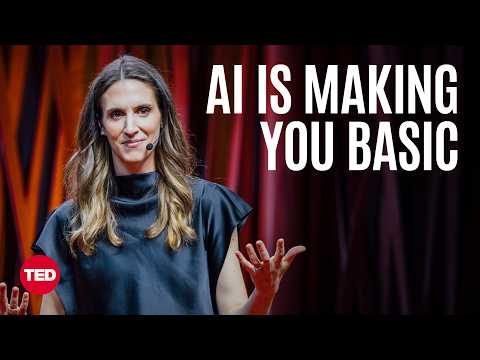
The speaker expresses a unique concern about AI: not its potential for misinformation or job displacement, but its capacity to make humans boring. This stems from the idea that relying too heavily on AI for decisions means surrendering our human capacity for exploration, risk-taking, and serendipity, potentially leading to shallower, more unidimensional lives. This concept is illustrated with the Baskin-Robbins analogy, highlighting the "exploitation-exploration trade-off." Humans naturally balance playing it safe with trying new things to grow. While AI excels at exploitation, optimizing for engagement and satisfaction, it inherently dislikes risk and exploration, as these are not incentivized in its programming. Companies train AI to recommend popular choices to avoid customer churn, leading to a focus on what is already known and liked.
Read AI summary
YouTube
The speaker, an artist who draws on location for news outlets, shares personal experiences from war zones, particularly Ukraine. Witnessing destruction in Kramatorsk, they were struck by the resilience of ordinary people like Petro, a 70-year-old who salvaged books from rubble, and Madame Olga, a 99-year-old survivor of multiple historical traumas. The speaker contrasts the news's focus on destruction with their own artistic mission: to slow down and capture the human experience of war, revealing "how it felt" rather than just "what happened." Through their drawings, they highlight individuals like Oleg, a young fighter posing with his guinea pig, and Sergei, an architect injured by a missile, who even drew the artist in return. The speaker argues that these intimate portraits of "unsung and understated" people are crucial because they represent the true, often overlooked, human consequences of conflict. They believe the news can be polarizing and fatiguing, offering an illusion of certainty.
Read AI summary
YouTube
The speaker highlights the historical underrepresentation of women in music, noting that only one melody by a medieval woman composer survives. Discovering an encyclopedia listing thousands of women composers, she began a project to document their work. This initiative evolved into a foundation that has now identified over 18,000 women composers. The speaker questions why, as a professional musician, she was unaware of this vast body of work, attributing it to the fact that nearly 90% of music heard is by men. She expresses concern that AI, learning from this biased data, is perpetuating this silence, missing half of humanity's creativity. The speaker advocates for recording and preserving both historical and contemporary underrepresented musical voices to ensure they become searchable, teachable, and integrated into future musical landscapes. She calls for tech companies to invest in completing musical catalogs, emphasizing that "we" now decide which voices survive and urging AI to learn from "all of us."
Read AI summary
YouTube
Rising power bills are straining the energy grid, with AI data centers being a significant contributor. This creates a situation where tech companies profit while consumers face higher costs. Many Americans are struggling with energy expenses, with some paying as much for utilities as for their mortgages. Traditionally, the energy system involved power plant supply and consumer demand. However, a surge in energy demand, largely driven by AI, has broken this model. Thousands of AI data centers are planned, requiring immense power – enough to supply two-thirds of American homes. This projected demand continues to climb, putting unprecedented strain on the existing infrastructure. Without change, consumers will fund massive infrastructure buildouts for AI, while their own home systems remain outdated.
Read AI summary
YouTube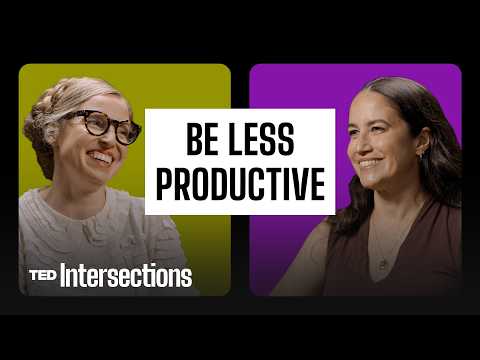
The conversation begins by challenging common perceptions of productivity, suggesting that it's often mistakenly linked solely to financial or quantifiable output. The speakers argue that activities like having a great conversation with a friend or engaging in gardening, even without a tangible "product," are valuable and productive uses of time. Gardening, in particular, is highlighted as a way to escape the constant pressure of productivity, serving as a form of self-care, a break, and a means to reconnect with nature and oneself. It's seen as a healthy way to thrive in an overly productive world. The discussion then moves to the concept of "fun" and its role in life. Fun is presented not as an anti-productivity stance, but as a necessary respite from the obsession with productivity. There's a recognized conflict where people often turn hobbies or fun activities into side hustles, driven by an ingrained need for productivity and an end product. The challenge lies in encouraging adults to simply engage in activities for the sake of enjoyment, without a predefined goal or output.
Read AI summary
YouTube
Jessica Malaty Rivera, an infectious disease epidemiologist, defines leadership in public health as bridging the gap between complex scientific information and the public it serves. She emphasizes the need to make science accessible, especially in times when public health and science are under scrutiny and attack. Rivera believes science is inherently political because it informs policy, but it should not be politicized. Courageous leadership, in her view, involves actively connecting with lawmakers and advocacy groups to prevent dangerous misinformation from filling the void created by scientific silos. Communicating complex and often unpopular truths in emotionally charged environments requires both care and courage. Rivera acknowledges that speaking uncomfortable truths has come at a personal cost, including threats to her safety and family. However, she finds grounding by remembering her purpose, inspired by her children, and by seeking solidarity with other scientists dedicated to making science understandable. She aims to elevate people's scientific literacy rather than simplify complex information, recognizing that people need tools to navigate challenging information ecosystems.
Read AI summary
YouTubeBriefTube monitors your YouTube channels, generates AI-powered audio summaries, and delivers them wherever you listen. Telegram, Discord, Slack, or your podcast app. Fully automated.
Start free trial