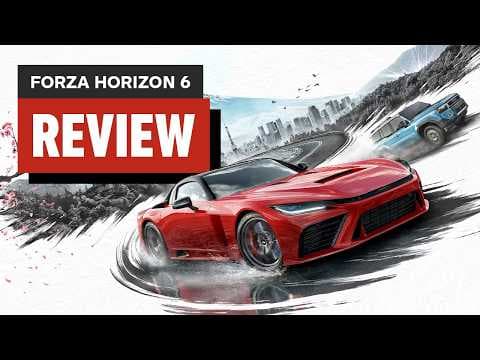
Forza Horizon 6 Review
Audio Summary
AI Summary
Forza Horizon 6 marks the series' long-awaited debut in Japan, a country synonymous with car culture. While the setting feels overdue, the game's developers, Playground Games, have seemingly used the time to craft an exceptional experience, primarily due to a significant upgrade in map quality. This new map transcends mere size or beauty, offering an unprecedented level of credibility and car-friendliness. Every corner of the map feels like a deliberate destination, transforming every journey into a potentially limitless adventure.
At its core, Forza Horizon 6 retains the familiar class-based racing mechanics of its predecessors. Players engage in the classic loop of ticking the clock, mashing the throttle, and battling for the lead. The AI has reportedly made more impressive evasive maneuvers than in previous titles, enhancing the racing itself. On a gamepad, the handling remains a well-balanced blend of simulation-inspired weight and grip with smooth, accessible steering. It avoids being an overly punishing simulator or a pure arcade racer, striking a comfortable middle ground. For wheel users, there's a noticeable and welcome increase in front-end grip, reducing the slightly skittish feel found in earlier games, which is beneficial for navigating the numerous hairpins and kinks, as well as for avoiding traffic on the extensive freeway network.
To dismiss Forza Horizon 6 as simply Forza Horizon 5 on a new map would be a gross oversimplification. The game introduces a refined campaign progression, balancing the structured approach of the original Forza Horizon with the open freedom of Forza Horizon 5. Significant enhancements have been made to car graphics and audio, resulting in the best-looking and best-sounding vehicles in the series' history. User-generated content tools have seen a massive expansion, allowing for garage customization, the construction of private racetracks on personal estates, and even multiplayer building anywhere in the open world. A highly anticipated customization feature, long desired by Forza players, has finally been implemented.
The game's rendition of Japan is a characteristically distilled and condensed version, blending a shrunken Tokyo City with diverse natural landscapes. Rolling hills, farmland, forests, mountains, villages, and rural circuits surround the urban sprawl, all overseen by highlands and the Japan Alps. This fusion of natural beauty and man-made spectacle is described as outstanding, with lighting and environmental details, such as patchy snow on lush fields or multi-level freeways towering over Tokyo, contributing to a visually stunning experience. While geographically nonsensical, this approach creates a Japanese-themed amusement park for cars, prioritizing visual appeal and engaging traversal. The game achieves a remarkable sense of both natural and man-made scale without performance issues like crashes or stuttering.
Beyond the grand vistas, the smaller nuances of the map are equally captivating. Details like flaking paint on overgrown concrete pylons, varied road surfaces (from grooved tunnel sections to corrugated asphalt), and idiosyncratic colored road markings scarred by tire rubber all contribute to the world's authenticity. The parking lots are particularly noteworthy, with each appearing bespoke to its location, ranging from multi-level Tokyo-style lots to modest spaces beneath overpasses. While the reviewer notes a slight edge for Test Drive Unlimited Solar Crown in terms of underground parking variety, Forza Horizon 6 excels with its pervasive and realistic placement of gas stations, a feature previously scarce in the series. This abundance of places to pause and park enhances the feeling that the map is a world built to host cars, not just to drive on.
The cars themselves are rendered with enhanced realism, appearing more grounded in the environment, especially in frosty weather with ice accumulation and visible exhaust fumes. A welcome addition to the livery editor is the ability to place decals on glass. Car audio is also at its peak, with particularly impressive echoing in tight spaces and tunnels, alongside subtle improvements like the faint squeak of performance brakes.
The campaign structure has returned to a more curated wristband system, reminiscent of the 2012 original, which the reviewer finds improves the overall sense of progression. A sealed-off section of the map unlocks only at the highest festival rank, providing a clear endgame and a defined final goal. Each wristband graduation culminates in a large-scale event, either a traditional showcase race or a new "rush" event, which are essentially large obstacle races often involving aircraft. The showcase featuring a giant mech stomping towards Tokyo is highlighted as particularly wild.
While the tighter career structure temporarily restricts customization, races can be replayed with different cars once completed. This compromise effectively bridges traditional approaches with Forza Horizon 5's complete freedom. The narrative of the player character arriving as a tourist rather than a superstar is noted, though its impact on gameplay is minimal, with players still receiving three pre-modified cars at the start. The new aftermarket car system, where cars for sale are scattered around the world, is suggested as a potentially more immersive way to acquire vehicles.
Forza Horizon 6 has scaled back the wheel spin prize mechanic, which had become overused. Credits are still plentiful, and the game features an increased number of hidden cars, including the most barn finds to date and nine additional treasure cars, clues for which are found through exploration. This incentivizes players to explore the map at their own pace.
Technically, the game runs flawlessly, and aesthetically, it's Playground's best-looking and best-sounding game yet. The map is lauded as wonderfully realized, filled with authentic details and stunning driving roads, making exploration rewarding. The well-paced campaign offers a great payoff, and the reviewer finds it difficult to stop playing. While Forza Horizon 3 may remain a personal favorite for its personal connection, Forza Horizon 6 is unequivocally declared the best in the series and a new standard for open-world racing, hailed as a masterpiece. The review also features a discussion with IGN's resident racing game reviewer, Luke Riley, who reiterates his high praise for the game, emphasizing the map's authenticity and the series' consistent quality. Riley attributes his passion for racing games to a lifelong love of cars and appreciates Forza's curated car selection and global representation. His personal Mount Rushmore of racing games includes Forza Horizon 3, Driveclub, and Gran Turismo.