Le mythe du génie solitaire : la neuroscience démonte tout ce que vous pensiez savoir
AI Summary
The discussion begins by emphasizing the importance of acknowledging one's limitations and being open to the expertise of others, suggesting that instead of possessing all skills, the key is to ask the right questions to the right people. This leads into the concept of the "invisible backpack," which can act as both a burden and a source of tools for navigating life.
In the context of entrepreneurship, the invisible backpack often represents the environment and resources one comes from. Individuals from backgrounds where entrepreneurship is prevalent, and where financial means exist to mitigate risk, have a distinct advantage. This advantage is not solely about financial capital but also encompasses the historical and political context that supports or hinders innovation. The backpack can include the support or exclusion from loved ones, inherited knowledge, and a nurturing environment that fosters motivation. It’s highlighted that the perception of audacity can sometimes mask a situation where everything has already been prepared, underscoring the need for humility and the recognition that success is often a collective endeavor.
This collective aspect is contrasted with the "self-made" myth, which is deemed toxic for leaders. This myth can lead to isolation, a distorted self-perception, and an unhealthy attribution of responsibility. When individuals see themselves as solely responsible for both success and failure, they may struggle with self-compassion. The reality is that individuals are shaped by a multitude of influences, both positive and negative, and are not solely responsible for their outcomes. This can, in turn, lead to issues like imposter syndrome, where individuals hesitate to pursue opportunities due to self-doubt about timing or readiness.
The conversation then shifts to self-confidence, reframing it not as a universal trait but as an objective calculation of one's skills in relation to a specific field. True self-confidence requires stepping outside the ego and assessing one's competence with a degree of detachment, similar to how one might evaluate another's abilities. This perspective encourages a trial-and-error approach to life, reducing the fear of failure.
A significant point is made about overconfidence being more prevalent than imposter syndrome. The Dunning-Kruger effect is discussed, where individuals with low competence often overestimate their abilities due to a lack of awareness of the field's complexity. Conversely, highly competent individuals tend to possess the humility to recognize the limits of their knowledge. The complexity of a field, when discovered, leads to a more realistic self-assessment, marked by the "valley of despair" – the uncomfortable realization of how much one doesn't know. This realization is presented as the crucial starting point for genuine learning.
The discussion then addresses the tendency for some to accumulate skills and theoretical knowledge without taking action, fearing they are not "ready." The antidote to this, and to the myth of the solitary genius, is collective intelligence. Admitting a lack of competence in one area necessitates openness to the skills of others. The importance of role models who can offer guidance and even warn of impending failure is stressed. Surrounding oneself with diverse perspectives is crucial to avoid groupthink and ensure project success.
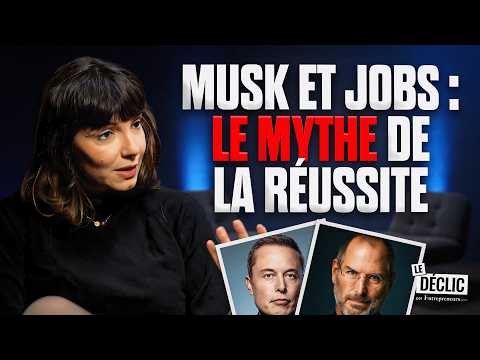
The popular narratives of solitary, tormented entrepreneurs like Steve Jobs and Elon Musk are debunked as myths largely created for marketing purposes. Sociological research, such as that by Anton Galuzzo, highlights that innovation is a result of the association of diverse knowledge and expertise from many individuals across various fields, including politics and law. The idea that entrepreneurs must master everything themselves is false; entrepreneurship, even when led by an individual, relies heavily on the collective knowledge and work of many. The myth of the lone genius is not only false but also misleads students into believing that figures like Musk are entirely self-made, when in reality, they benefited from significant support networks and were at the center of influential systems.