Why You Need the Growth Mindset of a Weed | Stephen Nobles | TED
Audio Summary
AI Summary
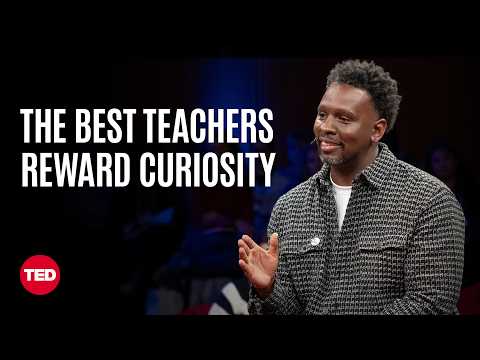
In education, curiosity is vital for enabling students to see possibilities beyond current realities. When students feel seen, heard, and empowered through curiosity, they engage, connect with their work, leading to improved attendance and performance. This approach requires educators to be curious, not judgmental, as advocated by Ted Lasso.
Curiosity acts as a bridge between differences, transforming potential conflicts into dialogue. It's crucial to meet students where they are, viewing them through a lens of expectation and opportunity, free from judgment. This means looking beyond data; for instance, understanding that a child living in poverty is not inherently "poor," but rather their parents are. Similarly, a child of wealthy parents is not "rich" themselves. By placing data-driven characteristics on the parents, not the student, educators can see the child's potential, allowing them to rise to the occasion.
In a world prone to certainty and doubling down on personal feelings, curiosity emerges as an essential life skill. It fosters a society that celebrates not just answers, but profound questions. Data, when used effectively, should provoke deeper inquiry, requiring genuine curiosity. This curiosity builds connection, which in turn fosters friendship and partnership – a pathway to a brighter future. Unlike the quick, confident answers often prevalent, curiosity instills humility and empathy, crucial for progress in education and globally.
Curiosity can transform disagreement into dialogue, as demonstrated in a TED-Ed student talk program. In a challenging middle school, adults were encouraged not to judge students, allowing them space to be themselves without barriers. One student, initially appearing disengaged, surprised everyone by choosing to speak on "trash in space" and its gravitational implications. This unexpected topic, far from adult expectations, highlighted the power of curiosity in giving students the freedom to explore their unique interests and meet standards on their own terms. This experience fostered a lasting relationship with the student.
The impact of curiosity is contagious, spreading throughout a community. Like sports, it creates a safe space for students to connect, voice opinions, and be seen, irrespective of their home life, grades, or behavior. For adults and leaders, embracing curiosity means not just providing answers but also recognizing that growth can come from those they lead. This cultural shift, starting in the district, is generating excitement for the future.
Creating a culture of curiosity in education, where solutions are not always immediately presented, is vital. It involves encouraging everyone to look at things for what they *can* be, rather than solely focusing on what they *are*, which can be daunting and lead to disengagement. For educators, the goal is to position students to view learning as a lifelong journey, not just a K-12 phase. When adults model curiosity, seeing possibilities, students adopt this behavior, making it a contagious culture that propels progress within the school district and beyond.
For those struggling against a tide of entrenched discourse, the advice is to be open and see everything from a lens of hope, disconnecting from individual perspectives to embrace a collective view. The initial challenge is getting people to this entry point, moving beyond current data and perceived limitations of students. Once curiosity takes hold, it becomes self-sustaining, fostering imagination, leadership, and a cycle of empowerment where current leaders nurture the next generation's dreams and hopes.
An example of this involves moving beyond simply telling students what they can be, to being open to their questions about "why." When students question adult decisions and ask why their input isn't sought, it's eye-opening. When students feel seen and heard through curiosity, the impact is immeasurable.
For implementing curiosity in diverse learning environments, the advice remains consistent: see students through the lens of possibility, beyond data, living conditions, zip codes, or parental lifestyles. Erasing data-driven labels and genuinely seeing potential unlocks engagement, safety, and comfort for students to voice opinions and take ownership of their academic experience. Authentic curiosity precedes academic data.
Stephen Nobles' own life exemplifies the power of curiosity, fostered by his mother who encouraged him to question everything and be an avid reader. Despite growing up in a tough environment, reading, even for a "cruise" as a reward, shaped him. His mother's analogy of a "weed" – something growing where it's not supposed to be – instilled in him the value of growing and thriving even in challenging environments, a lesson he now imparts to students.
Hope for the future stems from students' unprecedented access to information and their increasing ownership of their identities. Even if this ownership manifests as rebellion against expectations, it demonstrates a crucial questioning of societal norms, political structures, and crime. Recognizing life as a relay, not a race, means adults pass the baton of curiosity to the next generation. Their innate curiosity makes him hopeful for academic, professional, and societal progress.
The ultimate takeaway for everyone, not just educators, is to use data to ask better questions and then ask the next question. Curiosity, when positioned correctly, is the fuel that bridges the gap between the present and desired future. With the right leadership and empowered next generations, the potential for accomplishment—locally, statewide, and nationally—is immeasurable. Remaining curious, not judgmental, is the key.