Do Atheist Friends Make People Lose Their Faith?
AI Summary
Conservative American Christian parents often fear that secular universities will lead their children away from their faith, either through aggressive philosophy professors or, more commonly, through new non-religious friends. A new study investigated whether filling a teenage believer's friendship network with non-religious friends leads to a loss of religion. The answer was often yes, but only to an extent.
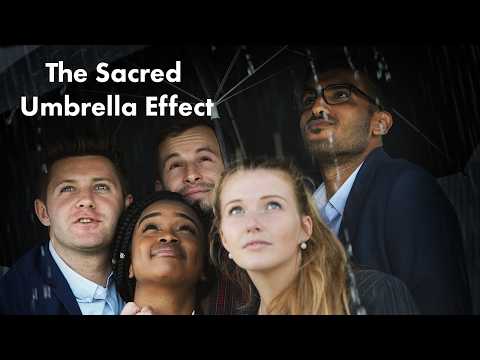
The study builds on Peter Berger's 1967 work, "The Sacred Canopy." Berger argued that humans create social worlds—cultures, institutions, laws, customs, and sacred texts—which are then experienced as objective reality. These socially constructed realities are fragile, and religion stabilizes them by anchoring human-made order in something sacred and unquestionable. For example, marriage becomes a sacred institution, and kings rule by divine appointment. This "sacred canopy" provides answers to fundamental questions and confirms a worldview across society, making it seem obvious and unquestionable.
Berger later noted that modernity, with scientific advancement, religious pluralism, urbanization, and secular institutions, exposes people to competing worldviews, weakening the "taken-for-grantedness" of any single sacred canopy. Later sociologists adapted this idea, shrinking it to "sacred umbrellas" or "tents" over close friendships or family networks. The idea is that a worldview remains plausible if supported by one's closest connections.
In 2019, Matthew Faciane and Matthew Brashears tested this, using data from the General Social Survey. They found that individuals whose close contacts entirely shared their religion or political party had a "sealed umbrella" and held tighter to their beliefs. Even one associate with a different ideology created a "hole" in this sacred umbrella, weakening conviction. This held true for both religious beliefs and political stances.
However, this study only showed a correlation between a sealed umbrella and firmer belief, not whether people actually changed their minds. To investigate if a "leaky sacred umbrella" could lead to disaffiliation, Katie Corcoran and Christopher Scheitle conducted an eight-year longitudinal study in 2015, following the same people from adolescence (2005) to adulthood (2013). They asked about belief in God and the religious composition of their five closest friends. To be counted as becoming an atheist, a teenager had to switch from "yes" or "unsure" to a "flat no" as an adult.
It's important to note the study's American and Christian-centric nature. "Religion" was primarily measured by belief in God and participation in a youth group, which aligns with Protestant Christianity but may not capture the nuances of other traditions. The findings, therefore, are narrower than the general term "religion" might suggest, mainly tracking individuals moving away from a Christian-shaped belief in God.
The results corroborated the "hole in the umbrella" finding: more non-religious friends significantly increased the odds of becoming an atheist. For a teenager with no non-religious friends, the predicted chance of becoming an atheist was about 3%. If their entire friend group was non-religious, this jumped to 14%, more than quadrupling the odds. Even one non-religious friend could nudge the odds up, as they can relativize a worldview and make it feel less obvious. A 2017 study also suggested that non-religious friends might exert a stronger influence in pulling someone out of religion than religious friends holding someone in.
Despite this, the study also found that most individuals, even those entirely surrounded by non-religious friends, did not become atheists. If 14% of teenagers with fully non-religious friend groups became atheists, then approximately 86% did not. This suggests that while non-religious friends can increase the odds of non-belief, the nudge is small compared to other factors maintaining a worldview. The authors argue that worldviews, once socialized into a "sacred canopy," are resilient. Religious communities shape entire lives—who one associates with, values, time spent, and holidays—making the "sacred umbrella" encompassing by teenage years. The strongest factor protecting belief was frequent religious service attendance. While a non-religious friend can introduce new questions and alternative ways of living, this influence often competes with parents, childhood, community, and one's sense of identity.
The study acknowledges the challenge of distinguishing between "influence" (friends changing beliefs) and "selection" (choosing friends who already share beliefs). While the longitudinal design helps by observing friends first and then belief change, it doesn't fully resolve the issue, as a teenager with unspoken doubts might already gravitate towards non-religious friends. However, the study supports older research on conversion, which suggests that friendship and social contact often precede new beliefs. For atheism specifically, new friends and professors in college can prompt questioning of God, creating a "dynamic process" where doubt, non-believing friends, and a shifting worldview mutually reinforce each other.
The study's American and Christian focus means results might differ elsewhere. For instance, in many Asian countries like Thailand, non-religion or religious practices, such as Buddhist merit-making and rituals, are understood differently than Western propositional belief claims.