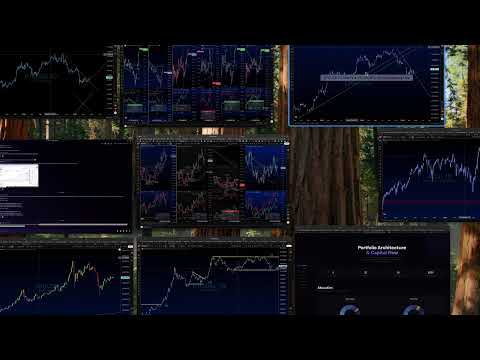
CTM Live Session - Monday, April 20
AI Summary
The speaker begins by discussing a potential adjustment to their presentation routine, considering playing the "honeymoon" track just before going live to set the desired mood. They then pivot to the current market, describing it as headline-driven and difficult to trade, reminiscent of March 2025. A key observation is the parallel playbook to the previous weekend, characterized by positive headlines during market hours, followed by denials and escalations from Iran after markets close.
The speaker elaborates on the situation with Iran, noting that after market close, the parliament speaker denied certain points, and there were minor incidents like shooting at oil tankers, which they interpret as negotiation tactics. India was reportedly upset after firing on Iranian vessels despite having permission to cross the Strait. The speaker also mentions Trump's assertive stance, threatening to "blow everything up" if negotiations fail. They highlight that Trump announced sending a team to Istanbul, and Iran also confirmed sending a delegation, creating uncertainty about who is being more accurate.
A new dynamic is introduced with China's President Xi calling for the immediate opening of the Strait of Hormuz in a call with the Saudi Crown Prince, suggesting China is pressuring for a resolution. The US dollar index (DXY) is trading at 98, appearing dependent on the outcome of these events, with everything seemingly on hold. The speaker recalls a significant market drop on Friday following signals that the strait was open, and a subsequent gap up in oil prices over the weekend after Iran reportedly closed the strait. They note a disconnect between futures and physical oil markets, with oil prices falling to $80 despite the physical market being much higher.
The speaker then contrasts the current market environment with historical periods. They find it unusual for stocks to be at all-time highs with such bearish posturing. They compare March 2000, when the Nasdaq was at its peak with poor IPO quality, to 2026, where they see strong IPOs like Anthropic and SpaceX, with massive revenues. A key difference noted is that in 2000, there was speculation about the internet's future, while now, established companies are generating significant revenues.
Another comparison is made to October 2007, when the S&P 500 hit an all-time high while subprime lending was in crisis. The speaker suggests private credit today might be analogous. They recall Bear Stearns hedge funds blowing up and Lehman Brothers being known to be in trouble, contrasting this with the current lack of widespread whispers about financial institutions failing, though they acknowledge seeing frozen redemptions in private credit, similar to BNP freezing redemptions. They also note the absence of emergency Fed cuts seen in 2007.
The speaker revisits February 2020, when the S&P 500 was at all-time highs, attributing the subsequent March sell-off to the global lockdown. They claim to have foreseen this event and positioned themselves accordingly. The current situation sees many calling for market tops, and the speaker points out that only 3% of companies making all-time highs is not typical for a healthy bull market.
An energy shock is identified as a significant factor to watch, questioning if the current situation constitutes the largest energy shock in history, and whether it's global or regional. They recall oil prices above $150 in 2007-2008.
Shifting to technical analysis, the speaker highlights Bitcoin approaching a strong area of resistance. They identify two key indicators to watch: trading below a specific high line and any reversal on the weekly chart. A breakdown below this line, followed by another strong structure, could signal a significant bearish divergence. Potential catalysts for such a move include escalation of the Iran situation, supply cuts, targeting of infrastructure like new Saudi pipelines, or closing another strait, which could push oil above $120 and potentially create a bull trap.
The speaker then considers the alternative scenario: a ceasefire ending, US attacks, or Iran succumbing to pressure due to blockades and allowing supply to flow. This would be positive news, potentially extending the current market move.
The speaker briefly discusses a stock (AST) down 14% due to a Blue Origin rocket failure, but notes the successful landing of a reusable rocket, comparing it to Elon Musk's achievements. They ponder if this is a buying opportunity, especially with SpaceX's IPO on the horizon. However, they express caution due to the fragile, headline-driven market influenced by the conflict, leading them to remain on the sidelines.
They reiterate the possibility of a liquidity grab followed by a breakdown, referencing a chart pattern. They also mention midterm elections, noting historical drawdowns in midterm years followed by gains. The speaker questions whether the current S&P 500 drawdown is the full extent or if further declines are imminent. They also touch upon the bullishness of the sixth year of a presidential term, but note President Trump's non-consecutive terms complicate this analysis.
For the bulls, a fractal pattern from 1996-2000 is presented, suggesting a potential melt-up after upward resistance. Seasonality is seen as favorable through the end of the month, with May and June being consolidation months, and August typically seeing the VIX come off. They analyze S&P performance after three consecutive 3% weekly gains, finding it historically favorable, with an exception in 1987. They also compare current market action to 1997-1998 and note that bull markets often continue after the three-year mark.
The speaker acknowledges the differing outlooks on the future, from pessimism to optimism, and the real concerns about the job market, particularly the potential displacement of jobs by AI and robots.
Regarding the Iran conflict, the speaker believes that what happens in Pakistan in the next few days will have significant consequences, potentially leading to escalation. This escalation could either result in a quicker resolution or a massive energy shock that halts economic growth, possibly invoking the "dollar milkshake theory."
The speaker mentions a request for dollar liquidity lines from Oman, with a threat to sell oil in Yuan if not provided, which they find interesting.
On Bitcoin, they note it's still struggling to break above a green line and is retesting resistance. The outcome is again linked to the Iran situation. They discuss a critical trendline break on Bitcoin and the importance of technical levels, especially after a breakdown. They review past technical analysis, emphasizing learning from real-time lessons.
The speaker mentions their NVIDIA trade is still open, Tesla was stopped out with a pending re-entry, and Cardano is still holding a short trade. They are focused on ensuring they remain on the "right side" of the market.
They briefly mention a fix for a trailing stop automation issue on Bitcoin charts and a potential rollout of this feature. They also acknowledge a missed message from a user named Cabbie regarding discretionary trading.
The speaker expresses concern about tomorrow's open, suggesting a potential pullback and considering a move on the SQQQ. They interpret Iran's actions as negotiation tactics, aiming to demonstrate their ability to cause disruption, while the US responded by seizing a vessel. They believe the Iranians sending a delegation to Pakistan confirms this was posturing. The only factor that could cause a major sell-off, in their view, is the end of a ceasefire and the commencement of major bombing, which would likely trigger an initial risk-off move. They note that CTAs are buying, and the current market strength might be the last chance to exit or continue to catch people off guard. They emphasize praying for peace and avoiding speculative moves ahead of the talks.
Finally, they revisit a "dangerous line" in Bitcoin charting, highlighting its historical significance and the importance of technical analysis. They discuss breakdowns and retests, stressing the need to learn from these patterns. While acknowledging a bullish posture is currently sensible, they warn that this could change rapidly. They conclude by reiterating that they will be present all day and wish everyone a beautiful day, encouraging them to hit the thumbs up.