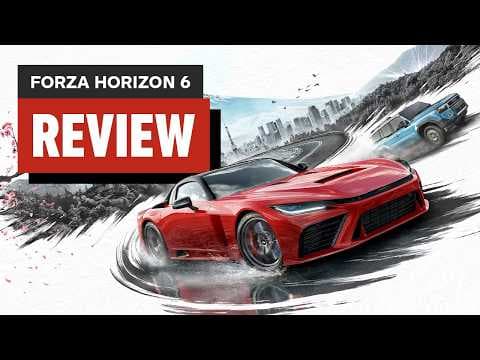
Forza Horizon 6 Review
Audio Summary
AI Summary
Forza Horizon 6 marks the series' long-awaited debut in Japan, a country synonymous with car culture. This entry elevates the franchise with a significantly improved map quality, which is not only visually stunning and expansive but also remarkably credible and car-friendly. Every locale feels like a deliberate destination, turning every journey into a potentially limitless adventure.
At its core, Forza Horizon 6 retains the familiar class-based racing of its predecessors, where players aim to reach the front of the pack. The AI demonstrates more impressive evasive maneuvers than in past titles, contributing to engaging races. The gamepad handling remains a successful fusion of simulation-inspired elements with a tangible sense of weight and approachable steering, avoiding the punishing nature of hardcore simulators or the pure arcade feel of titles like Burnout Paradise. For those using a wheel, there's a welcome increase in front-end grip and a reduction in the slightly skittish feel of previous games, enhancing responsiveness when navigating hairpin turns or avoiding freeway traffic.
While superficially resembling Forza Horizon 5 with a new map, Forza Horizon 6 introduces substantial changes. The campaign progression has been refined, striking a balance between the structured approach of earlier games and the unbridled freedom of Forza Horizon 5. The game boasts significant enhancements in car graphics and audio, presenting the best-looking and best-sounding cars in the series' history. User-generated content tools have seen a massive expansion, allowing players to customize garages, build private racetracks on estates, and even construct multiplayer elements anywhere in the open world. A particularly anticipated feature, the implementation of Togei racing and open-world car meets, along with customization options that players have desired for two decades, further enriches the experience.
The game’s rendition of Japan is a masterclass in distillation and imaginative design. It presents a shrunken Tokyo surrounded by a diverse landscape of rolling hills, farmland, forests, mountains, and villages, all overlooked by highlands and the Japan Alps. This blend of natural beauty and urban spectacle creates an outstanding environment. The lighting, particularly at low sun, highlights the snowy fringes of alpine regions and the multi-level ramps and freeways of Tokyo. While geographically improbable, this "Japanese-themed amusement park for cars" is designed to be visually spectacular and engaging to drive through. The map excels in conveying both natural and man-made scale, a feat achieved without any performance issues like crashes or stuttering.
Beyond the grand vistas, Forza Horizon 6 captivates with its subtle details. Players can find themselves pausing to admire the flaking paint on overgrown concrete pylons, the distinct textures of road surfaces like grooved tunnel sections or corrugated asphalt, and the idiosyncratic colored road markings scarred by drifters. Every parking lot discovered is unique to its location, from multi-level Tokyo structures to modest lots under overpasses or in front of convenience stores. While underground parking garages with working boom gates akin to Test Drive Unlimited Solar Crown might be a slight advantage for that specific feature, Forza Horizon 6 compensates with the widespread, albeit non-interactive, presence of realistic petrol stations, a significant expansion from the series' previous single station. This abundance of places to pause and park makes the map feel purpose-built for car enthusiasts, offering spaces to race, drift, meet friends, and simply appreciate the vehicles.
The cars themselves look fantastic, appearing more grounded in the world than ever before, especially in frosty weather with ice encrustations and visible exhaust vapor. The livery editor now allows decals on glass, adding a subtle layer of personalization. Car sound is also at its peak, with particularly impressive echoing in tight spaces and tunnels, alongside understated improvements like the faint squeak of performance brakes.
The return of the curated wristband structure from the original 2012 game enhances the sense of progression. A sealed-off section of the map unlocks only upon reaching the top rank of the Horizon Festival, providing a clear endgame. Each wristband graduation culminates in a large-scale event, either a traditional showcase race or a new "rush event." These rush events, essentially giant obstacle races involving aircraft, are similar to showcases in their spectacle. Showcases themselves are on more straightforward routes, allowing more time to appreciate events like a giant mech stomping towards Tokyo.
While the tighter career structure temporarily limits customization, completed races can be replayed with any vehicle. This compromise balances a traditional approach with the freeform nature of Forza Horizon 5. The decision to have the player character arrive as a tourist, rather than a superstar, feels somewhat underdeveloped, as players are immediately gifted three cars. The new aftermarket car system, where vehicles for sale are scattered across the world, could have offered a more immersive starting experience. Minor complaints aside, the game incentivizes exploration through numerous hidden cars, barn finds, and treasure cars, with clues uncovered simply by driving.
Technically, Forza Horizon 6 runs flawlessly, boasting the best visuals and audio Playground Games has ever produced. Its meticulously crafted map, filled with authentic details and driving roads, makes exploration rewarding. The well-paced campaign offers a satisfying payoff, making it difficult to stop playing. While Forza Horizon 3 holds a special place for its personal connection, Forza Horizon 6 is unequivocally the best in the series and sets a new standard for open-world racing.
Review director Tom Marks discusses the game with racing game reviewer Luke Riley, who has reviewed every Forza Horizon title since its inception. Riley reiterates his high praise for the series, explaining that maintaining a 10/10 score requires resetting expectations with each iteration. He believes Forza Horizon 6 deserves a perfect score due to its incredible execution, particularly the map, which he describes as dripping with authenticity and a fantastic place to explore.
Riley attributes his passion for racing games to his lifelong love of cars, stemming from his childhood. He appreciates the broad and eclectic representation of cars in the Forza series, which speaks to him more than other racing games. His preferred genre leans towards simulation or sim-cade, with a strong preference for real, licensed cars. For his "Mount Rushmore" of racing games, he lists Forza Horizon 3 (which felt personally crafted for him), the original Gran Turismo for its revolutionary impact and massive car count, and Race Driver 3 for the PS2. He also acknowledges the unique and ridiculous nature of Burnout Paradise.
The conversation touches on the difficulty of choosing favorite games and the subjective nature of scoring. Riley expresses his enjoyment of discussing his racing game history and preferences, and the review concludes with a mention of other recent 10/10 reviewed games, Mixtape and Screamer.