

Acquired
AI Audio Summaries
1 videos summarized
1 follower on BriefTube
Last summary: Sep 3, 2026
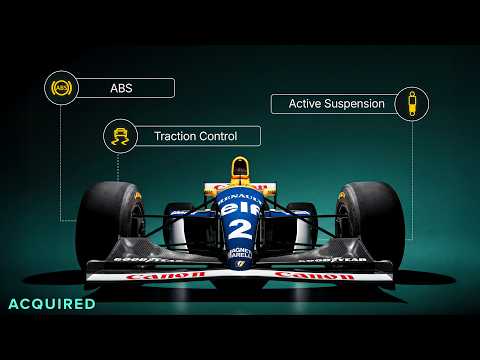
The Evolution of Speed in Formula 1
In 1968, Colin Chapman of Lotus pioneered the use of airfoils or wings on cars to increase downforce, improving traction during turns. These early wings were small, marking a transitional period in Formula 1 car design. While downforce helps cars stick to the road, large spoilers also create significant drag, slowing the car on straightaways. The goal became to maximize downforce while minimizing drag. Nine years later, in the late 1970s, Lotus sought a revolutionary approach to downforce. Their breakthrough was to design the entire car as a wing, rather than simply attaching a wing to a traditional car body. The Lotus 78, for instance, resembled one large wing. This concept drew inspiration from fluid dynamics, specifically the principle of lift generation in airplanes. Instead of creating lift, Lotus inverted the airplane wing design. The car's underside was shaped to create low air pressure, effectively sucking the car onto the ground. This was achieved by a special skirt on the bottom of the car that channeled airflow, squeezing air into a small space between the car and the road. This accelerated airflow created a low-pressure zone beneath the car, a phenomenon known as the Venturi effect, with the areas under the car being called Venturi tunnels.
Read AI summary
YouTubeGet automatic AI summaries for all your channels
BriefTube monitors your YouTube channels, generates AI-powered audio summaries, and delivers them wherever you listen. Telegram, Discord, Slack, or your podcast app. Fully automated.
Start free trial