

Les idées froides (Alain Bernard)
AI Audio Summaries
2 videos summarized
1 follower on BriefTube
Last summary: Oct 3, 2026
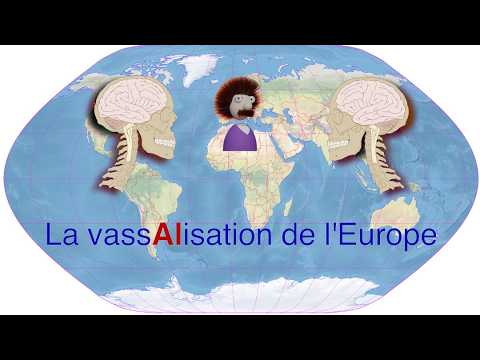
La VassAIisation de l'Europe
The video expresses concern about Europe's potential vassalization to the United States and China due to their dominance in Artificial Intelligence (AI). The speaker argues that AI will become indispensable for businesses, leading to increased performance and competitiveness. Companies that do not leverage AI will fall behind, akin to a feudal system where some become subservient. This dependency is illustrated with the example of aeronautical engineering, where AI is crucial for faster, cheaper, and better aircraft development. The speaker posits that if Europe fails to develop its own AI capabilities, it will be forced to rely on AI engines provided by US tech giants. These giants, it is argued, will not offer their most advanced AI to potential competitors like Airbus, potentially providing inferior or biased versions to hinder their progress. This raises the question of whether European companies can survive without access to European AI solutions.
Read AI summary
YouTube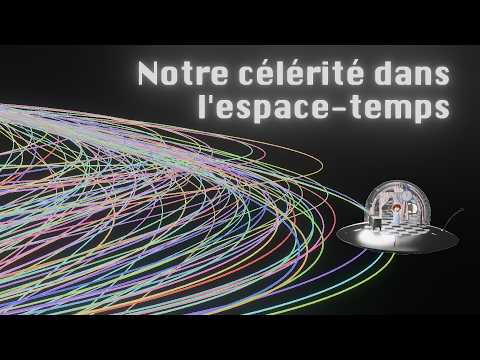
Notre célérité dans l'espace-temps
This summary explores the fundamental nature of our velocity within the four-dimensional fabric of spacetime, based on the provided transcript. The speaker begins by challenging common perceptions of mass and relativity, ultimately focusing on a core question: at what speed do we move through the universe? While a popular scientific analogy suggests that all objects move through spacetime at a constant speed—the speed of light ($c$)—by redistributing a fixed "speed budget" between spatial movement and the passage of time, the speaker argues that this explanation is slightly misleading. While the conclusion is mathematically useful, the underlying geometric logic often presented is flawed because it typically relies on standard Euclidean geometry rather than the hyperbolic geometry that actually governs the relativistic universe. In standard geometry, the distance between two points is calculated using the Pythagorean theorem, where the squares of the components are added ($a^2 + b^2 = c^2$). However, spacetime operates under what the speaker calls "Pythagoras’s cousin," a metric where the square of the spatial component is subtracted from the square of the temporal component. In this hyperbolic framework, the relationship between space and time is not one of simple trade-offs where one decreases as the other increases. Instead, to maintain a constant interval in this "minus-sign" metric, the temporal component must actually increase as spatial speed increases. This is a crucial distinction that separates the speaker’s view from the common "liquid in a cylinder" analogy.
Get automatic AI summaries for all your channels
BriefTube monitors your YouTube channels, generates AI-powered audio summaries, and delivers them wherever you listen. Telegram, Discord, Slack, or your podcast app. Fully automated.
Start free trial