AI Audio Summaries
8 videos summarized
1 follower on BriefTube
Last summary: May 27, 2026

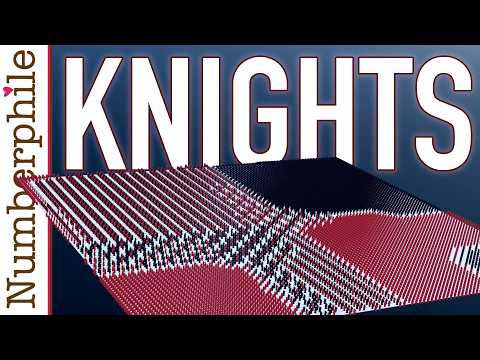
The video explores two distinct knight-moving puzzles on an infinite chessboard. The first scenario involves a single knight that always moves to the lowest unvisited square. Starting at zero, the knight follows a path, marking visited squares. Initially, it seems the knight will continue indefinitely, but eventually, it gets trapped, having visited all possible adjacent squares. This results in a finite sequence of squares. The second, more complex scenario introduces multiple "courteous" knights of two colors, red and black. The rule for placing knights is that a new knight is placed on the first unattacked square encountered along a spiral path. In the first variation of this, only one type of knight is placed. A knight is placed at zero, then at one, and so on, skipping squares attacked by already placed knights. This creates interesting, periodic patterns, like clusters of five knights separated by singles, and vertical lines with alternating clusters of two and four. After a thousand steps, the pattern is visually striking and mathematically precise, showing a periodic structure.
Read AI summary
YouTube
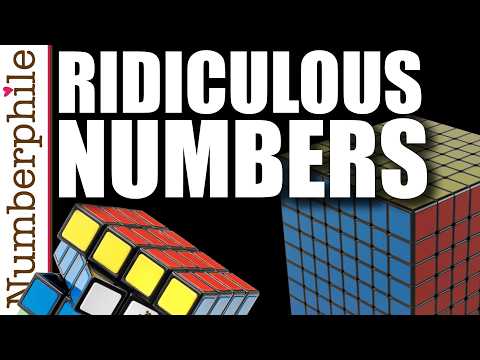
The discussion focuses on calculating the number of possible scrambled states for various Rubik's Cubes, starting with a classic 3x3 cube and progressing to larger, even-numbered cubes. For a standard 3x3 Rubik's Cube, there are approximately 43 quintillion possible scrambles, or 4.3 x 10^19 states. This number represents all unique ways the cube can be mixed up, including the solved state, without overcounting identical states due to reflections or internal center piece arrangements.
BriefTube monitors your YouTube channels, generates AI-powered audio summaries, and delivers them wherever you listen. Telegram, Discord, Slack, or your podcast app. Fully automated.
Start free trialRead AI summary

YouTube
In this video, Hannah Fry, known from "Numberphile" videos, has had her portrait painted and hung at the Royal Society in London, a significant achievement. This painting was created by Chloe Barnes, a "Sky Portrait Artist" winner, whose prize was to paint this masterpiece for the Royal Society. A separate, more in-depth video about Chloe's painting process and Hannah's thoughts on it is available on the "Objectivity" channel. For "Numberphile," however, a different challenge was set. Instead of discussing mathematics, Hannah was challenged to create her own portrait of Chloe using "Numberphile" Sharpies on brown paper. Hannah expressed doubt about her artistic abilities, noting that while she takes pride in writing beautiful equations with a fountain pen, she doesn't believe it translates to portraiture. Chloe, the subject of the impromptu portrait, was enthusiastic about the challenge, curious to see Hannah's hidden artistic talent.
Read AI summary
YouTube
This discussion introduces a unique perspective on prime numbers, exploring their irregular yet surprisingly regular distribution. While primes appear haphazardly on the number line, growing "like weeds" with unpredictable gaps, their overall distribution, when viewed on a large scale (e.g., between 1 and a million), exhibits remarkable smoothness. This global behavior is captured by the prime-counting function, pi(n), which approximates n/log n. The linearity of this function is considered astonishing, given the initial irregularity of primes. The core idea presented is to visualize primes as points on a graph, where the x-coordinate is the index 'k' and the y-coordinate is the k-th prime number (prime_k). For instance, the first prime (2) is plotted at (1, 2), the second prime (3) at (2, 3), and so on. The objective is to determine how many straight lines are needed to cover these prime points, using the minimum number of lines possible for the first 'n' primes.
Read AI summary
YouTube
This discussion explores the history of contemplating very large numbers, moving beyond the recent discoveries in mathematical logic, such as Graham's number and Rayo's number, which date from the mid-20th century. The focus shifts to ancient civilizations, specifically highlighting the contributions of India, and within India, the Jain religion, which dates back two and a half thousand years BCE. Jainism, still practiced by millions, developed a rich tradition of mysticism that included incredibly large numbers, often used to represent vast periods of time. One such concept is the "paleopama," or "pit year," a unit of time derived from a thought experiment. It begins with a cubic pit, one yojana wide. A yojana is defined as slightly more than 10 kilometers, so for calculation purposes, it's rounded down to 10 kilometers. This pit, 10 km by 10 km by 10 km, is filled entirely with lamb's wool. The rule is that once every century, a single strand of lamb's wool is removed. The pit year is the total time it takes to empty the entire pit.
Read AI summary
YouTube
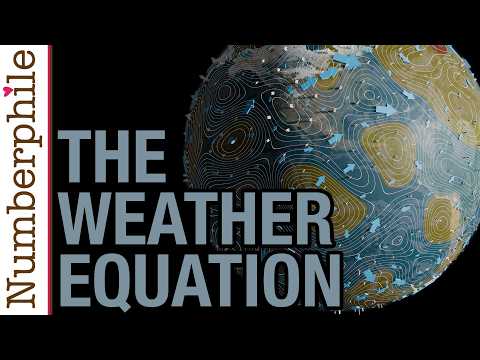
The Quasi-Geostrophic (QG) Omega Equation is widely regarded as one of the most significant formulas in meteorology. It provides a systematic way to determine vertical velocity by simplifying the complex primitive equations used in numerical weather models. Unlike prognostic equations that predict future atmospheric states, the Omega Equation is diagnostic. It allows meteorologists to analyze current horizontal maps of vorticity and temperature advection to identify where air is rising or sinking. In the context of weather development, vertical velocity serves as a critical proxy for the formation of high and low-pressure systems, which directly relates to the weather forecast. The central variable in this equation is the Greek letter omega ($\omega$), which represents vertical velocity. While most people are familiar with vertical motion measured in meters per second (often denoted as $w$), meteorologists frequently use a pressure coordinate system. In this system, $\omega$ is measured in pascals per second, representing the pressure change an air parcel experiences as it moves. Because pressure always decreases with height, upward motion (ascent) results in a negative $\omega$ value, while downward motion (subsidence) results in a positive $\omega$. This relationship is linked through the hydrostatic equation, which assumes a balance between the upward pressure gradient force and the downward pull of gravity. $\omega$ is essentially a version of vertical velocity scaled by density to account for the atmosphere being more dense at the surface.
Read AI summary
YouTube
In this video, the presenters explore a creative and hands-on method for approximating the value of pi using random distribution. The experiment begins with a simple physical setup involving a circle, a square, and a large quantity of Skittles. To create the necessary geometric bounds, the presenters draw a circle and then use books—including a thesis on string theory and a volume titled *Fantastic Numbers*—to construct a square that perfectly encloses the circle. The core of the experiment relies on a statistical method. The presenters drop a handful of Skittles randomly over the area and then begin the tedious process of counting them. They first count the candies that landed inside the circle, arriving at a figure of 562. They then count those that landed outside the circle but still within the square, which totals 159. By adding these together, they establish a total population of 721 Skittles within the square.
Read AI summary
YouTube
In this transcript, a self-described "grumpy" retired astronomy professor challenges the popular convention of celebrating Pi Day on March 14th. He argues that July 22nd is a far more logical choice for the occasion. The standard celebration on March 14th is based on the "middle-endian" date format (Month/Day), which yields 3.14. However, the speaker points out that the fraction 22/7, representing the 22nd of July, is actually a much better mathematical approximation of pi than 3.14. The discussion explores the various ways humans format dates and the logic—or lack thereof—behind them. The speaker describes the "little-endian" approach (Day/Month/Year) as sensible because it leads with the most relevant information for daily life: the day. In contrast, the "big-endian" format (Year/Month/Day) is preferred by scientists and for data cataloging because it allows digital files to be easily sorted in chronological order. He views the American "middle-endian" format as an arbitrary system with little justification, noting that even Americans occasionally revert to the little-endian style for holidays like the 4th of July.
Read AI summary
YouTube