
AI Audio Summaries
6 videos summarized
1 follower on BriefTube
Last summary: May 10, 2026

The podcast emphasizes that positive cash flow from an apartment investment is crucial, as it directly impacts your borrowing capacity from banks. For instance, a €300 cash flow increase effectively raises your monthly income by the same amount in the eyes of a bank, allowing you to bypass the 33% debt-to-income ratio limit and acquire more properties. The hosts, Fouad Berlin and Hugo, reflect on a previous podcast where they advised listeners to "forget cash flow," which was often misinterpreted as promoting negative cash flow investments. They aim to clarify this stance, stating that while cash flow is important, it should not be the primary objective.
Read AI summary
YouTube
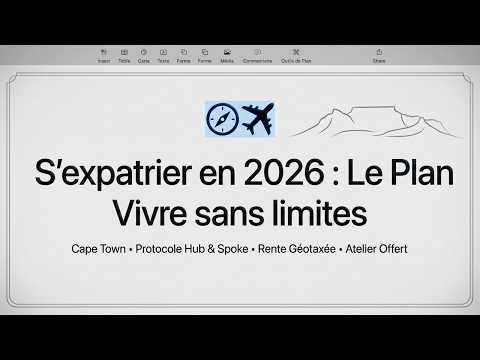
This vlog focuses on expatriation and lifestyle, offering solutions and sharing experiences from living abroad. The speaker plans to discuss an experience from over a month and a half abroad, how to achieve related goals, and a setup that offers extreme freedom. Viewers are encouraged to subscribe to the channel for expatriation information and join the Telegram community for shared content and discussions. A free live expatriation workshop will also be hosted to help find the best expatriation setup, especially given the uncertainty surrounding Dubai. The vlog will cover structuring expatriation, mobility, and the concept of geotaxed rent, which aims to untax income from the country of tax residence. The speaker provides an example: earning €200,000 in France taxed at only 10% due to asset category, offering freedom without requiring relocation solely for tax benefits.
BriefTube monitors your YouTube channels, generates AI-powered audio summaries, and delivers them wherever you listen. Telegram, Discord, Slack, or your podcast app. Fully automated.
Start free trialRead AI summary
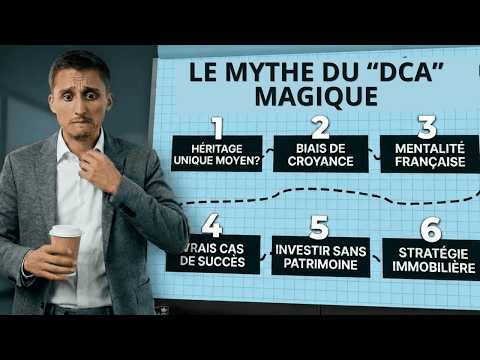
The speaker analyzes comments from a previous video discussing the merits of Dollar-Cost Averaging (DCA), particularly in response to a popular video by Finari titled "The healthiest path to your first €100,000." The speaker observes that the comments reveal a "radiography of the French financial mentality in real-time," which he found "chilling" due to the "almost unanimous, deep, and sincere belief" in certain financial principles, which he argues are "terribly costly." The Finari video, with 33,000 views, focused on compound interest and its limitations, contrasting it with a real estate operation example involving €300,000 properties acquired in 18 months, which was criticized. The speaker highlights Finari's choice of the word "healthiest" instead of "effective," "fast," or "profitable." He explains this linguistic mechanism as a "presupposition," an unstated truth that is accepted without question. By using "healthiest," Finari implicitly categorizes other paths, like leveraged real estate or entrepreneurship, as "unhealthy," "unvirtuous," or "immoral." This rhetorical tactic, the speaker argues, "vaccinates" viewers against alternatives, leading them to instinctively reject different approaches, such as the real estate example, as "unhealthy."
Read AI summary
YouTube
This video analyzes a popular YouTube video about achieving 100,000 euros in 14 years through Dollar Cost Averaging (DCA) on an MSCI World ETF, emphasizing compound interest. While acknowledging the original video's financial accuracy and educational value, the presenter argues it misses a crucial element: the distinction between Phase 1 (capital creation) and Phase 2 (capital deployment). The core of the critique is that the original video presents a slow, albeit disciplined, method that relies solely on Phase 2 strategies like DCA. The presenter calculates that investing 583 euros per month for 14 years, even with a hypothetical 7% annual real return, yields only 22,000 euros in investment returns on a total personal contribution of 78,000 euros, resulting in 100,000 euros. This, the presenter contends, is a meager return for 14 years of sacrifice, barely exceeding the French minimum income (RSA) in monthly interest. The original video's example of David, who achieved 100,000 euros in 14 years by investing 300-550 euros monthly from age 26 to 40, is highlighted as an illustration of this slow growth. The presenter points out that David's lifestyle sacrifices—missing personal events and living frugally—are downplayed, and that the simulation lacks real-life disruptions.
Read AI summary
YouTube
The podcast focuses on a new format called "10M for 100 million euros," which involves an in-depth, surgical analysis of a single borrower's profile. The hosts, Foadbert Lin and Hugo, are in Berlin and will dissect a case study of a client, René, who has a significant ambition of reaching 20 million euros in assets. René has provided a comprehensive banking presentation file, which is rare and allows for a detailed analysis from the perspective of a banker. Before diving into René's case, the hosts remind listeners about available resources: strategic audits with Foad for personalized assessments and roadmaps, a free masterclass on creating capital through real estate, and an application process for "Patrimoine Exponentiel," a community for ambitious investors. They also encourage listeners to submit their profiles for future analysis using a provided questionnaire and a pseudonym.
Read AI summary
YouTube
This summary explores the complex dynamics of investing as a couple, based on the dialogue between Foad, his wife Lémy, and their colleague Hugo. The discussion centers on how to align a couple’s psychological and financial goals to deploy an ambitious real estate strategy while maintaining family security. ### The Psychological Divide: Ambition vs. Prudence
Read AI summary
YouTube