

Science4All
AI Audio Summaries
2 videos summarized
1 follower on BriefTube
Last summary: Apr 28, 2026
Dégafamiser : on a un plan.
The United States, under President Donald Trump, has pursued an aggressive digital policy, leveraging its tech industries to weaken both adversaries and allies. Europeans are increasingly acknowledging the importance of reducing dependence on foreign digital technologies, with "digital sovereignty" becoming a bipartisan rallying cry. However, despite this recognition, effective detachment from foreign digital dependence remains a low priority for politicians and organizations. For example, the DGSI (France's internal security agency) renewed its use of the US software Palantir, and the Council of State confirmed funding Microsoft, giving them control over French health data. This raises the question of why such a critical sector is ceded to US providers, and how principles of telecommunications regulation, specifically interoperability, could offer a solution. Technological backwardness of European alternatives is a significant hurdle. Many alternative open-source software solutions lack the maturity, intuitive interfaces, functional completeness, and stability of their dominant counterparts like Google. This is often due to limited resources for development compared to the hundreds of billions invested by tech giants. This creates a "chicken and egg" problem: better software attracts more users, which in turn provides feedback and revenue for further improvement. As long as users rely on dominant US digital products, they reinforce their market position and technological superiority.
Read AI summary
YouTube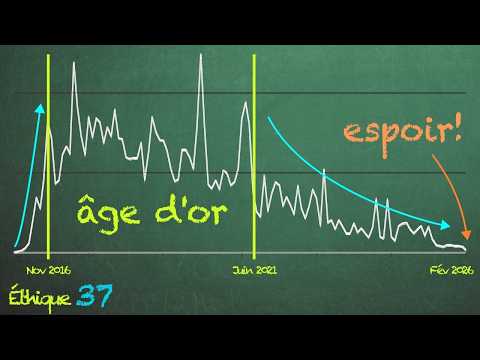
Science4All est mourant
The landscape of scientific communication on YouTube is undergoing a terminal decline, a phenomenon that the creator of the channel *Science for All* (SfA) describes as the "death" of scientific YouTube. By analyzing his own channel's data, the speaker reveals a depressing trend: watch time peaked in 2017, remained stable until early 2021, and has since crumbled to a near-standstill. While personal motivation played a small role—especially since the channel has been a purely volunteer effort since late 2021—the speaker argues that this decline is actually symptomatic of a fundamental and alarming shift in how social media and recommendation algorithms function. To understand this collapse, one must look at the evolution of social platforms. Before 2012, networks were truly "social," focused on connecting friends and maintaining real-world relationships. This transitioned into a "parasocial" era, where influencers and creators became the stars, fostering one-way relationships with millions of subscribers. This was the golden age for channels like SfA. However, the rise of TikTok ushered in the "asocial" era. In this new paradigm, the connection between a creator and an audience is severed. Recommendation AIs no longer prioritize who you choose to follow; instead, they serve content designed solely to trigger a reaction and maximize time on the platform. On modern apps, the identity of the creator has become irrelevant—users consume media without ever knowing or caring who produced it.
Get automatic AI summaries for all your channels
BriefTube monitors your YouTube channels, generates AI-powered audio summaries, and delivers them wherever you listen. Telegram, Discord, Slack, or your podcast app. Fully automated.
Start free trial