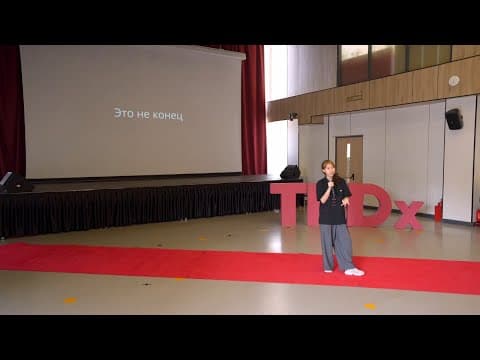
За пределами страха и сомнений | Адия Алданазар | TEDxQuantum STEM Youth
Audio Summary
AI Summary
Odiya, a high school student, recounts her year-long struggle with IT exams for university applications. Despite extensive preparation, including daily study, courses since January, and solving up to 70 problems a day, she repeatedly failed to achieve her target score of 1500, initially scoring 1350. This was particularly frustrating as friends who started later achieved higher scores faster.
After five unsuccessful attempts, Odiya felt ashamed and isolated herself, intensifying her efforts by giving up social activities. This only worsened her results, leading to a breakdown and her mother's refusal to fund further attempts. Ready to quit, a simple question – "Why don't you earn money yourself?" – prompted a change in perspective.
Odiya decided to try again, but differently. She started teaching and selling study materials to fund her exam, which unexpectedly boosted her confidence. During this period, she also engaged in filming and editing, learning to communicate, earn, sell, and manage time. Crucially, she began living again, and it was through conversations with others that she realized stress might be the true impediment.
University College London research confirmed that external pressure significantly impacts exam performance, causing students to underperform despite knowing the material. Odiya recognized her own panic and self-doubt during exams. She decided to approach her sixth attempt without pressure, treating it as a trial. She rested more, woke up calm on exam day, and avoided overthinking. This time, she scored 1440.
Odiya concluded that her improved results stemmed not from increased effort, but from reducing self-imposed pressure. She realized that stress, fear, and pressure can block thoughts and destroy results, creating a vicious cycle. The solution was to question her approach and change direction, viewing obstacles as signs for redirection rather than dead ends. This experience transformed her thinking, teaching her to ask what she was doing wrong, rather than why things weren't working.