Were These Ancient Petroglyphs Billboards?
Audio Summary
AI Summary
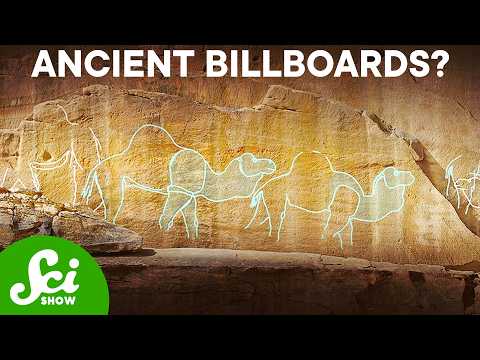
Thousands of years ago, people in the Arabian Peninsula carved a huge camel into a rock, similar to how billboards are used today. This camel likely signaled the location of water, a vital resource. Today, this ancient carving provides new information, potentially doubling the known timeline of human habitation in the region and offering clues about prehistoric climate.
The Arabian Peninsula has experienced alternating wet and dry periods, influencing human presence. During wet periods, grasslands supported human and animal life for hundreds of thousands of years. However, dry periods, like the Last Glacial Maximum 25,000 to 20,000 years ago, made the region inhospitable, causing humans to leave for at least 5,000 years. Pinpointing when humans returned after the glaciers receded and the climate became balmier has been challenging for scientists.
Life-sized camel murals, or petroglyphs, along with carvings of ibex, wild donkeys, and aurochs (extinct ancestors of modern cows), offer insights. The camel carvings are particularly detailed, even depicting males during the breeding season with furry coats seen only in wet wintertime. One hundred thirty such naturalistic animal engravings were found at three sites in Saudi Arabia, including 18 in the Sahout area. These animals marked important desert water sources. Dating these carvings could help determine when Arabia became habitable again after being a wasteland.
Dating rock carvings is difficult because traditional radiocarbon dating, which relies on carbon from living things, isn't applicable to geological formations. Previous estimates of human habitation, based on fireplaces, suggested a timeline of about 7,000 years, but this was a rough estimate.
A 2025 paper by the same research team almost doubled that figure by dating the carvings themselves. They discovered a pecking tool, similar to those found at petroglyph sites worldwide, directly beneath an engraving of two giant camels. Using luminescence dating, the tool was determined to be approximately 12,000 years old. Luminescence dating measures accumulated energy in crystalline minerals since their last exposure to sunlight, indicating when a sediment layer was last exposed. This layer also contained other evidence of human habitation, such as arrowheads and shell beads. The presence of a rock art tool alongside rock art strongly suggests they are related.
This discovery reveals several things about prehistoric Arabia. It supports the idea that Arabia became warmer and wetter after the last ice age, leading to the emergence of grasslands that attracted animals and people. The murals, carved into cliff faces, likely marked important surface water sources. The research suggests that these surface water sources, called playas, reappeared much sooner after the last glacial maximum than previously believed.
The depictions of camels in their wet season coats and the presence of aurochs (which, like modern cows, needed year-round water) offer clues about the extent of the wetness. It's possible the site was wet enough for aurochs during the wet season, or that the murals were made by seasonal migrants who had seen aurochs in wetter areas. Regardless, these accurate animal carvings provide crucial information about water availability in the region. These rock art "billboards" likely marked watering spots, suggesting people followed a prehistoric "superhighway" of ephemeral lakes, marking their route with these animal "jumbotrons." This new understanding of ancient art could help researchers locate more ancient water sources and further understand prehistoric climate.