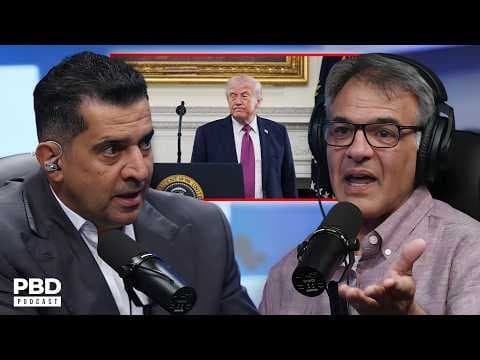
"FISA Can Target ANY American" - CIA Whistleblower BLASTS Deep State's Surveillance Weapon
Audio Summary
AI Summary
The discussion centers on the Foreign Intelligence Surveillance Act (FISA), particularly its origins, implementation, and the controversies surrounding Section 702, which is currently up for reauthorization. FISA, introduced by Ted Kennedy during the Carter administration, was initially intended to counter foreign involvement in American politics, especially in the wake of Watergate. It established a secret court, located in the Justice Department, that issues secret warrants for tapping phones. These warrants are not released to the public, raising concerns about oversight and potential abuse, especially given that the court rarely denies requests.
A significant point of contention is that FISA warrants, theoretically meant for foreign nationals, have been used against American citizens like Carter Page. Despite a lack of evidence of criminal activity, warrants against Page were repeatedly renewed. It's suggested that this was orchestrated by John Brennan as part of a broader effort to prevent Donald Trump from becoming president.
Section 702 of FISA, which allows for secret warrantless wiretaps, is highlighted as a critical area of concern. The lack of transparency regarding the threshold for these wiretaps and who they target is problematic. The case of Carter Page, who was investigated after a conversation with an Australian ambassador while working for the Trump campaign, exemplifies the potential for abuse of this power against American citizens.
The conversation then shifts to the possibility of accountability for those who allegedly misused FISA. There's expressed worry that figures like John Brennan, described as a "malevolent figure," may not be prosecuted, especially given recent developments where subpoenas in the Brennan case in South Florida were abruptly rescinded without explanation. It's speculated that the alleged crimes being investigated are "process crimes," which are difficult to prosecute due to the challenge of proving criminal intent. A call is made for the Justice Department to consider conspiracy charges, arguing that a conspiracy to deny Trump the presidency, and its subsequent cover-up, should reset the statute of limitations daily, making it a serious and prosecutable offense.
The reluctance to stop FISA is also discussed, with a particular focus on Donald Trump's stance. While some might question why he didn't stop FISA after it was allegedly used against him, it's suggested that his thinking is more complex. Trump reportedly spoke with numerous generals and admirals who asserted that FISA 702 is essential for national security, protecting America and its troops overseas from foreign terror attacks. This perspective suggests a tension between national security interests and the protection of civil liberties.
However, a distinction is drawn between FISA 702's legitimate use in identifying foreign terrorist threats and its potential misuse against American citizens. The concern is that the CIA, FBI, and NSA might use FISA 702 to investigate American citizens without sufficient justification, thereby infringing on constitutional rights. The example of journalists like Tucker Carlson interviewing foreign leaders is used to illustrate that such activities should not trigger FISA investigations against American citizens. The need for tighter controls on FISA's application is emphasized.
Regarding potential prosecutions, skepticism is expressed about whether figures like James Comey or Hillary Clinton will face legal action, with the belief that it's "wishful thinking." It's noted that recent Supreme Court decisions, while clearing Trump, may have also inadvertently cleared Obama of accusations. Additionally, the statute of limitations has reportedly expired on most potential charges against Hillary Clinton. John Brennan, however, is singled out as a "bad guy" who needs to be held accountable, and there's a strong call for controls on the activities of current and former intelligence personnel.
The issue of security clearances for former intelligence officials who become political commentators is raised. It's argued that these individuals, especially those who signed the letter against Hunter Biden, should not retain security clearances after leaving government service and entering the media. The historical shift in the CIA, where political affiliations were once strictly prohibited, is highlighted. The example of a CIA employee suspended for a Bob Dole bumper sticker in 1996 contrasts sharply with the current situation where former intelligence officials openly engage in political campaigns. John Brennan's rise to power is attributed to a unique set of circumstances during an exodus of senior intelligence personnel, where he was the only one to join the Obama campaign, positioning him for influence when Obama won.
Ultimately, FISA is viewed by some as an "insurance policy" to keep everyone in check. The ongoing debate underscores the complex balance between national security, government oversight, and the protection of civil liberties in the United States.