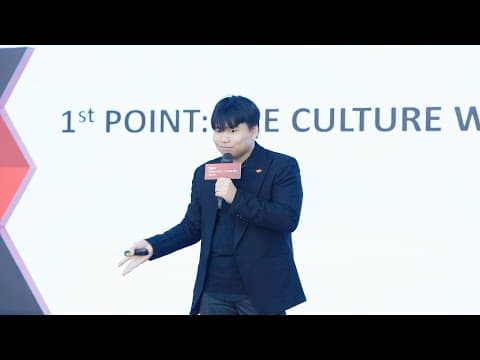
The Truth About Being “Perfect” Online | Hai Trung Hieu Nguyen | TEDxGreenwich University Hanoi
Audio Summary
AI Summary
The speaker, Nguyễn Hải Trung Hiếu, discusses the pervasive influence of beauty standards, especially in Vietnam, where cultural values include personal image. Society often defines a perfect male as slim and fit with well-groomed hair, and a perfect female as tender with white skin and long curly hair. This ideal creates a negative self-perception for those who don't fit these criteria, leading to feelings of inadequacy and ugliness—a phenomenon called the beauty standard.
The digital age, with its social media growth, has fostered "constant judgment." The speaker notes the prevalence of hate comments online, which instill fear and self-doubt. This negativity manifested during their secondary school years, leading to self-questioning and a desire to alter their appearance, even resorting to harmful actions like taking weight loss pills or over-exercising.
This isn't an isolated experience; a UK Mental Health Foundation study found 30% of teenagers feel inadequate about their image, with two in five blaming social media. The speaker attributes this to two factors: the unrealistic content we consume, dubbed "the Heather Effect," where curated perfection on social media becomes the perceived "normal"; and the ubiquitous use of filters and the resulting comparison of our everyday lives to others' idealized highlight reels. Filters don't just change faces; they change expectations, making us question our worth rather than our health or happiness.
The speaker emphasizes that perfection is a trap and advocates for awareness: understanding that online content is curated, algorithms are designed to keep us engaged, and images are edited. This awareness empowers choice—to follow content that promotes health, to stop viewing oneself as a project needing constant fixing, and to recognize that true worth isn't tied to external validation. Authenticity, not perfection, is the key to self-acceptance.