How Jerome Powell Reshaped The Federal Reserve
Audio Summary
AI Summary
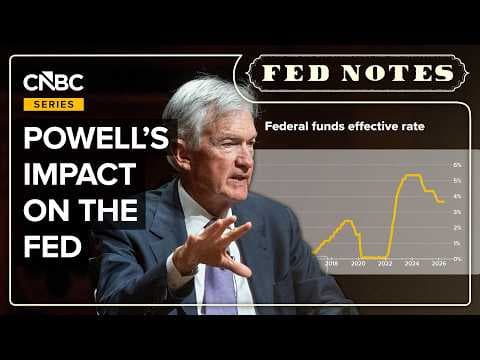
The transcript discusses Jerome Powell's tenure as Fed Chair, highlighting criticisms and defenses of his actions. Critics point to the rise in inflation under his leadership, with the word "transitory" becoming a lasting part of his legacy. His supporters, however, emphasize that inflation eventually decreased without causing a recession.
Powell is also noted for pushing back against presidential pressure, a rarity. While not an economist by training, he was appointed by Obama and made Fed chair by Trump. His tenure saw the Fed raising rates, then pausing due to weakening economic signs, leading to Trump's first criticism of the Fed.
The Covid-19 crisis brought new challenges, with Powell praised for decisive, aggressive actions that led to a short but deep recession followed by a rapid recovery. However, a subsequent surge in inflation, which ran above the 2% target for an extended period, is seen by some as a policy mistake. Powell's Fed also adopted a framework allowing inflation to exceed 2% on average and considered minority unemployment in policy decisions, actions critics argue distracted him. Furthermore, his engagement in international climate change discussions is also mentioned. Powell's decision to stay on the board beyond his planned retirement is linked to an ongoing investigation.
Get summaries like this automatically