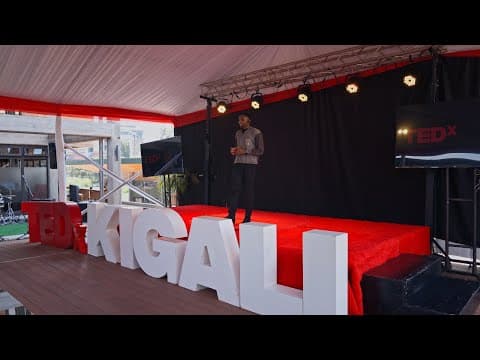
The best medicine starts outside the clinic window | Bertrand Dushimumuremyi | TEDxKigali
Audio Summary
AI Summary
The speaker recounts a patient, M, diagnosed with asthma at 50, who struggled with breathlessness despite oxygen support. During a test, M's oxygen levels dropped dangerously after only a few steps, prompting the speaker to question the diagnosis. This experience highlights the speaker's unconventional medical training at the University of Global Health Equity, which emphasized a "One Health" approach connecting human, animal, and environmental health.
Unlike traditional medicine, this program taught that patient health is inseparable from their environment. This perspective became crucial during the speaker's hospital training. Re-evaluating M's case, the speaker asked about her environment and lifestyle, discovering she cooked with wood and thatch grass. This prolonged exposure to smoke led to interstitial lung disease, often misdiagnosed as asthma. M had been treated for the wrong illness for decades because no one asked about her environment.
After changing M's medication and advising behavioral adjustments to reduce smoke exposure, her condition dramatically improved within two months. She no longer needed oxygen and could walk freely. This transformative experience underscored the interconnectedness of human health and the environment.
The speaker emphasizes that current medical training often overlooks environmental factors, leading to misdiagnoses and inadequate treatment for millions globally who suffer from environment-related illnesses like air pollution. Integrating a "One Health" approach into medical education is crucial to equip doctors to understand patients within their broader environmental context, moving beyond symptom-based treatment to address root causes. This shift is vital for patients, who are more than their symptoms; they are their environments and ecosystems.