Framework is making PCs cool again | The Vergecast
Audio Summary
AI Summary
This episode of The Vergecast covers the ongoing OpenAI vs. Elon Musk trial and the latest developments from Framework's product event.
**OpenAI vs. Elon Musk Trial:**
The main discussion revolves around the high-profile lawsuit filed by Elon Musk against OpenAI and its CEO, Sam Altman. Liz Lato, a reporter for The Verge, provides insights into the trial, emphasizing that it's largely considered a "shit show" with a low probability of significant legal victory for Musk. While there's a slim chance OpenAI could be ordered to pay damages, impacting the broader AI ecosystem, most legal experts believe the case is weak and Musk is pursuing it primarily for personal vindication and to inflict damage on Altman and OpenAI.
The core of the lawsuit stems from OpenAI's founding as a non-profit by Musk and others, with Musk contributing significant funding. He later left the organization, feeling he was not in control and disagreeing with its direction, particularly its pivot towards a for-profit model and its partnership with Microsoft. Musk's legal team is primarily composed of intellectual property lawyers, which Lato points out is not typical for a case involving contract and charity law, suggesting Musk is prioritizing taking the case at all costs rather than seeking the most qualified legal representation.
Musk's stated goals appear to be to embarrass and humiliate Sam Altman, potentially forcing him out of his leadership role. The trial is seen as a distraction and a financial drain for OpenAI, which is preparing for a potential IPO. Musk is also seeking remedies like Altman stepping down and being barred from running companies for a period, indicating a deeply vindictive motive. The lawsuit is one of four Musk has filed against OpenAI, highlighting his penchant for "lawfare" as a means of inflicting pain on opponents.
Discovery in the case has already unearthed embarrassing information, including texts from Mark Zuckerberg that seemingly contradict his public statements about government censorship. There's anticipation that further texts and emails from prominent tech figures, including those from Sam Altman's extensive network, could surface, potentially causing reputational damage to many in the industry. This includes potential fallout for investors and partners like Microsoft and Nvidia.
The timing of the lawsuit is also significant, coinciding with a critical period for OpenAI as it navigates its path to profitability and potential public offering. The ongoing legal battle, coupled with a recent New Yorker article raising questions about Altman's leadership, creates a precarious situation for the company. The article, which emerged after a dossier was sent to Ronan Farrow, suggests that while the most egregious claims were unsubstantiated, it did highlight concerning aspects of Altman's communication style and perceived people-pleasing tendencies.
Despite the legal complexities, the consensus is that Musk is using the lawsuit to generate chaos and inflict damage, regardless of the legal merits. The risk for Musk himself lies in potentially damaging information that could emerge from discovery, particularly from texts involving Siobhan Zillis, the mother of his children and a former OpenAI board member. This could impact his upcoming SpaceX IPO, especially if negative information about XAI or other ventures surfaces. The timing of the SpaceX IPO, with Musk's stated intention to include retail investors, adds another layer of risk, as potential investors might be deterred by revelations from the trial.
**Framework's New Laptop and Peripherals:**
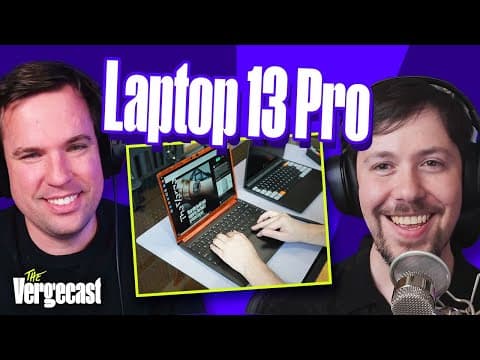
Sean Hollister discusses the latest announcements from Framework, a company focused on creating repairable and upgradable laptops. The star of the show is the new Framework Laptop Pro, which Hollister describes as a significant leap forward, addressing past compromises in build quality and performance.
The Laptop Pro features a CNC-machined aluminum chassis, giving it a premium feel that rivals top-tier laptops like the MacBook Pro. The touchpad is also highlighted as being exceptionally smooth and responsive. Performance-wise, it utilizes Intel's Core Ultra 3 processors, which offer a balance of efficiency and power, coupled with Intel's Arc graphics. The laptop boasts impressive battery life, with Framework claiming up to 20 hours of 4K Netflix playback, potentially exceeding that of the MacBook Pro.
Key technological advancements include a custom 13.5-inch IPS display with a variable refresh rate (30-120Hz), an improvement over previous 60Hz panels. Framework has also incorporated LP-CAM 2 memory, a more efficient and tightly integrated memory solution that can be screwed onto the motherboard, similar to soldered RAM but retaining upgradability. The inclusion of PCI 5.0 storage further enhances performance.
A significant aspect of Framework's philosophy is its commitment to upgradability and long-term support. The company has made a concerted effort to ensure that new components and improvements can be retrofitted to older Framework laptops, a rarity in the industry. This includes the ability to upgrade motherboards, CPUs, and even batteries with new bottom covers.
The company's growth and increasing leverage in the supply chain are evident in their ability to develop custom components like the display. This marks a shift from their early days, where they relied on available parts, to dictating their own product designs. This increased control, coupled with a transparent approach to pricing and component sourcing, has fostered a loyal and engaged customer base.
Framework is also targeting developers with this new laptop, offering a pre-installed Ubuntu Linux version as the default option, alongside support for other Linux distributions. This positions it as a compelling choice for Linux users seeking a high-quality, upgradable laptop.
Pricing for the Framework Laptop Pro starts at $1499 for a Core Ultra 5 model with 16GB RAM and 512GB storage, with a DIY version available for $1200. Higher-end configurations, such as a Core Ultra 7 model with more RAM and storage, can reach nearly $2100, placing it in direct competition with premium MacBook Pro pricing. While the initial cost can be high, Framework's value proposition lies in its long-term upgradability, potentially making it a more cost-effective solution over many years compared to devices that require complete replacement.
Beyond the laptop, Framework has also introduced a new keyboard, aiming to improve upon the ubiquitous and often criticized Logitech K400 couch keyboard. This new offering boasts better typing feel, multiple Bluetooth pairing options, and wired connectivity for BIOS access, a significant improvement for tech enthusiasts. It also features an "anti-dongle" design, where the USB receiver can be integrated flush into Framework's expansion card system. This focus on thoughtful peripherals and modularity further solidifies Framework's commitment to its unique product philosophy.
The discussion concludes with a hopeful outlook for the future of small, portable computing devices like the Surface Go, driven by advancements in ARM architecture and improved battery technology. The ongoing chip revolution, spurred by Apple's success with its M-series chips, is leading to more efficient and powerful processors across the industry, making previously underpowered categories of devices potentially viable.