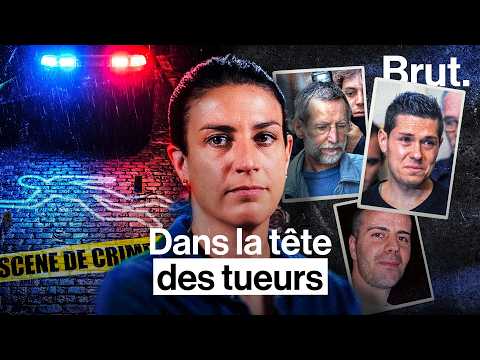
Comment faire parler un tueur : les secrets d’une "profileuse"
AI Summary
Audrey Renard, a commander in the gendarmerie and a behavioral analyst, commonly known as a profiler, has been assisting investigators for nearly 20 years in identifying and analyzing criminals. She recently co-authored the book “Profileuse” with Christophe Dubois. Renard clarifies that while anyone can potentially act violently in a specific context and relationship with a victim, it doesn't mean they are destined to become a serial killer. Most individuals she has encountered who commit a single violent act are otherwise ordinary people.
The primary motivations for a single act of violence are often anger and vengeance, sometimes with a sexual component. Anger, in particular, is a common underlying emotion, frequently observed in cases like femicide. Profilers analyze crime scenes meticulously to understand the perpetrator's actions, including violent gestures and what they call "reparative gestures," which can indicate the nature of the relationship with the victim and how the situation escalated.
Renard debunks common misconceptions about profilers, emphasizing that their work is scientific, highly protocolized, and methodological, rather than relying on flashes or intuitions. While investigators on the ground often have good intuitions, profilers provide a solid, evidence-based explanation for these hunches.
She distinguishes between individuals who kill once in a specific context and organized, highly prepared serial killers. The former often appear as "Mr. Everybody," surprising those who knew them. Serial killers, however, spend extensive time planning their crimes, almost pursuing a criminal career. Renard disagrees with the notion that serial killers possess superior intelligence, suggesting their perceived cleverness is merely a result of their meticulous preparation.
Becoming a profiler in France requires a solid university background, typically in criminology or clinical psychology, followed by joining the gendarmerie and undergoing extensive internal training, often with international counterparts from agencies like the FBI. Currently, there are only five profilers in France, working on the most complex and incomprehensible cases where the crime scene doesn't immediately make sense to investigators. Their role is to provide clarity and support the investigative teams.
Profilers contribute their expertise in criminal psychology to analyze non-verbal behavior during suspect interrogations, though they observe from an adjacent room via camera to maintain neutrality and distance. They focus on the coherence of a suspect's discourse in relation to their physical positioning, but emphasize that this is merely one detail among many factual contradictions and evidence gathered during the investigation. They do not rely on simplistic interpretations like neuro-linguistic programming, especially given the stressful context of police custody, which can induce stress in anyone, guilty or innocent. The goal is to identify deception, which requires a holistic interpretation of multiple elements.
The discipline of behavioral analysis arrived relatively late in France compared to countries like the US and Canada. Initially, investigators were skeptical, associating it with fictional crime series. However, the effectiveness of the approach, particularly in understanding single-act crimes beyond just serial killer cases, led to its gradual acceptance. Profiling helps uncover the perpetrator's motivations and their connection to the victim, even when material evidence like DNA is present.
The field of profiling in France is predominantly female, largely due to the high number of women pursuing psychology and law degrees, which are prerequisites for the role. Renard notes that while investigators are mostly male, the two groups are highly complementary. She acknowledges the initial challenges faced by early female profilers in a male-dominated environment.
Profilers maintain a greater emotional distance from cases than frontline investigators, who have direct contact with victims' families. This separation helps profilers preserve their emotional well-being. Renard recounts her first crime scene, involving a dismembered and burned body, where she felt a sense of purpose and a realization that she was in the right place, driven by a desire to contribute to solving the case for the victim and their family. The adrenaline associated with emergency calls helps them work effectively on crime scenes.
Profilers and investigators observe the same details at a crime scene but interpret them differently. Profilers delve into the underlying motivation and intent of the perpetrator, seeking to understand if the act was premeditated or an opportunistic escalation. They also focus on discerning the nature of the relationship between the perpetrator and the victim, looking for emotional links.
During interrogations, Renard and her team aim to establish a "cognitive alliance" with the suspect by demonstrating an understanding of what happened and the emotional state the perpetrator was in. This approach facilitates confessions, as it encourages the individual to open up. They try to help suspects recall emotions that their brains might have suppressed as a protective mechanism, as these intense emotions are often too painful to relive.
In the Jonathan Daval case, Renard's team analyzed the crime scene and concluded that the perpetrator was likely someone from the victim's close circle. Key indicators included the victim's face being badly beaten, suggesting a close-range, emotional attack, but the body being carefully positioned with her glasses placed back on her face. These "reparative gestures" indicated an emotional connection between the perpetrator and victim, a pattern often observed in cases involving intimate partners. Daval's public display of grief and his media-constructed image made it more challenging to extract confessions, as he had entrenched himself in a posture of innocence.
In contrast, with Nordahl Lelandais, a serial killer, emotional appeals proved ineffective. Renard emphasizes that while it's crucial to access the "human" aspect of a criminal to understand and secure confessions, this should not be confused with excusing their actions. Humanizing criminals helps in explaining their behavior, which is vital for victims' families.
Profilers manage the psychological toll of their work through teamwork and institutional support. The gendarmerie provides psychological support services for all personnel. Renard believes her professional uniform and institutional affiliation offer a symbolic layer of protection, allowing her to maintain emotional distance by focusing on theoretical frameworks and contextualizing the violent realities she encounters. She also stresses the importance of having a life outside of work and the humility to acknowledge that not every case can be fully resolved.
Regarding serial killers, Renard dismisses the idea of a "born criminal" or a genetic predisposition. Instead, studies suggest a difficult and toxic childhood, characterized by violence and a lack of emotional outlets, can create a "favorable ground" for such individuals. However, she notes that many people with similar backgrounds do not become serial killers, highlighting the role of resilience and positive life experiences.
Renard observes a difference in confessions between male and female perpetrators. In her experience, women tend to be more resistant to confessing than men. She speculates this might be due to a strong belief in the justification for their actions, leading to less guilt, or perhaps societal perceptions and interrogation techniques that differ for women.
The public's fascination with true crime stems from a desire to confront fears of death and violence by observing them from a safe distance, providing a sense of reassurance. Renard recommends the series "Mindhunter" for its historical realism in portraying behavioral analysis and "Criminal" for its insightful depiction of interrogation psychology. She advocates for prevention, particularly focusing on vulnerable adolescents who may retreat into isolated internal worlds, emphasizing the importance of adult presence and support during this critical developmental stage.