"Karl Marx Was On The British Payroll"- Imperial Expert EXPOSES The Communist History Britain Buried
Audio Summary
AI Summary
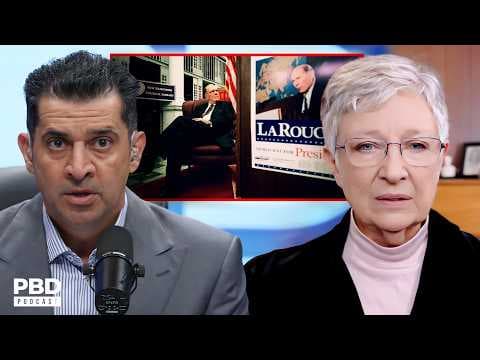
The speaker discusses the significant influence of Lyndon LaRouche, describing him as a unique and universal genius. LaRouche's political journey started as a Trotskyist socialist in the 1940s and 50s, then shifted to the far-right in the mid-70s. Despite his political evolution and legal troubles, including mail fraud and tax evasion, LaRouche’s core principles remained consistent.
The speaker encountered LaRouche's movement after the Bobby Kennedy assassination, feeling a sense of hopelessness about the country's direction. LaRouche's central passion was the divergence between the physical economy, driven by human creativity, and artificial systems based on money. What attracted the speaker was LaRouche's intellectual approach, which constantly challenged and forced a rethinking of established ideas.
The movement, founded by LaRouche, underwent a significant re-evaluation when they rediscovered the "American system" around the time of the 1976 American bicentennial. This system, based on principles they always espoused, provided the framework they sought for effective policies and institutions. The speaker argues that LaRouche's perceived shift from left to right was a mischaracterization by the media, as his fundamental principles and policies remained constant.
LaRouche played a vital, though often misunderstood, role in Ronald Reagan's Strategic Defense Initiative (SDI). He met Reagan in 1980, and LaRouche was brought into the Reagan administration for extensive discussions on what became SDI. However, LaRouche's growing influence led to his prosecution by what the speaker calls the "imperial elite," including Robert Mueller, resulting in his conviction in 1987.
The speaker notes a divergence with LaRouche's widow, Helga Zepp LaRouche, after his passing, leading to a split and the formation of Promethean Action.
The conversation then delves into some of LaRouche's more controversial claims, such as Queen Elizabeth II's alleged involvement in the international narcotics trade, the Rothschilds' orchestration of Hitler's rise, and British intelligence's control over the U.S. economy and various geopolitical events. The speaker clarifies that these are often "cartoonish" characterizations of more deeply researched claims. For example, regarding the drug trade, LaRouche's focus was on the laundering of drug money through offshore banking operations established by the City of London in the 1960s. The speaker cites a book, "Dope Incorporated," from the 1970s, which documented the role of institutions like HSBC in international drug money laundering.
Similarly, LaRouche's claims about Hitler's rise are linked to the role of his finance minister, Hjalmar Schacht, who emerged from Anglo-American financial circles to set up Germany's financial structure for war reparations and militarization. The speaker emphasizes that LaRouche’s claims, though often caricatured, are historically provable when one delves beyond superficial historical accounts and examines primary sources.
The speaker highlights Richard Poe's book, "How the British Created Communism and Blamed It on the Jews," as an example of rigorously documented historical work. This book argues that communism was created in London, with Karl Marx on the payroll of the British East India Company, to be used as an ideology against Russia for geopolitical purposes. The speaker encourages listeners to consult primary sources, much like LaRouche advocated, rather than relying on secondary interpretations, citing the example of understanding the Trump administration's policies directly from White House documents.