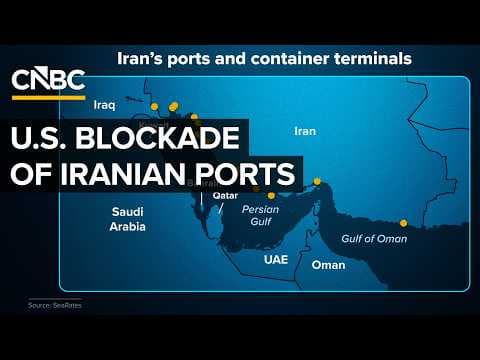
What The U.S. Blockade Of Iranian Ports Means for Iran
Audio Summary
AI Summary
The president announced on Truth Social that the Strait of Hormuz is open for business, but a naval blockade remains in full force. However, Iranian state media reports that the strait is not reopened as long as the blockade persists. The U.S. is implementing a "close blockade" of Iranian ports, an escalation following a two-week ceasefire, aimed at compelling Iran to accept U.S. terms for ending the conflict. This economic pressure seeks to cut off Iran's revenue from oil sales to Asia and other parts of the world, as military pressure has been ineffective.
A close blockade means the U.S. Navy will intercept any ships entering or exiting Iranian ports, with a blocking force of U.S. Navy ships, helicopters, and Marines. The U.S. hopes this will significantly impact Iran's economy, as Iran is a top ten oil producer, with most of its exports through the Strait of Hormuz going to Asian countries like China, Japan, and India. While Iran previously allowed ships to pay a toll for passage, the blockade has halted even this.
The immediate impact of the blockade on Iran's willingness to negotiate is questioned, with no resumption of oil flows expected soon. The cost of maintaining this blockade and the broader war effort is a concern on Capitol Hill, as the administration seeks hundreds of billions in supplemental funding. The market views the blockade as an escalation, causing oil prices to jump, and the conflict's future remains unpredictable, with potential for increased hostilities as U.S. ships actively operate in Iranian waters. The blockade is expected to take months to be effective.